By the Banger Labs Research Team · Updated June 2026
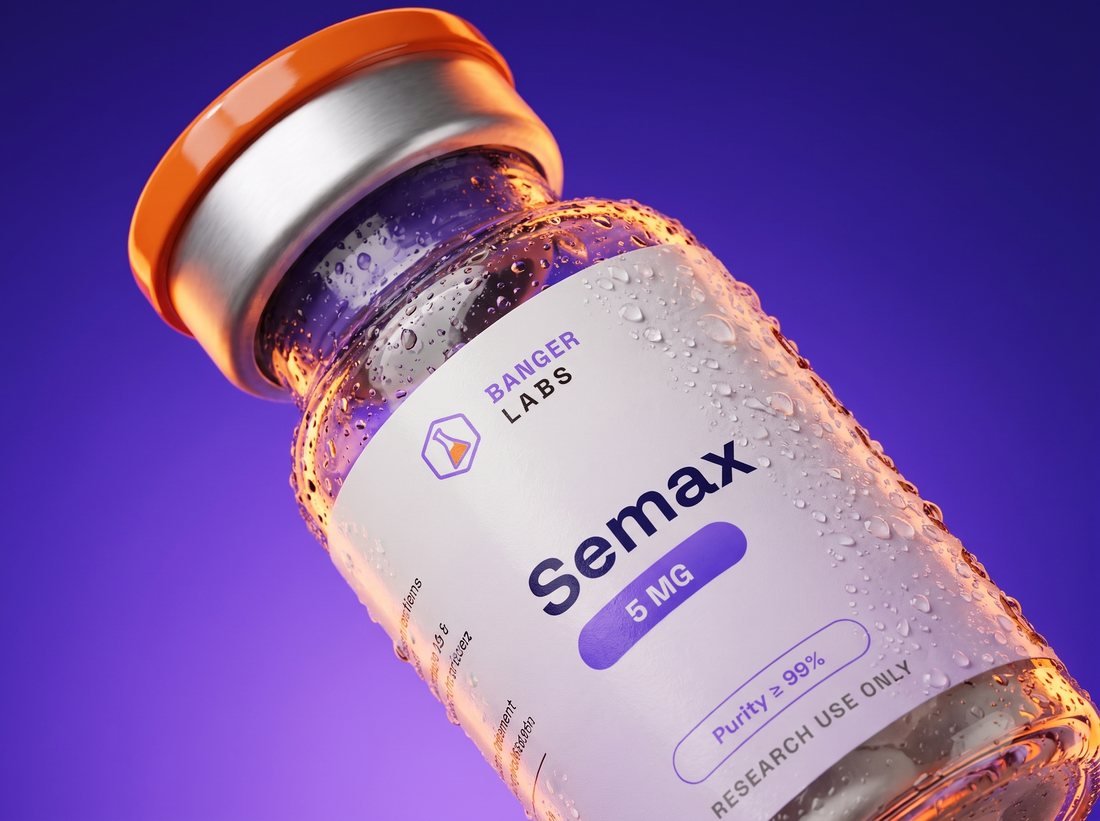
What is Semax?
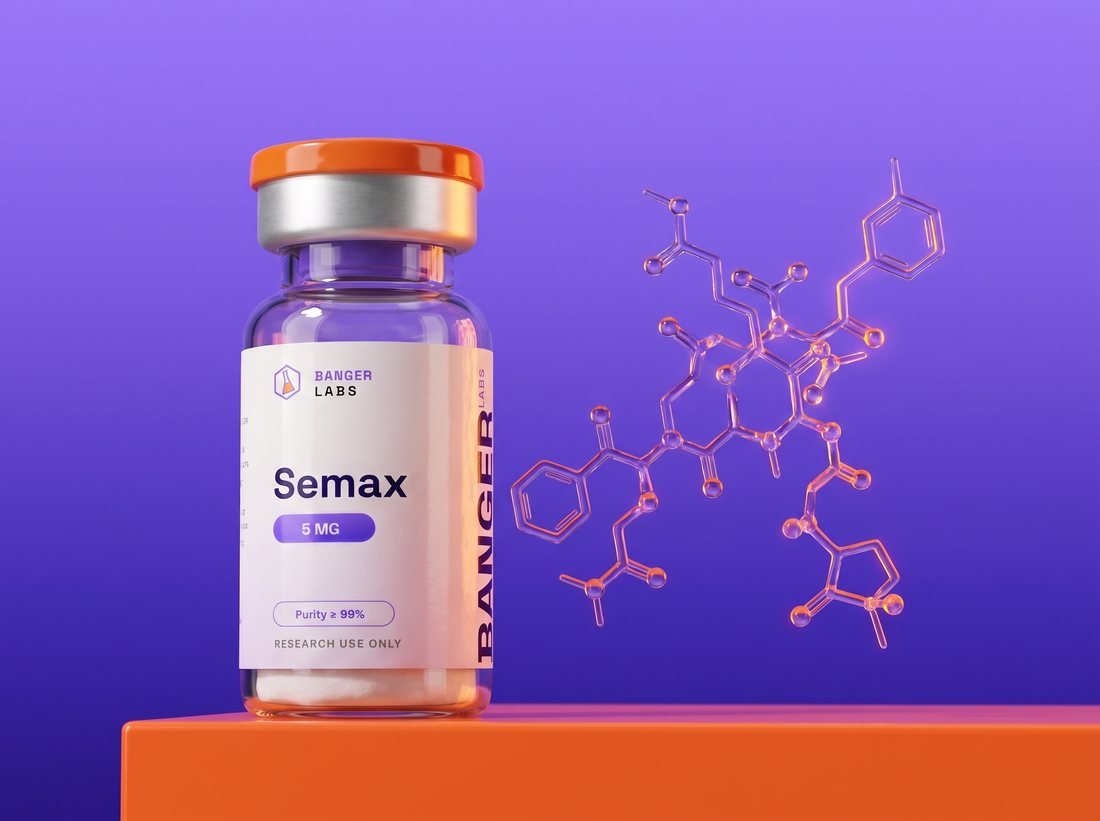
Semax is a synthetic heptapeptide with the sequence Met-Glu-His-Phe-Pro-Gly-Pro, derived from the 4-7 fragment of the N-terminal region of adrenocorticotropic hormone (ACTH) joined to a C-terminal Pro-Gly-Pro tripeptide. It was developed in Russia as an ACTH(4-10) analog and is reported in the literature to be devoid of the hormonal (corticotropic) activity of the parent peptide. It is used as a research compound in neuropeptide and neurochemistry investigations.
How Semax is studied
In preclinical/in vitro and animal studies, Semax has been reported to modulate the expression and transcription of neurotrophic factors such as BDNF and NGF and their receptor genes. Additional research describes interactions with monoaminergic systems (dopaminergic and serotonergic) in rodent models and copper(II) ion binding. These mechanisms are characterized only in experimental research settings and are not established human pharmacology.
Research areas
- Investigated in rodent models for effects on neurotrophic factor (BDNF/NGF) gene transcription
- Studied in experimental cerebral ischemia/neuroprotection research models
- Examined in preclinical research on dopaminergic and serotonergic signaling in rodents
- Studied in vitro for copper(II) ion binding and metal-induced cytotoxicity research
- Explored in animal models of neurodegeneration (e.g., Alzheimer’s-disease research models)
These describe laboratory/preclinical research only. No therapeutic, medical, or efficacy claims are made.
Semax specifications
Handling & quality
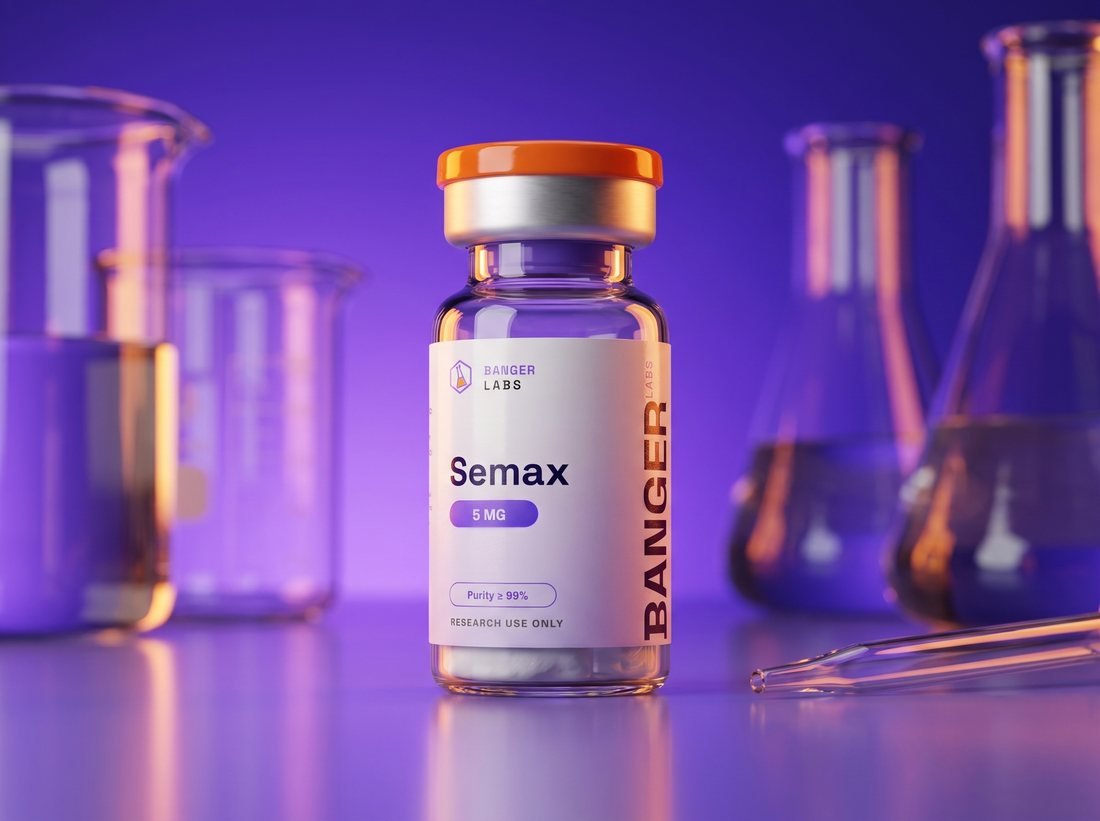
Semax is held to a ≥ 99% HPLC purity standard with a Certificate of Analysis available per batch. Reconstitute with bacteriostatic water and store refrigerated; handle strictly for research. See reconstitution & storage.
Frequently asked questions
What is Semax?
Semax is a synthetic heptapeptide with the sequence Met-Glu-His-Phe-Pro-Gly-Pro, derived from the 4-7 fragment of the N-terminal region of adrenocorticotropic hormone (ACTH) joined to a C-terminal Pro-Gly-Pro tripeptide. It was developed in Russia as an ACTH(4-10) analog and is reported in the literature to be devoid of the hormonal (corticotropic) activity of the parent peptide. It is used as a research compound in neuropeptide and neurochemistry investigations.
Is Semax research use only?
Yes. Semax is supplied strictly for laboratory research — not for human or veterinary use, and not as a drug, food, or supplement.
Does Banger Labs provide a COA for Semax?
Yes — a Certificate of Analysis (HPLC purity + mass-spec identity) is available per batch on request. See the COA Library.
References
- Semax, an ACTH(4-10) analogue with nootropic properties, activates dopaminergic and serotoninergic brain systems in rodents — PubMed (Neurochem Res, 2005)
- Semax and Pro-Gly-Pro Activate the Transcription of Neurotrophins and Their Receptor Genes after Cerebral Ischemia — PubMed Central (PMC)
- Semax, an ACTH4-10 peptide analog with high affinity for copper(II) ion and protective ability against metal induced cell toxicity — PubMed (J Inorg Biochem, 2015)
- The Potential of the Peptide Drug Semax and Its Derivative for Correcting Pathological Impairments in the Animal Model of Alzheimer’s Disease — PubMed Central (PMC)
Sources are provided for scientific reference and describe laboratory/preclinical research; they do not constitute medical advice or efficacy claims.
Shop Semax & related research peptides
By the Banger Labs Research Team. For research use only. Not for human or veterinary use. Not a drug, food, or cosmetic. Educational information, not medical advice.