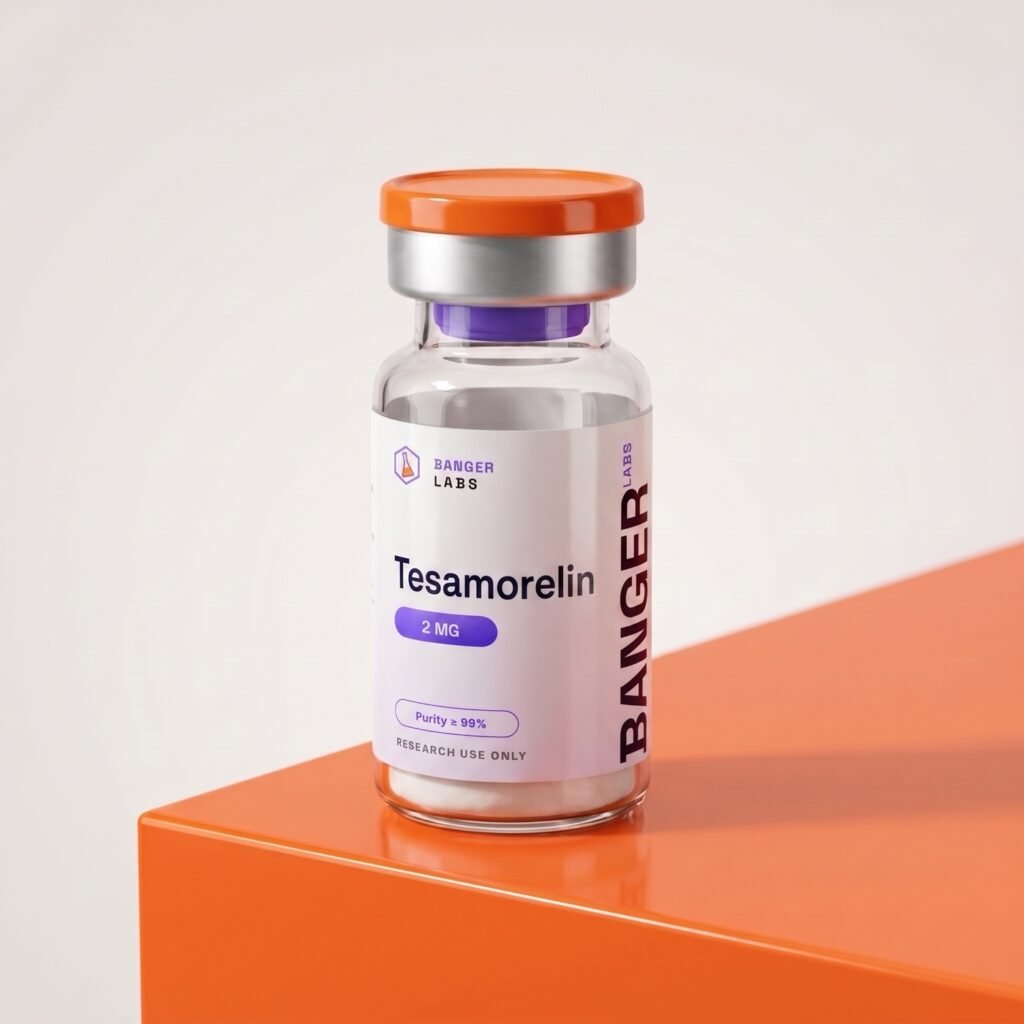
 For Research Use Only
Tesamorelin
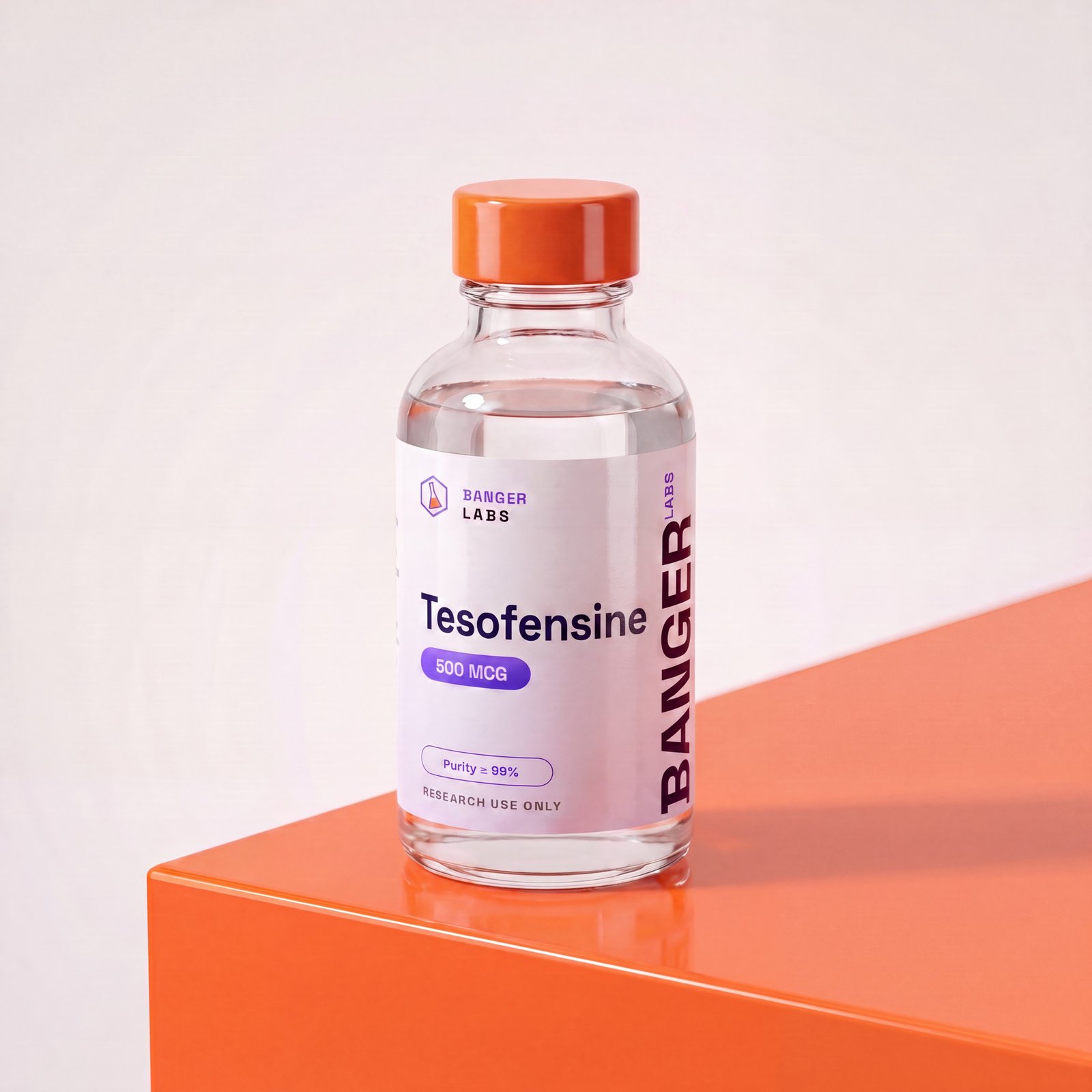
Tesamorelin — research-grade peptide. ≥ 99% purity (HPLC), Certificate of Analysis with every batch. For laboratory research use only.
 + 1 Free 3ml BAC Water
+ 2 Free 3ml BAC Water
+ 1 Free 3ml BAC Water
+ 2 Free 3ml BAC Water
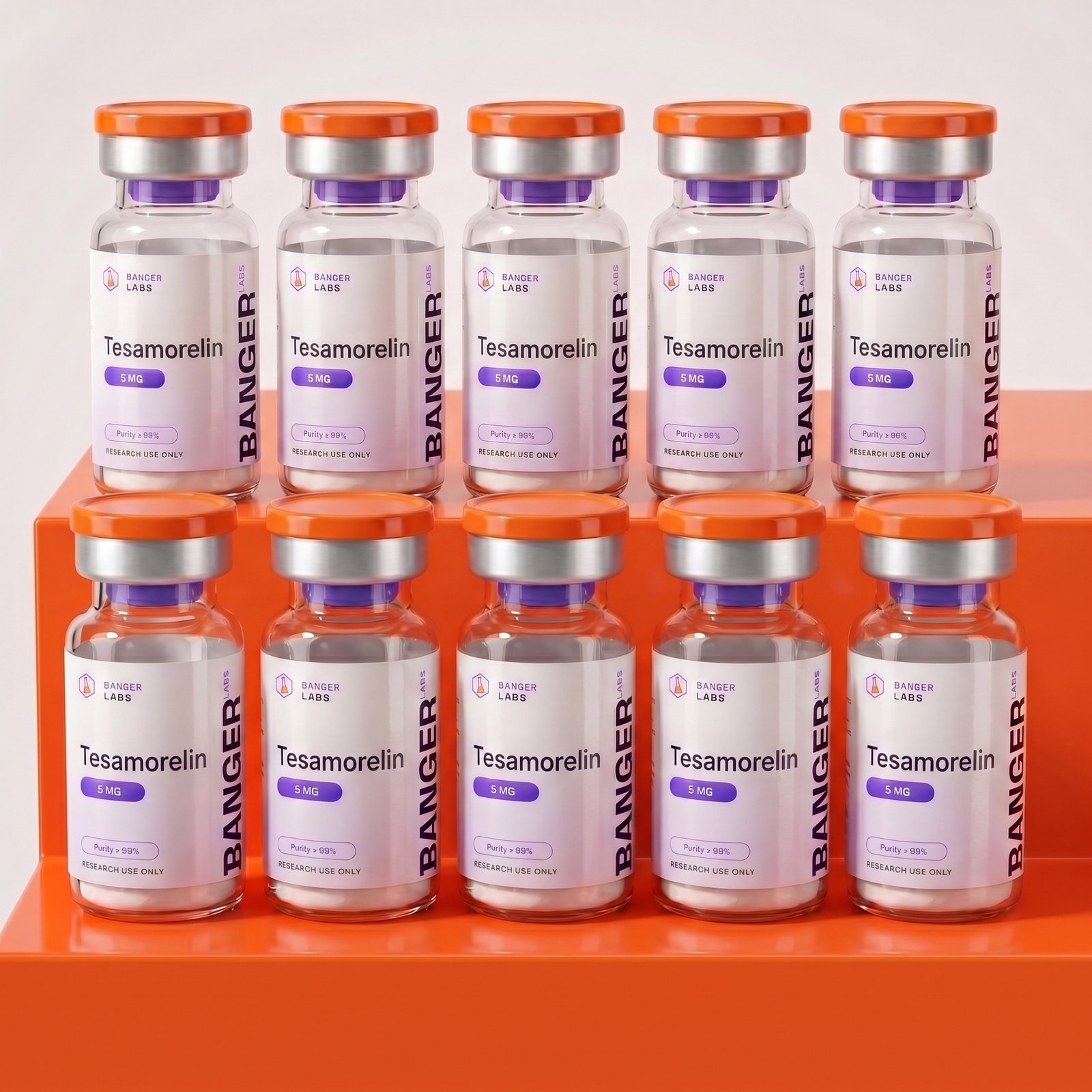 10 VIALS · 40% OFF
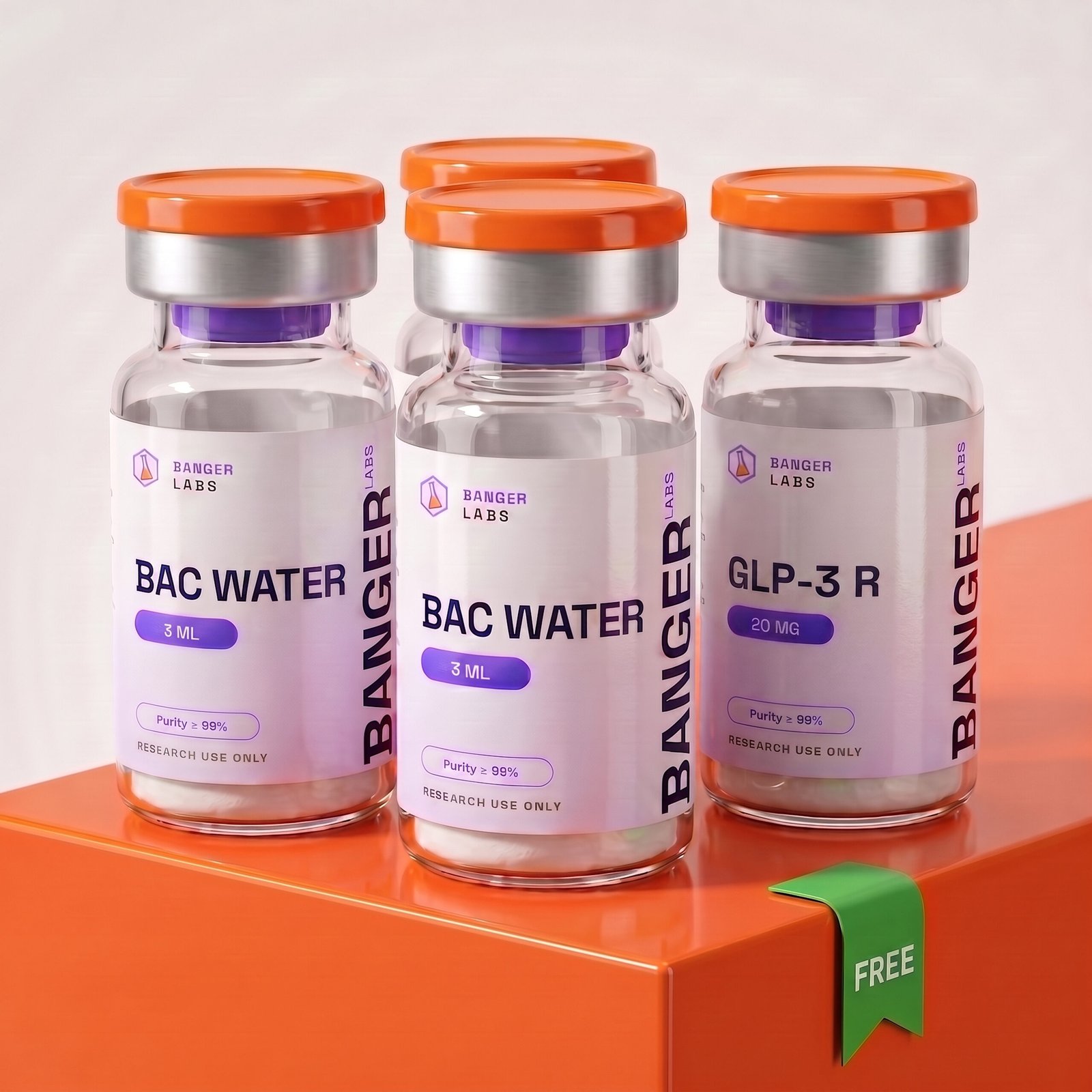 FREE
FREE- 3 Free 3ml BAC Water
- Free GLP-3 R 10mg vial
- Free Priority Shipping
Transparency
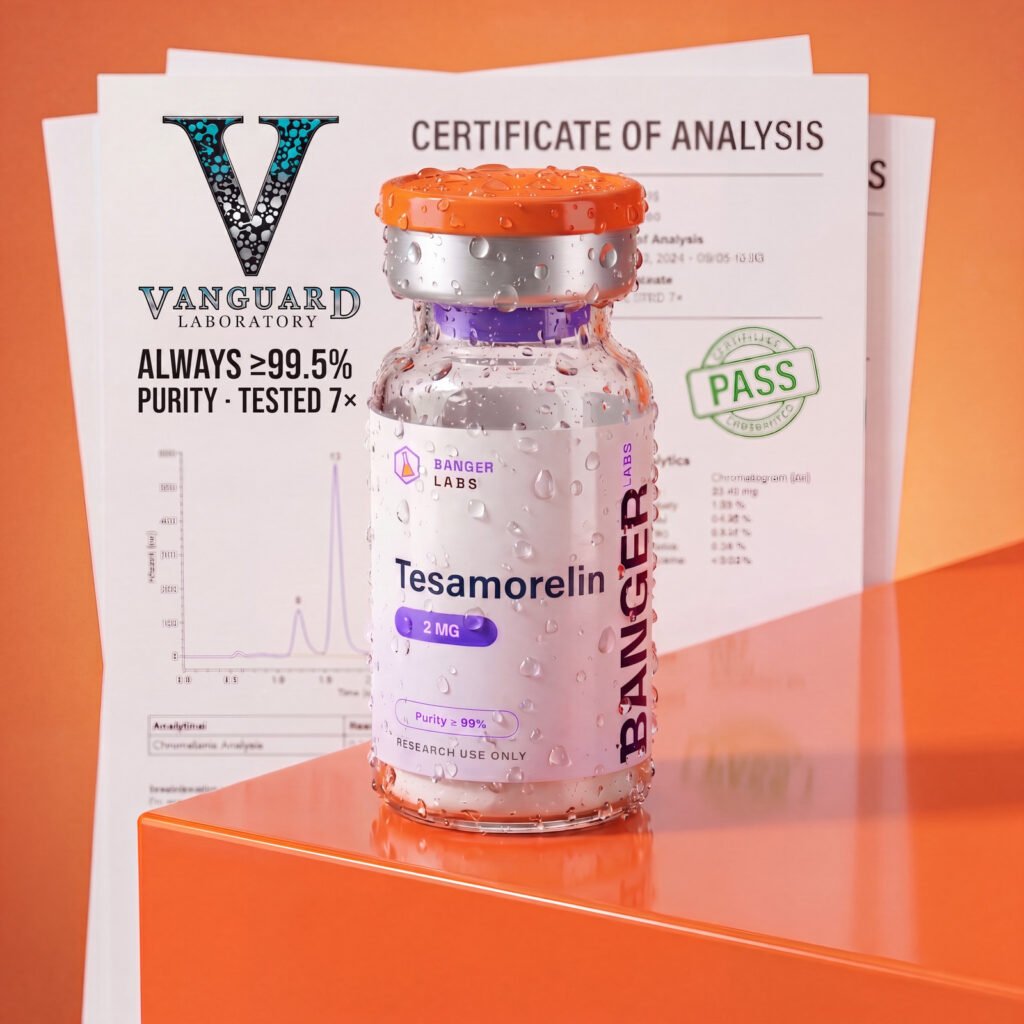
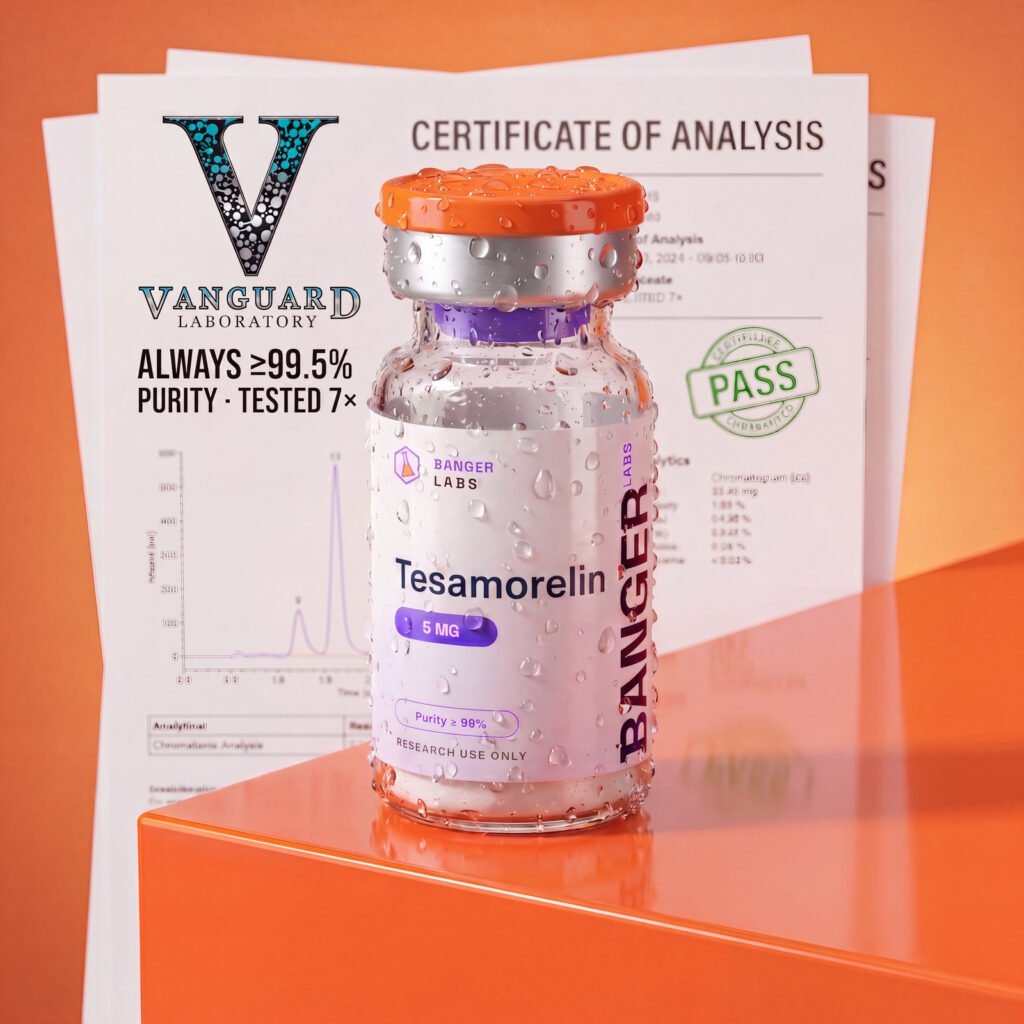
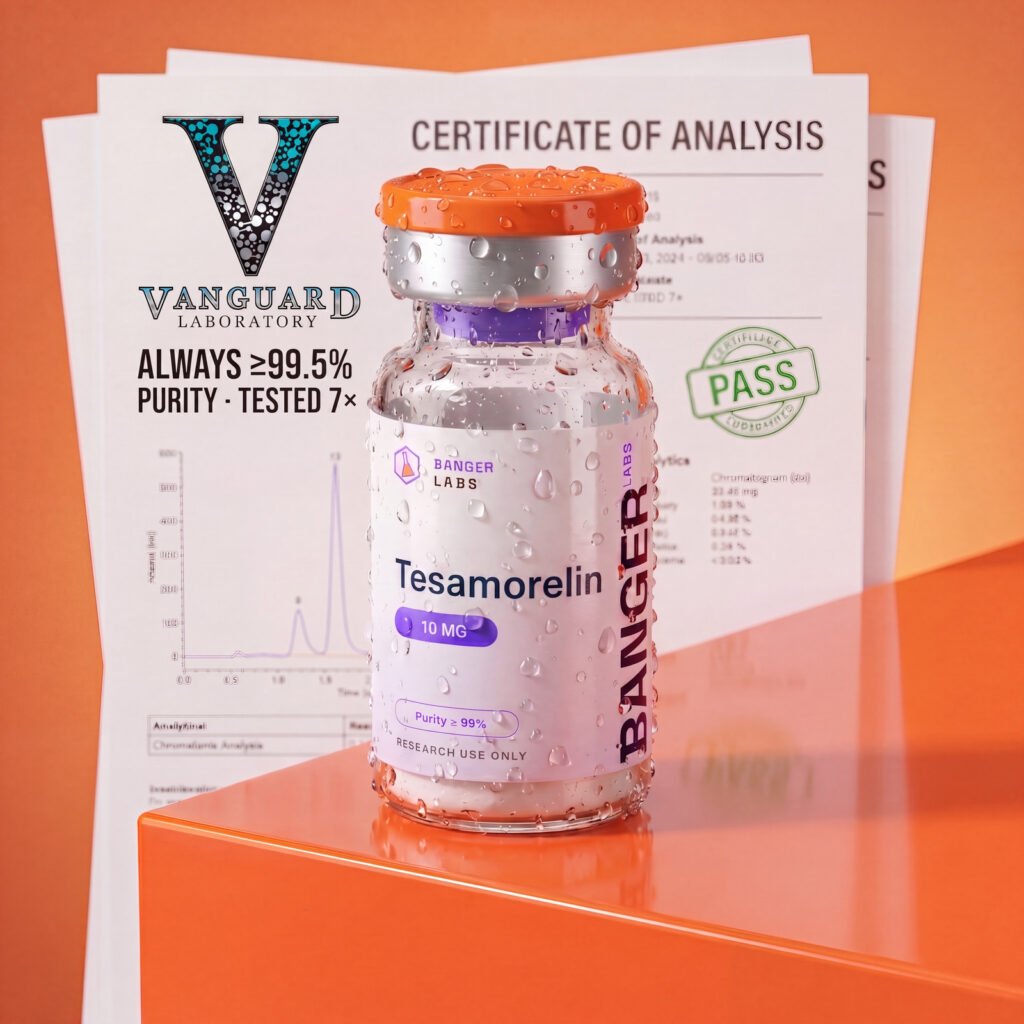
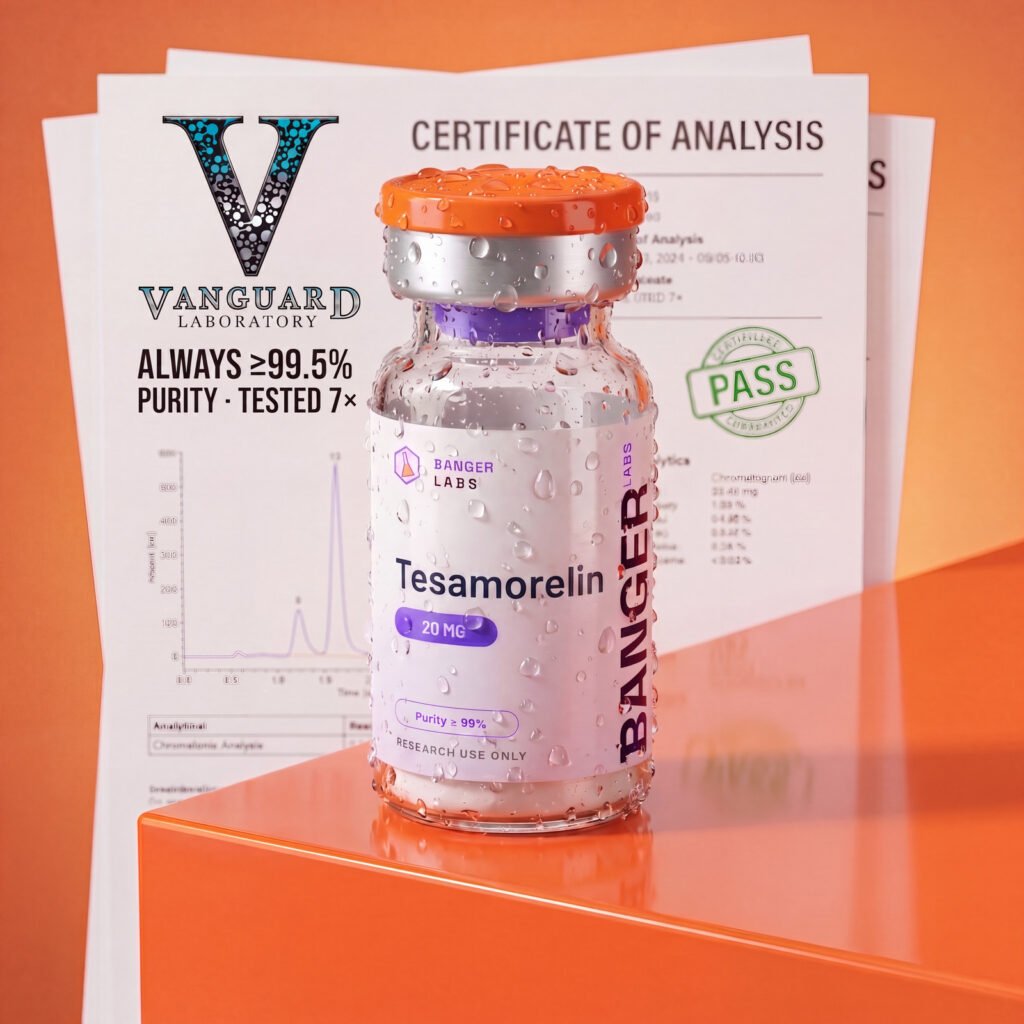
Certificate of Analysis
Every batch independently verified by third-party laboratories.
Tesamorelin COA
All Banger Labs products are independently tested by accredited third-party laboratories. Results are batch-specific and provided for research transparency only. This product is not approved for human use.
Lab Verified
Every Dose, Independently Tested
Verified by Vanguard Laboratory — always ≥99.5% purity, tested 7×. Swipe to view your selected dose.
Support
Frequently Asked Questions
Everything you need to know about this product and your order.
Research Overview Cited research summary, handling & references — tap to expand
Tesamorelin: A Research Compendium
What Tesamorelin Is
Tesamorelin is a synthetic analog of human growth hormone–releasing hormone (GHRH) — a stabilized GHRH(1-44) construct bearing an N-terminal trans-3-hexenoyl group engineered to resist the dipeptidyl-peptidase cleavage that rapidly inactivates native GHRH. Among the compounds in this group it has by far the most extensive randomized controlled-trial record, having been studied chiefly in HIV-associated visceral adipose tissue accumulation and lipodystrophy, and it is the GHRH analog whose clinical pharmacology is best documented in the peer-reviewed literature.[5] Mechanistically it acts like the other GHRH-receptor agonists in this catalog: it binds the pituitary GHRH receptor to stimulate the synthesis and pulsatile secretion of endogenous growth hormone, which in turn raises IGF-1 and drives the downstream metabolic effects that the trials measured. What distinguishes tesamorelin in the research record is the depth of its controlled outcome data — spanning visceral fat, muscle composition, hepatic fat, metabolic and safety endpoints, and even neurocognitive measures. It is presented here strictly as a research reference standard, and all of the following summarizes findings reported by the cited investigators in controlled and clinical-trial settings.
Areas Studied in the Research Literature
Tesamorelin's literature is anchored by randomized controlled trials and meta-analyses examining body composition, ectopic and visceral fat, hepatic fat, metabolic and safety endpoints, and downstream neurocognitive measures. It is the only compound in this group with a controlled-trial evidence base of this depth, which makes it the natural clinical-pharmacology reference point for GHRH analogs generally. The summaries below reflect only those published findings, each tied to its source study.
Visceral & Muscle Fat
As a GHRH analogue, tesamorelin decreased muscle fat and increased muscle area in adults with HIV[1], and it is consistently studied as a therapeutic pathway for excess visceral abdominal fat, including head-to-head clinical characterizations against other metabolic agents[6] — the body-composition findings that anchor its research profile.
Fat Quality vs. Quantity
A controlled analysis reported that tesamorelin improved fat quality independently of changes in fat quantity, an important refinement showing that its metabolic effects are not captured by volume measurements alone and that tissue composition is altered at a level beyond simple fat loss.[2]
Hepatic Fat & Metabolic Endpoints
A meta-analysis of randomized controlled trials pooled body-composition, hepatic-fat, metabolic, and safety outcomes for tesamorelin in HIV-associated lipodystrophy, providing the highest-level synthesis of its effects across the trial literature.[5]
Concomitant-Therapy Safety
Efficacy and safety were specifically examined in people with HIV receiving integrase-inhibitor regimens, addressing how the analog behaves alongside other ongoing treatments — a practical question for any agent studied in a complex therapeutic context.[3]
Neurocognitive Endpoints
A clinical study evaluated the effects of tesamorelin on neurocognitive impairment in persons with HIV and abdominal obesity, extending the research program well beyond body composition into central-nervous-system outcomes of GH/IGF-1-axis stimulation.[4]
How It Is Studied
Tesamorelin's evidence base is distinctive within this group for resting on randomized, placebo-controlled trials with imaging-based body-composition endpoints rather than on isolated mechanistic assays, and for being synthesized across studies in formal meta-analysis. This trial-and-meta-analysis structure is what allows its body-composition, hepatic-fat, and safety signals to be characterized with a confidence that single-study compounds in this class do not have.[5]
Reconstitution, Handling & Storage (Research)
The following reflect general peptide research-handling practice described in the literature for stabilized GHRH-analog reference standards; they are bench-handling notes for reference standards, not directions for use, and they apply to in-vitro and analytical work only. Exact parameters always defer to the supplier certificate of analysis and to the requirements of the specific assay being run.
Reconstitution
In published peptide-handling protocols, lyophilized Tesamorelin is brought to room temperature before opening to prevent condensation onto the hygroscopic powder, then solubilized by adding sterile or bacteriostatic water slowly down the inner vial wall. The vial is swirled gently or left to dissolve passively (never shaken) until the solution is clear; vortexing, sonication, and foaming are avoided because mechanical shear and large air–liquid interfaces can denature small peptides and drive surface adsorption losses. Diluent choice is recorded, since bacteriostatic preservatives and pH both influence how long the reconstituted reference solution remains usable on the bench.
Concentration
Working concentrations in the literature are calculated against the labeled net peptide mass rather than gross fill weight, because lyophilizates contain counter-ions, salts, and residual moisture that inflate apparent mass. The reconstitution volume is chosen so that the smallest aliquot the assay requires is still accurately pipettable, and concentration is expressed in molar terms when receptor-occupancy or potency comparisons are the experimental goal. Serial dilutions are prepared in low-binding tubes to limit peptide loss to plasticware.
Storage
Lyophilized material is reported to be most stable when kept desiccated, frozen (commonly −20 °C or colder for long-term, with −80 °C used for extended archival), and shielded from light. Once reconstituted, aqueous peptide is typically refrigerated at 2–8 °C and used within a short window; handling protocols recommend dividing the stock into single-use aliquots immediately after reconstitution so that the working material is never subjected to repeated freeze–thaw cycles, each of which can fragment or aggregate sensitive peptides and proteins.
Sterility & Records
Aseptic technique, single-use sterile needles and filters, clean-bench preparation, and logged lot, diluent, concentration, and date documentation are standard laboratory practice for reference standards. Carryover between unrelated compounds is avoided, and chain-of-custody notes accompany the vial. None of these handling notes describe, recommend, or imply administration to humans or animals; they pertain solely to in-vitro experimentation and analytical reference use by trained personnel.
Identity & Purity
Before a peptide reference standard is used in quantitative work, identity and purity are typically confirmed by analytical methods such as reversed-phase HPLC for purity and mass spectrometry for molecular-weight confirmation, with the certificate of analysis retained alongside the lot record. Verifying that the observed mass matches the theoretical mass for the intended sequence guards against truncated, oxidized, or mis-synthesized material that would confound downstream assays.
Quality-Control Notes
Visual inspection for clarity and the absence of particulates after reconstitution, confirmation that the powder fully dissolved without persistent haze, and consistency of behavior across lots are routine quality checks. Any deviation — discoloration, incomplete dissolution, or unexpected odor — is treated as a reason to set the material aside rather than risk corrupting an experiment. Where quantitative results depend on exact peptide content, an independent content assay against a characterized reference is preferred over relying on the label mass alone.
Disposal & Containment
Unused reconstituted solution, expired stock, and contaminated consumables are disposed of as laboratory waste in accordance with institutional and local regulations rather than being retained indefinitely. Work surfaces are decontaminated after use, and personal protective equipment appropriate to handling research biochemicals is worn throughout. These containment practices reinforce that the material is intended for a controlled laboratory workflow and nowhere else.
Stability & Half-Life Notes
The N-terminal trans-3-hexenoyl modification is described as conferring resistance to enzymatic cleavage relative to unmodified GHRH, improving the analog's stability profile and giving it a longer effective duration than the bare GHRH(1-29) fragment.[5] The lyophilized peptide is stored cold and desiccated as a dry powder; once reconstituted it is refrigerated, treated as time-limited, and divided into single-use aliquots to minimize freeze–thaw exposure and surface-adsorption losses. As a comparatively larger GHRH-analog peptide, it benefits from low-binding consumables and gentle handling, since surface adsorption to glass and plastic can measurably reduce the working concentration of dilute peptide solutions.
Research Use Only — Not For Human Use
This material and all information presented here are provided strictly for in-vitro laboratory research and analytical reference. Tesamorelin is not a drug, dietary supplement, food, cosmetic, or medical device; it has not been evaluated or approved by any regulatory authority for the diagnosis, treatment, cure, or prevention of any condition; and it is not approved for human or veterinary use. Nothing in this overview is medical advice, a therapeutic claim, or any suggestion, instruction, or encouragement for use in or on the body of a human or animal. Every study summarized above was conducted by the cited investigators in controlled research or clinical-trial settings and is reported here only to document what exists in the peer-reviewed literature. Handling is restricted to qualified personnel operating in an appropriate research environment and in accordance with all applicable laws and institutional policies. By accessing this material the user accepts sole responsibility for its lawful, research-only use.
References
- Adrian S, Scherzinger A, Sanyal A, et al. The Growth Hormone Releasing Hormone Analogue, Tesamorelin, Decreases Muscle Fat and Increases Muscle Area in Adults with HIV. J Frailty Aging. 2019. PMID: 31237318
- Lake JE, Trevillyan J, Stanley T, et al. Tesamorelin improves fat quality independent of changes in fat quantity. AIDS. 2021. PMID: 33756511
- Russo SC, Wong C, Fitch KV, et al. Efficacy and safety of tesamorelin in people with HIV on integrase inhibitors. AIDS. 2024. PMID: 38905488
- Ellis RJ, Iudicello JE, Heaton RK, et al. Effects of Tesamorelin on Neurocognitive Impairment in Persons With HIV and Abdominal Obesity. J Infect Dis. 2025. PMID: 39813152
- Badran AS, et al. Body composition, hepatic fat, metabolic, and safety outcomes of Tesamorelin, a GHRH analogue, in HIV-associated lipodystrophy: A meta-analysis of randomized controlled trials. Obes Res Clin Pract. 2026. PMID: 41545261
- Beach R, et al. Differing Presentations of Excess Visceral Abdominal Fat in People Living With HIV: Two Clinical Cases Highlighting Distinct Therapeutic Pathways With Tesamorelin and Glucagon-Like Peptide-1 Receptor Agonists. Clin Infect Dis. 2026. PMID: 42139091
Scientific References
Explore the published research literature on Tesamorelin. We link directly to independent, primary sources — we don't summarize or interpret findings. For research use only.
Links open external databases (pubmed.ncbi.nlm.nih.gov · clinicaltrials.gov). Banger Labs is not affiliated with these sources. For research use only — not medical advice.
Certificate of Analysis
Tesamorelin · ≥99.4% purity (HPLC)