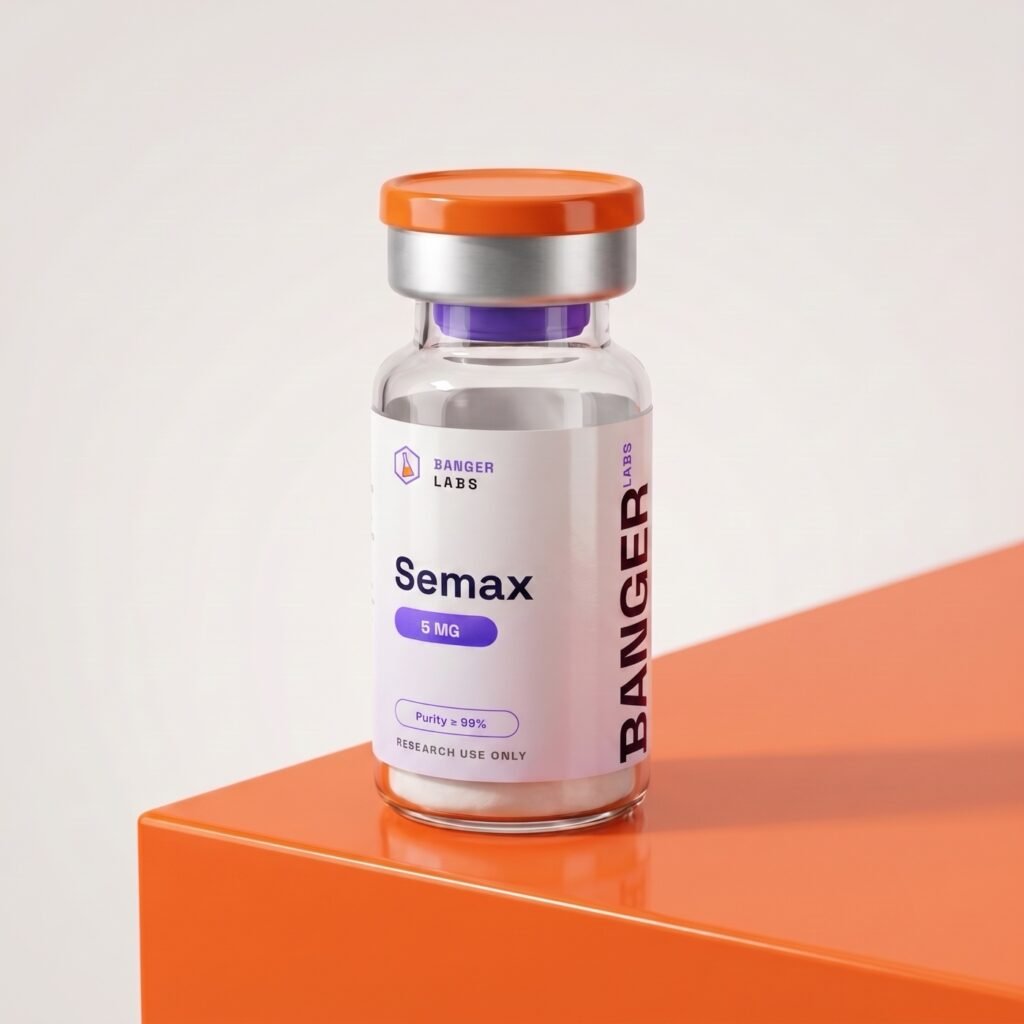
 For Research Use Only
Semax
Semax — research-grade peptide. ≥ 99% purity (HPLC), Certificate of Analysis with every batch. For laboratory research use only.
 + 1 Free 3ml BAC Water
+ 2 Free 3ml BAC Water
+ 1 Free 3ml BAC Water
+ 2 Free 3ml BAC Water
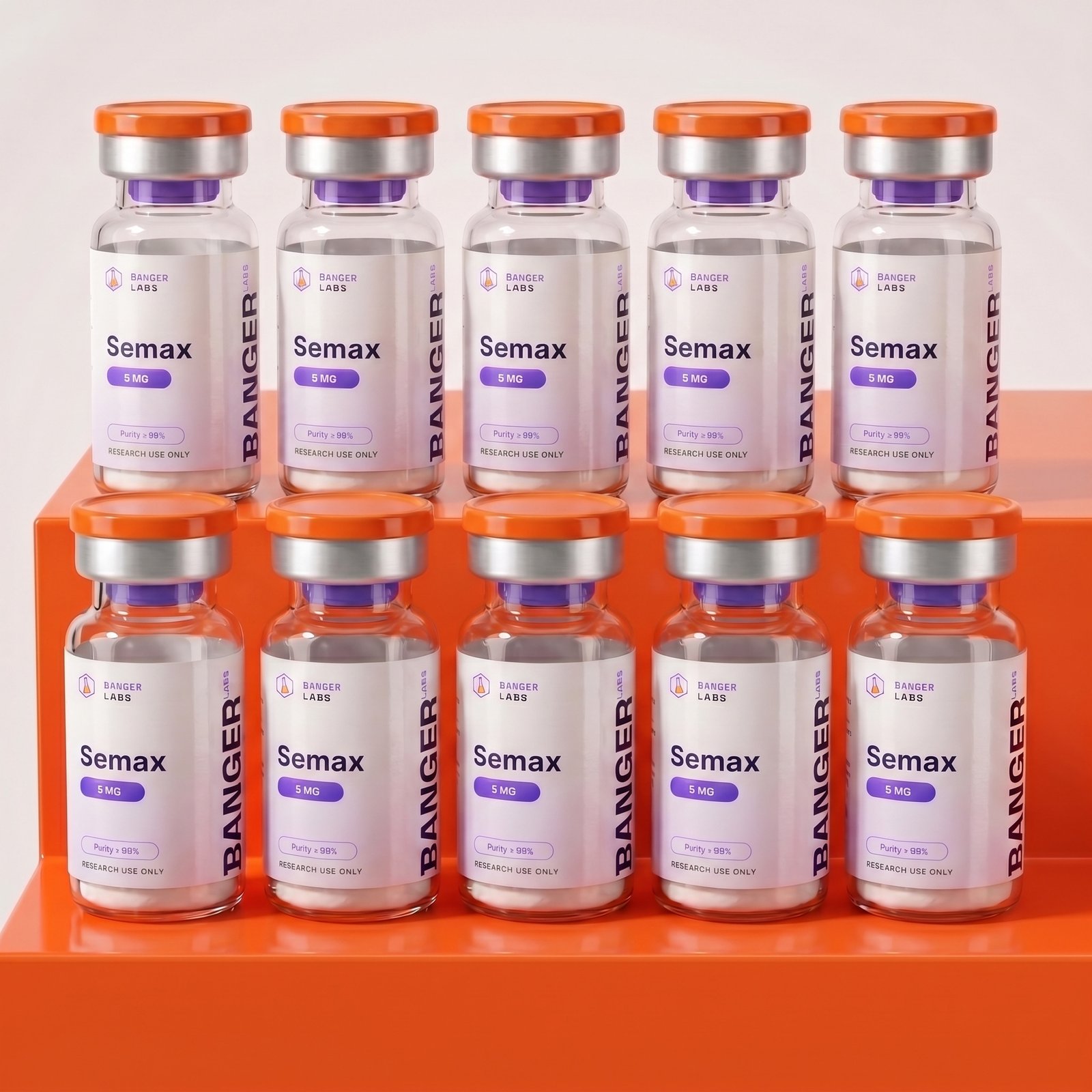 10 VIALS · 40% OFF
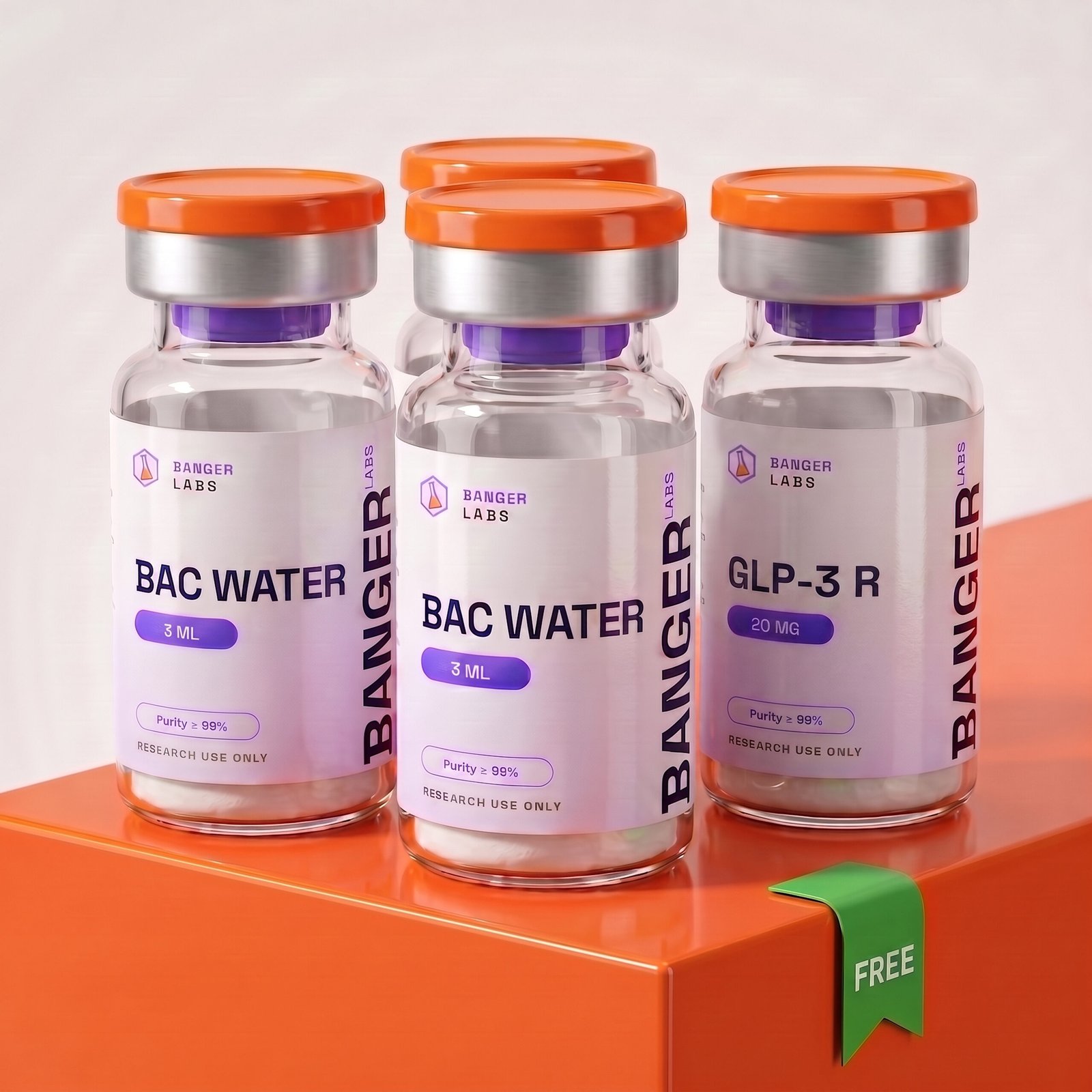 FREE
FREE- 3 Free 3ml BAC Water
- Free GLP-3 R 10mg vial
- Free Priority Shipping
Transparency
Certificate of Analysis
Every batch independently verified by third-party laboratories.
Semax COA
All Banger Labs products are independently tested by accredited third-party laboratories. Results are batch-specific and provided for research transparency only. This product is not approved for human use.
Lab Verified
Every Dose, Independently Tested
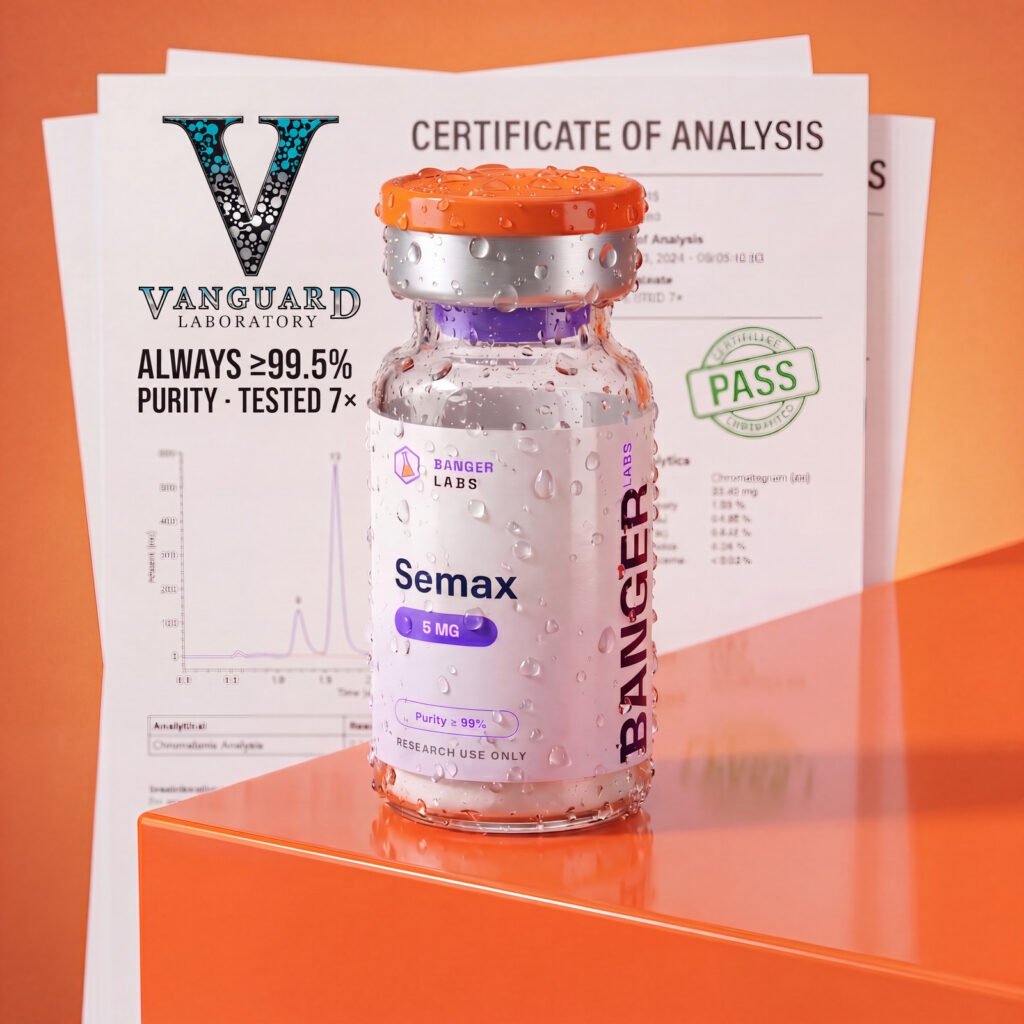
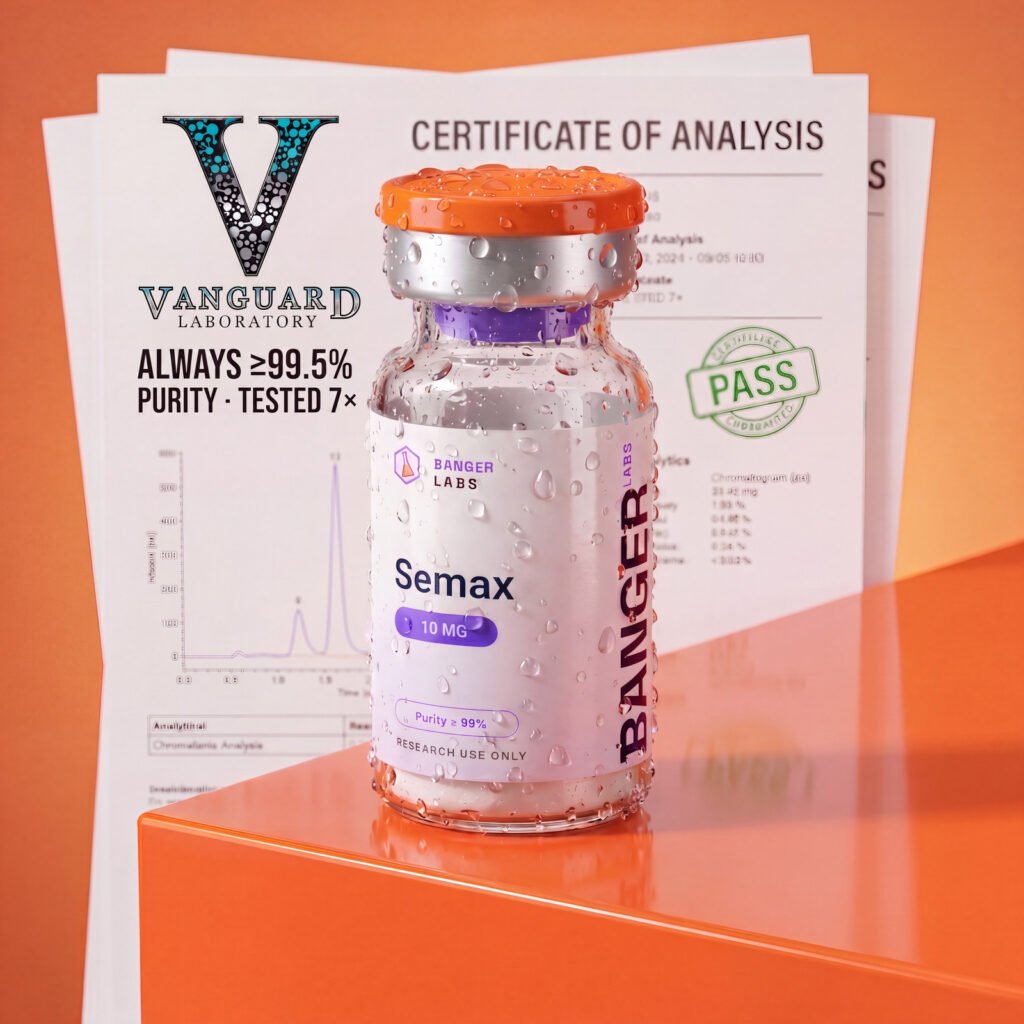
Verified by Vanguard Laboratory — always ≥99.5% purity, tested 7×. Swipe to view your selected dose.
Support
Frequently Asked Questions
Everything you need to know about this product and your order.
Research Overview Cited research summary, handling & references — tap to expand
Semax: A Research Compendium
What Semax Is
Semax is a synthetic heptapeptide (Met-Glu-His-Phe-Pro-Gly-Pro) based on the ACTH(4-10) fragment of adrenocorticotropic hormone, extended with a C-terminal Pro-Gly-Pro tail that confers resistance to enzymatic degradation while removing the hormonal corticotropic activity of the parent sequence. Developed in Russia, it is studied in the neuroscience literature primarily as a neuroprotective and neurotrophic peptide. Reviews describe its potential for correcting pathological impairments in disease models, including models relevant to neurodegeneration.[1] A recurring mechanistic theme is its ability to modulate the expression of neurotrophins such as BDNF and NGF.[5]
Areas Studied in the Research Literature
The themes below recur across the published Semax literature and are summarized for scientific context only.
Neuroprotection in Ischemia
In a rat cerebral ischemia-reperfusion model, brain protein-expression profiling was reported to confirm a protective effect of the ACTH(4-7)PGP peptide (Semax).[2] Related work examined how Semax and its fragment Pro-Gly-Pro activate transcription of neurotrophins and their receptor genes after cerebral ischemia.[3]
Neurotrophin Expression
Investigators compared the temporal dynamics of NGF and BDNF gene expression across rat hippocampus, frontal cortex and retina under Semax action.[5] Other studies looked at how Semax and its C-terminal PGP peptide affect neurotrophins and their receptors during incomplete global ischemia.[4]
Behavioral & Antistress Effects
Semax has been studied in behavioral paradigms, including attenuation of behavioral and neurochemical changes following early-life pharmacological exposure in rats.[6] Antidepressant-like and antistress effects of Semax have also been examined in a chronic unpredictable stress model.[7]
Exploratory Clinical Research
Semax has appeared in exploratory clinical reports, including work on its use at different stages of ischemic stroke in human patients.[8]
Metal Binding & Cytoprotection
Biochemical work characterized Semax as an ACTH(4-10) analogue with high affinity for copper(II) ions and a reported protective ability against metal-induced cell toxicity.[9]
Neurodegeneration Models
Review-level work has discussed the potential of Semax and a derivative for correcting pathological impairments in an animal model of Alzheimer's disease.[1]
Reconstitution, Handling & Storage (Research)
General laboratory handling conventions for lyophilized research peptides, provided for research context only and not as directions for use in humans or animals.
Reconstitution
Lyophilized peptide is typically dissolved with bacteriostatic or sterile water added slowly down the vial wall, then gently swirled until clear.
Handling
Peptides are generally kept cold during preparation and protected from light, oxidation and repeated temperature cycling.
Storage
Lyophilized material is commonly stored frozen; reconstituted aqueous solutions are usually refrigerated and aliquoted to limit freeze–thaw cycles.
Stability & Half-Life Notes
The C-terminal Pro-Gly-Pro extension of Semax was added to slow peptidase cleavage relative to the parent ACTH(4-10) fragment, which is one reason the peptide and its PGP fragment are studied together in the ischemia literature.[3] As with most small peptides, reconstituted material is most stable kept cold and protected from oxidation, and freeze–thaw cycling is generally minimized in research handling.
Research Use Only — Not For Human Use
This material is sold strictly for laboratory and research purposes. It is not a drug, supplement, or medical product, and nothing in this overview constitutes medical advice or a claim of therapeutic benefit. It is not intended to diagnose, treat, cure, or prevent any disease and is not for human or veterinary use. The studies referenced here are cited solely to describe the scientific literature.
References
- Radchenko AI, et al. The Potential of the Peptide Drug Semax and Its Derivative for Correcting Pathological Impairments in the Animal Model of Alzheimer's Disease. Acta Naturae. 2025. PMID: 41479572
- Sudarkina OY, et al. Brain Protein Expression Profile Confirms the Protective Effect of the ACTH(4-7)PGP Peptide (Semax) in a Rat Model of Cerebral Ischemia-Reperfusion. Int J Mol Sci. 2021. PMID: 34201112
- Dmitrieva VG, et al. Semax and Pro-Gly-Pro activate the transcription of neurotrophins and their receptor genes after cerebral ischemia. Cell Mol Neurobiol. 2010. PMID: 19633950
- Stavchanskiĭ VV, et al. The effect of semax and its C-end peptide PGP on expression of the neurotrophins and their receptors in the rat brain during incomplete global ischemia. Mol Biol (Mosk). 2011. PMID: 22295573
- Shadrina M, et al. Comparison of the temporary dynamics of NGF and BDNF gene expression in rat hippocampus, frontal cortex, and retina under Semax action. J Mol Neurosci. 2010. PMID: 19662538
- Glazova NY, et al. Semax, synthetic ACTH(4-10) analogue, attenuates behavioural and neurochemical alterations following early-life fluvoxamine exposure in white rats. Neuropeptides. 2021. PMID: 33418449
- Inozemtseva LS, et al. Antidepressant-like and antistress effects of the ACTH(4-10) synthetic analogs Semax and Melanotan II on male rats in a model of chronic unpredictable stress. Eur J Pharmacol. 2024. PMID: 39442746
- Gusev EI, et al. The efficacy of semax in the treatment of patients at different stages of ischemic stroke. Zh Nevrol Psikhiatr Im S S Korsakova. 2018. PMID: 29798983
- Tabbì G, et al. Semax, an ACTH4-10 peptide analog with high affinity for copper(II) ion and protective ability against metal induced cell toxicity. J Inorg Biochem. 2015. PMID: 25310602
Scientific References
Explore the published research literature on Semax. We link directly to independent, primary sources — we don't summarize or interpret findings. For research use only.
Links open external databases (pubmed.ncbi.nlm.nih.gov · clinicaltrials.gov). Banger Labs is not affiliated with these sources. For research use only — not medical advice.
Certificate of Analysis
Semax · ≥99.4% purity (HPLC)