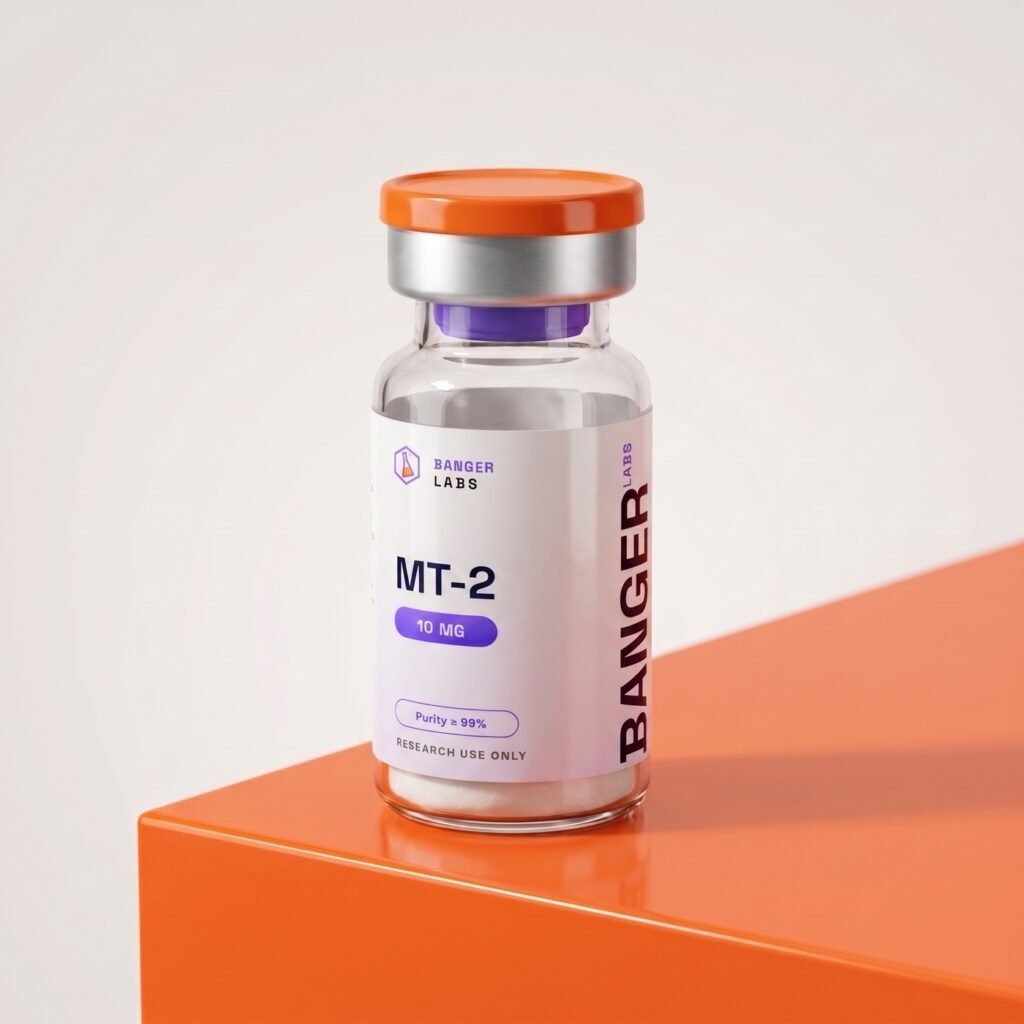
 For Research Use Only
MT-2
MT-2 — research-grade peptide. ≥ 99% purity (HPLC), Certificate of Analysis with every batch. For laboratory research use only.
 + 1 Free 3ml BAC Water
+ 2 Free 3ml BAC Water
+ 1 Free 3ml BAC Water
+ 2 Free 3ml BAC Water
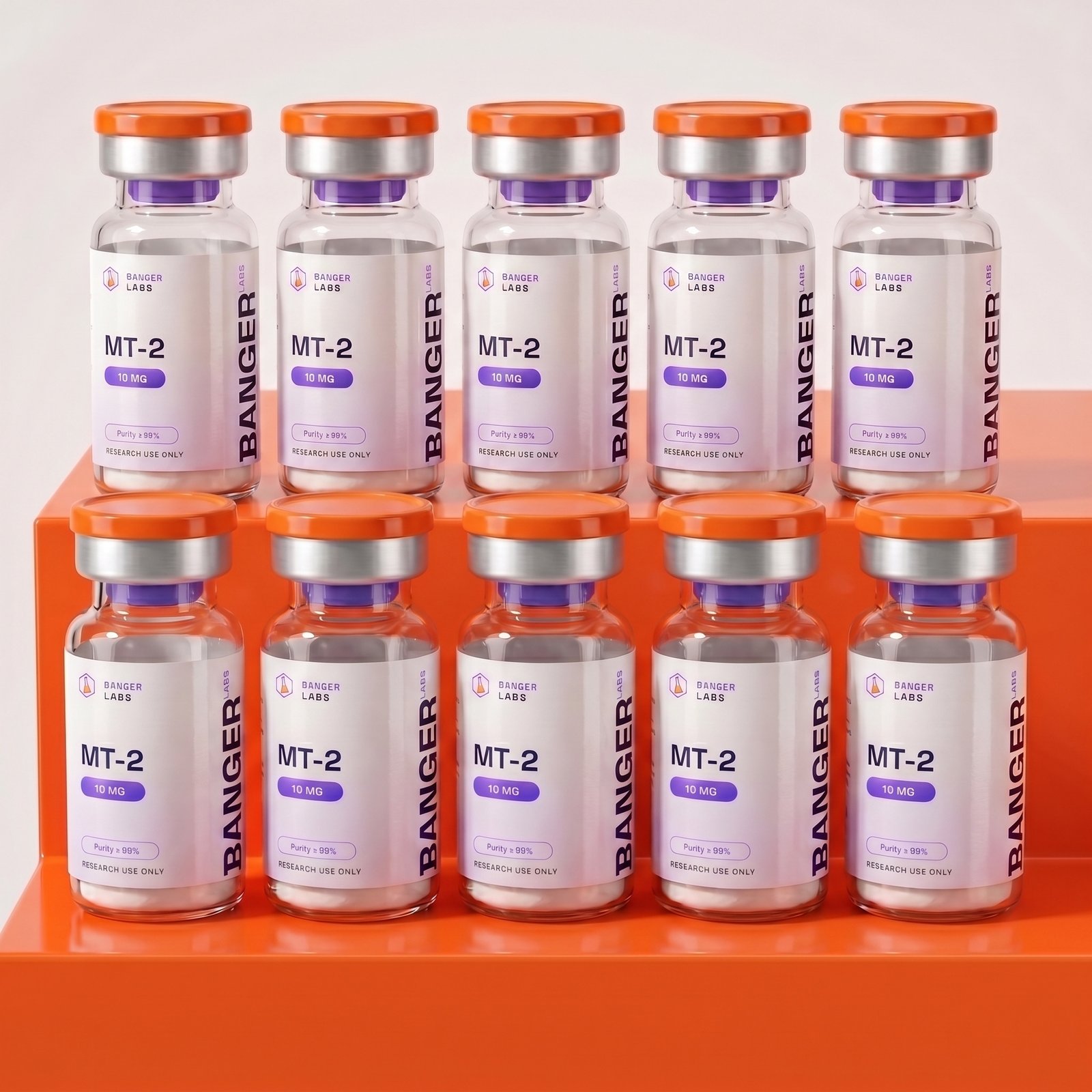 10 VIALS · 40% OFF
 FREE
FREE- 3 Free 3ml BAC Water
- Free GLP-3 R 10mg vial
- Free Priority Shipping
Transparency
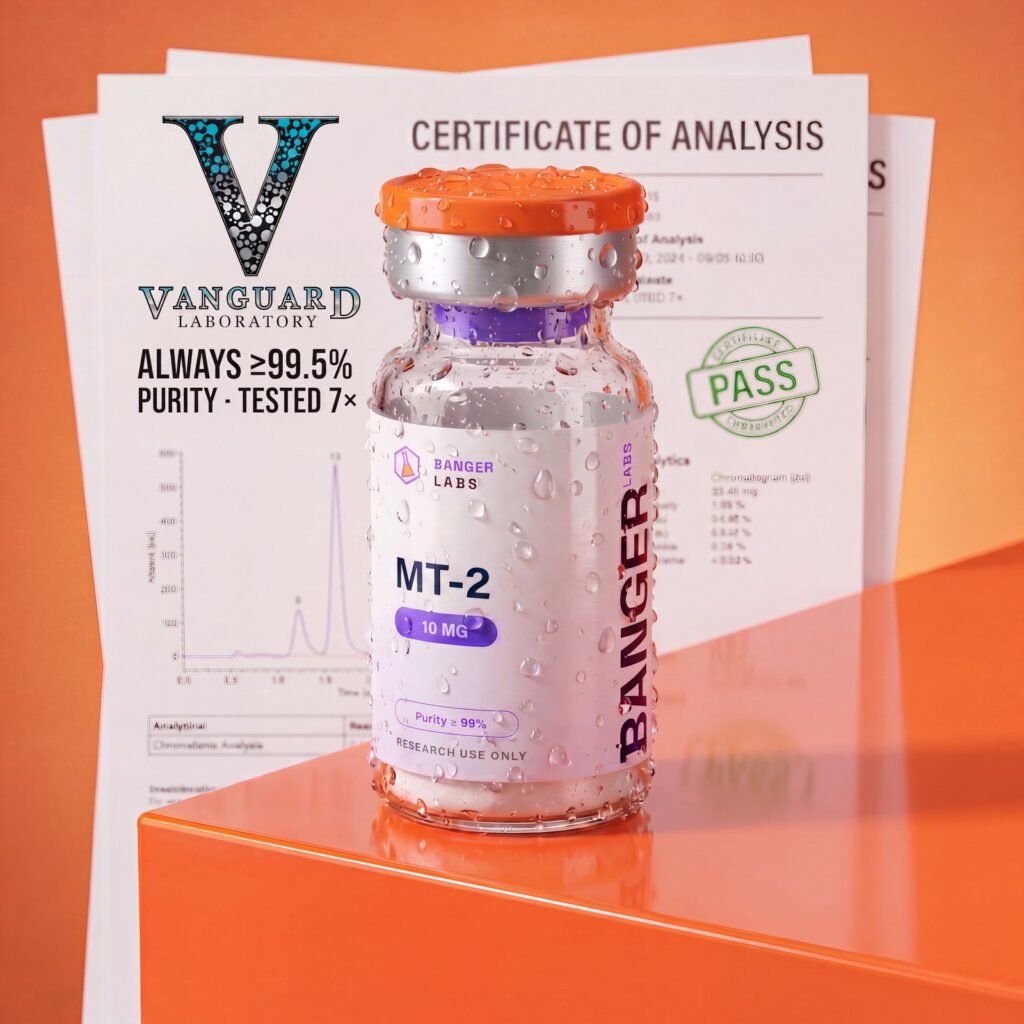
Certificate of Analysis
Every batch independently verified by third-party laboratories.
MT-2 COA
All Banger Labs products are independently tested by accredited third-party laboratories. Results are batch-specific and provided for research transparency only. This product is not approved for human use.
Lab Verified
Every Dose, Independently Tested
Verified by Vanguard Laboratory — always ≥99.5% purity, tested 7×.
Support
Frequently Asked Questions
Everything you need to know about this product and your order.
Research Overview Cited research summary, handling & references — tap to expand
MT-2: A Research Compendium
What MT-2 Is
MT-2 (Melanotan-II) is a synthetic cyclic peptide developed as a melanocortin-receptor agonist. It originated alongside Melanotan-I from research into melanogenic peptides — synthetic analogs of alpha-melanocyte-stimulating hormone (α-MSH) designed to engage the melanocortin receptor system. Where the linear analog Melanotan-I is relatively selective, the cyclic structure of Melanotan-II gives it broad agonist activity across several melanocortin receptor subtypes, which is precisely why it has been used so heavily as a pharmacological tool in receptor research.[1]
The relevant biology is the melanocortin receptor family — a group of five G-protein-coupled receptors (MC1R through MC5R) that respond to α-MSH and related melanocortin peptides and govern processes ranging from pigmentation (MC1R) to central energy-balance signaling (MC4R). Melanotan-II is characterized in the literature as a non-selective agonist that activates multiple members of this family, making it a standard probe for dissecting melanocortin pharmacology.[2][1]
Because of its broad receptor activity, MT-2 has appeared widely in medicinal-chemistry research aimed at understanding and refining melanocortin ligands. Investigators have used the Melanotan-II scaffold as a starting point for designing functionally selective agonists, applying chemical modifications to tease apart the contributions of individual receptor subtypes. This positions the compound as a research reference ligand within melanocortin pharmacology rather than as a finished agent.[5]
Banger Labs supplies MT-2 as a lyophilized (freeze-dried) powder intended strictly for in-vitro and laboratory research. The sections that follow summarize the published research literature for reference purposes only — they describe what investigators reported observing in laboratory and receptor-pharmacology settings, and they do not describe, recommend, or imply any use of this product in humans or animals. Nothing here addresses cosmetic, tanning, or any non-research application.
Areas Studied in the Research Literature
Research on MT-2 is concentrated in melanocortin-receptor pharmacology — receptor biology, ligand design, and the melanogenesis pathway. The summaries below report what investigators described observing in those specific settings, with each statement tied to a verified primary source. They are observational accounts of published research, not generalizable conclusions, and nothing here should be read as evidence of safety or benefit for any use of this product.
Melanocortin receptor biology
The foundation of MT-2 research is the melanocortin receptor system. Reviews of the melanocortin receptors describe the five-member GPCR family, their endogenous melanocortin ligands, and their distinct tissue distributions and signaling roles. Detailed work on the structure, function and regulation of these receptors provides the molecular framework within which a broad agonist like Melanotan-II is interpreted, since the compound's profile is defined by how it engages each receptor subtype.[2][3]
Melanotan peptides & melanogenesis
Melanotan-II was introduced as one of a pair of novel melanogenic peptides developed to activate the melanocortin pathway, and the original discovery-and-development literature describes both Melanotan-I and -II in this context. This work frames MT-2 as a synthetic α-MSH analog studied for activity within the melanogenesis system, and it is the historical anchor for essentially all subsequent research on the molecule.[1][4]
Ligand design & functional selectivity
A substantial strand of medicinal-chemistry research uses Melanotan-II as a scaffold for designing better-defined melanocortin ligands. One representative study applied a chemical-cyclization strategy to the Melanotan-II structure to discover multiple functionally selective human melanocortin-receptor agonists, illustrating how the broad-spectrum parent compound is engineered toward subtype selectivity. Broader reviews catalog the expanding landscape of melanocortin-receptor ligands beyond the natural melanocyte-stimulating hormones.[5][6]
Melanocortin pharmacology & drug research
MT-2 also features in the wider literature on melanocortin receptors as drug targets. Review articles trace the historical milestones, clinical studies and commercialization of melanocortin peptide therapeutics, and others survey the receptors as targets for novel drug development and discuss the multifaceted physiology they control. This places Melanotan-II within a large and active receptor-pharmacology research field.[4][7][8]
Reconstitution, Handling & Storage (Research)
The following notes describe general laboratory handling and storage practices for short lyophilized research peptides such as this melanocortin agonist. They are provided so qualified researchers can work accurately and reproducibly at the bench and help preserve the integrity of the material between experiments. They are general laboratory-practice notes only — not protocols, dosing guidance, or instructions for administration to humans or animals — and should always be read alongside the lot-specific Certificate of Analysis.
On arrival & inspection
Lyophilized MT-2 ships as a dry powder or thin film at the base of a sealed vial. On receipt, inspect the vial for an intact seal, confirm the label matches your order, and verify the lot number against its Certificate of Analysis. The dry, sealed powder is the most stable form of the peptide, so it is best left unopened and cold until you are ready to use it.
Reconstitution for research
For laboratory work, lyophilized peptides are typically brought into solution using a suitable sterile diluent. The diluent is added slowly down the inner wall of the vial rather than directly onto the pellet, which helps avoid foaming and mechanical shearing. The vial is then left to dissolve and swirled gently — never shaken vigorously, as agitation can denature peptides. Final concentration is calculated from the labeled peptide mass on the COA and the exact diluent volume added.
Storage — dry powder
Before reconstitution, the lyophilized peptide is generally stored cold and kept away from light, humidity, and repeated temperature swings. For short working periods refrigeration may be adequate, while longer-term storage of the dry powder is commonly at −20 °C or colder. Always defer to the storage conditions and shelf-life stated on the lot-specific Certificate of Analysis, which reflect the actual material in hand.
Storage — reconstituted solution
Once dissolved, peptides are markedly less stable than the dry powder and have a finite working life. Reconstituted solution is generally kept refrigerated (around 2–8 °C), protected from light, and used within a limited window. Repeated freeze–thaw cycles are a common cause of peptide degradation, so aliquoting into single-use portions before any freezing is standard laboratory practice. Discard any solution showing cloudiness, particulates, or color change.
Stability & Half-Life Notes
A relevant structural point in the MT-2 literature is that the molecule is a cyclic peptide. Cyclization is a well-recognized strategy in peptide chemistry for improving resistance to enzymatic degradation, and the cyclic Melanotan-II scaffold is repeatedly used in ligand-design research partly because of this favorable structural character. As with peptides in general, however, the dry lyophilized powder remains the stable reference form while solution is comparatively fragile.[5]
Formal pharmacokinetic parameters for MT-2 are not presented here as a single fixed figure, because reported values depend on the formulation, route, and assay used, and the published research focuses on receptor pharmacology and ligand design rather than on definitive human pharmacokinetics. Bench handling should follow the standard dry-versus-solution stability principle and the cited literature relevant to a given experiment.
Researchers should treat the discussion above as background context drawn from the cited primary studies, and should rely on the lot-specific Certificate of Analysis for the exact material in hand when planning any in-vitro or laboratory work. The COA, not this overview, is the authoritative document for the purity, identity, and recommended storage of the vial you have received.
Research Use Only — Not For Human Use
MT-2 is sold strictly as a research chemical for in-vitro and laboratory investigation by qualified professionals. It is not a drug, dietary supplement, cosmetic, food, or tanning product, and it is not intended to diagnose, treat, cure, or prevent any disease or to be used for any cosmetic purpose. Nothing on this page is medical advice or a recommendation for use in humans or animals; the research literature summarized above is provided solely as scientific reference. By purchasing, the buyer affirms they are a qualified researcher and accept full responsibility for compliant, lawful handling, storage, and disposal.
References
- Hadley ME, et al. Discovery and development of novel melanogenic drugs. Melanotan-I and -II. Pharm Biotechnol. 1998. PMID: 9760697
- Tao YX. Melanocortin receptors. Biochim Biophys Acta Mol Basis Dis. 2017. PMID: 28801103
- Yang Y. Structure, function and regulation of the melanocortin receptors. Eur J Pharmacol. 2011. PMID: 21208602
- Hadley ME, Dorr RT. Melanocortin peptide therapeutics: historical milestones, clinical studies and commercialization. Peptides. 2006. PMID: 16412534
- Tomassi S, et al. CLIPSing Melanotan-II to Discover Multiple Functionally Selective hMCR Agonists. J Med Chem. 2022. PMID: 35188390
- Yuan XC, Tao YX. Ligands for Melanocortin Receptors: Beyond Melanocyte-Stimulating Hormones and Adrenocorticotropin. Biomolecules. 2022. PMID: 36291616
- Wikberg JE. Melanocortin receptors: perspectives for novel drugs. Eur J Pharmacol. 1999. PMID: 10443584
- Laiho L, Murray JF. The Multifaceted Melanocortin Receptors. Endocrinology. 2022. PMID: 35700124
Scientific References
Explore the published research literature on MT-2. We link directly to independent, primary sources — we don't summarize or interpret findings. For research use only.
Links open external databases (pubmed.ncbi.nlm.nih.gov · clinicaltrials.gov). Banger Labs is not affiliated with these sources. For research use only — not medical advice.

Certificate of Analysis
MT-2 · ≥99.4% purity (HPLC)