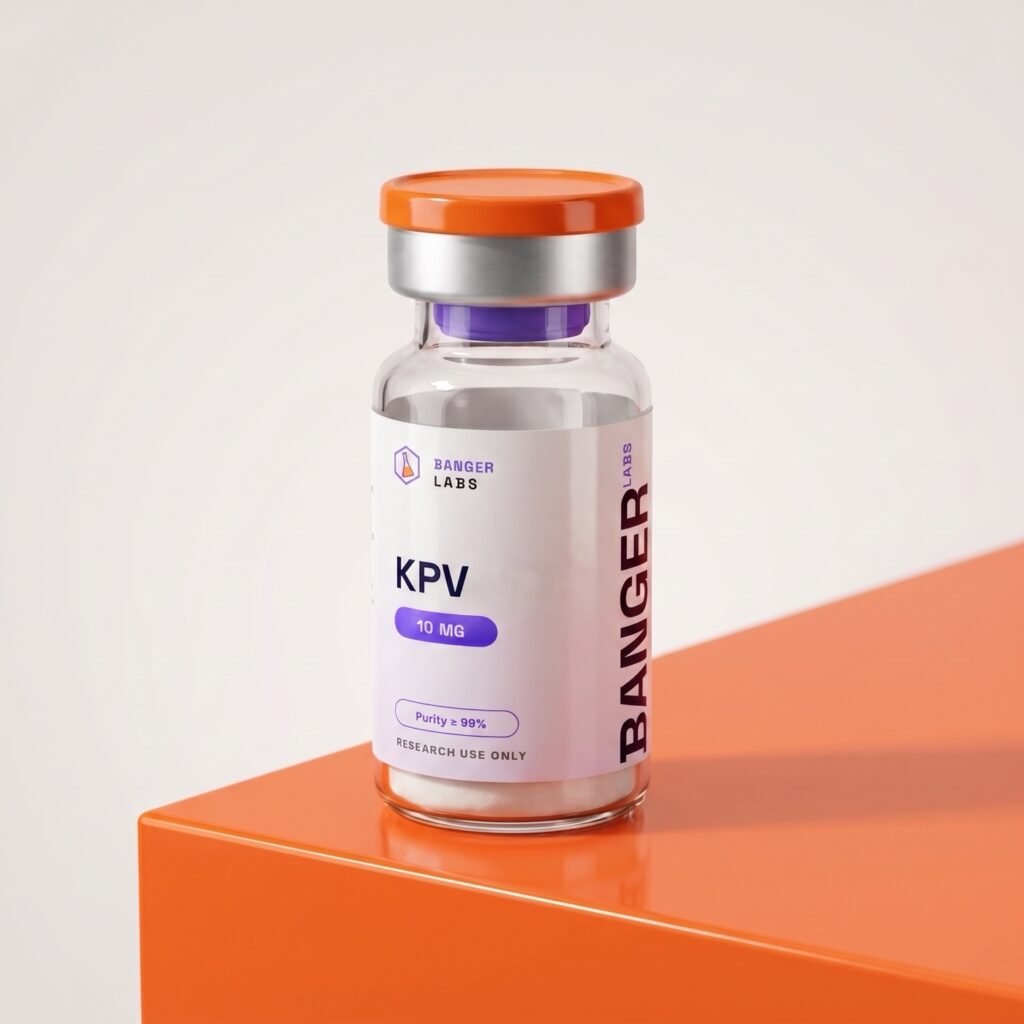
 For Research Use Only
KPV
KPV — research-grade peptide. ≥ 99% purity (HPLC), Certificate of Analysis with every batch. For laboratory research use only.
 + 1 Free 3ml BAC Water
+ 2 Free 3ml BAC Water
+ 1 Free 3ml BAC Water
+ 2 Free 3ml BAC Water
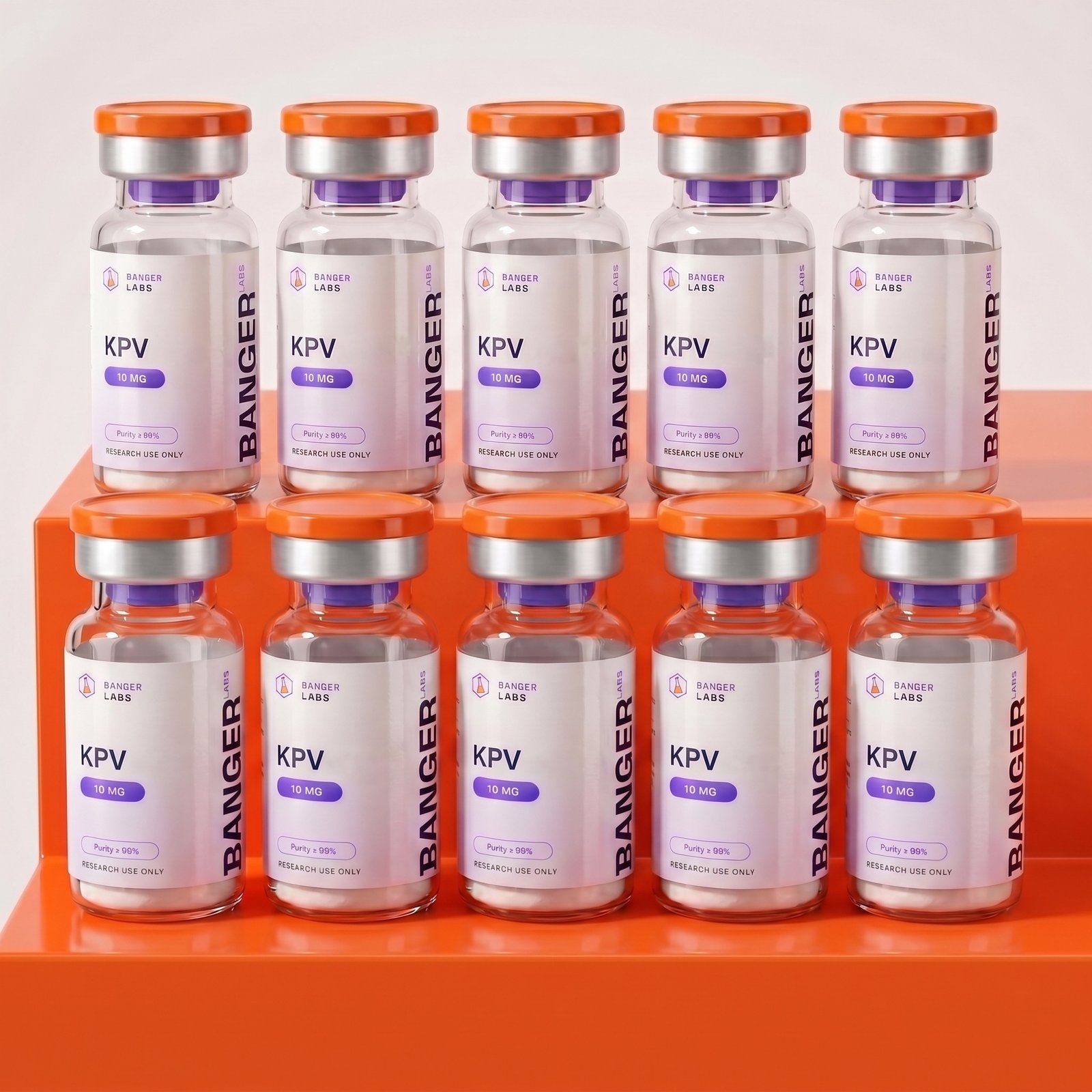 10 VIALS · 40% OFF
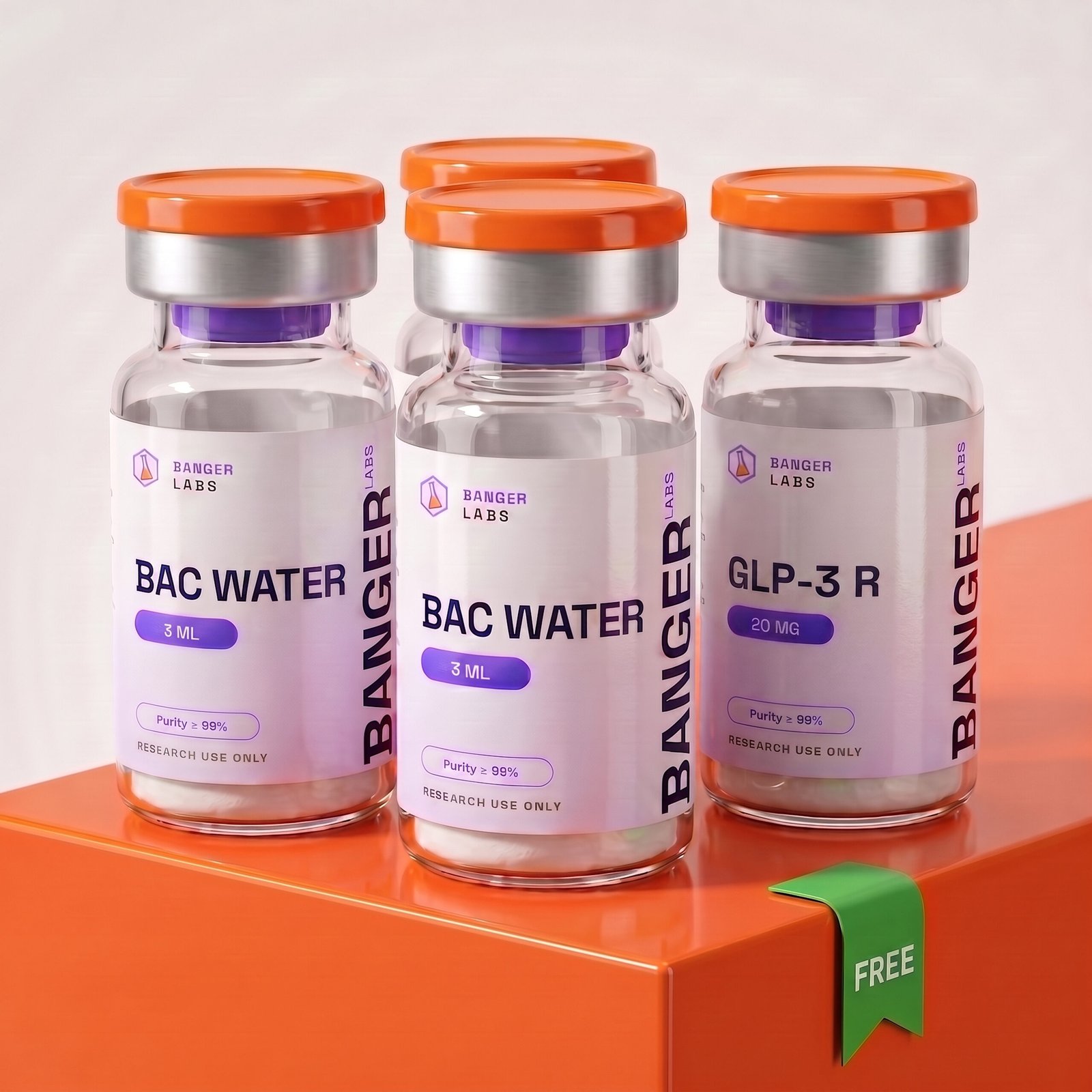 FREE
FREE- 3 Free 3ml BAC Water
- Free GLP-3 R 10mg vial
- Free Priority Shipping
Transparency
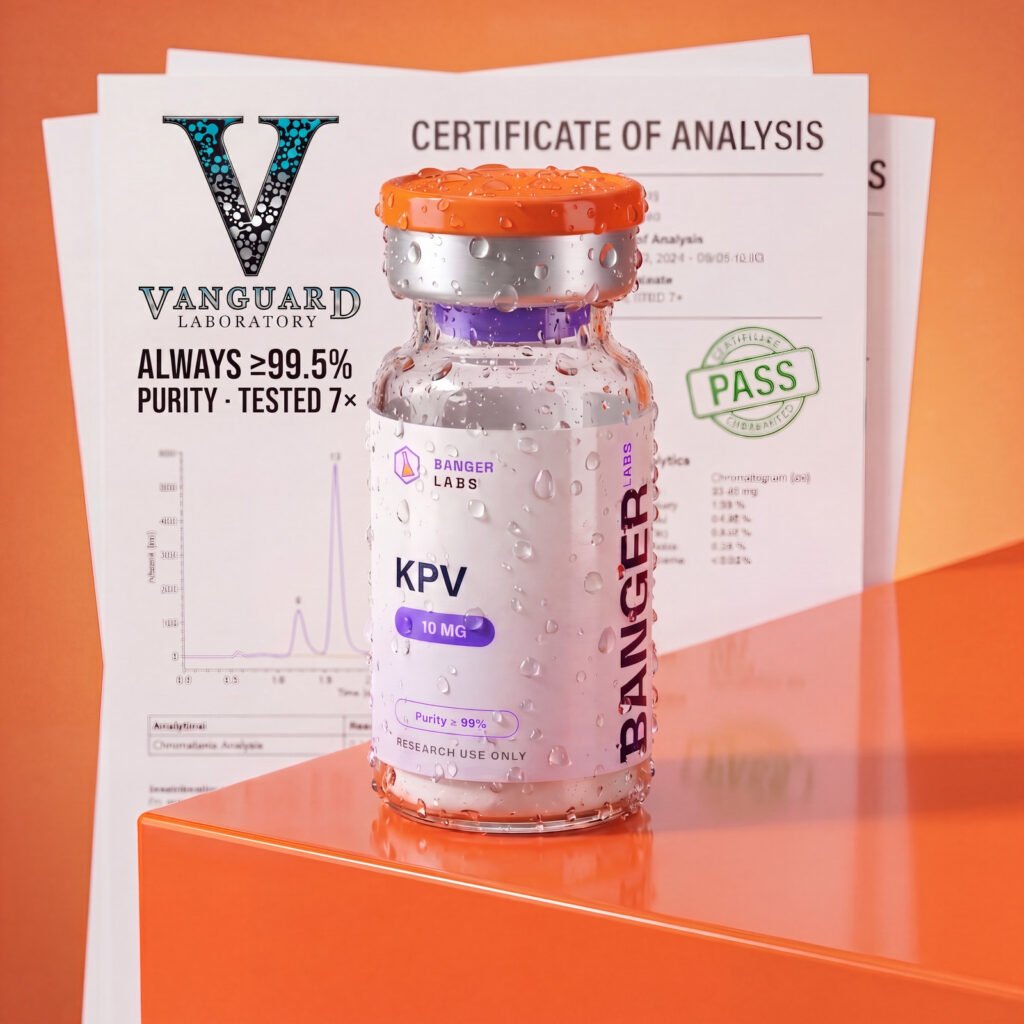
Certificate of Analysis
Every batch independently verified by third-party laboratories.
KPV COA
All Banger Labs products are independently tested by accredited third-party laboratories. Results are batch-specific and provided for research transparency only. This product is not approved for human use.
Lab Verified
Every Dose, Independently Tested
Verified by Vanguard Laboratory — always ≥99.5% purity, tested 7×.
Support
Frequently Asked Questions
Everything you need to know about this product and your order.
Research Overview Cited research summary, handling & references — tap to expand
KPV: A Research Compendium
What KPV Is
KPV is a tripeptide composed of the amino acids lysine, proline, and valine, corresponding to the C-terminal sequence (residues 11–13) of α-melanocyte-stimulating hormone (α-MSH). Because it represents the terminal fragment of α-MSH, KPV is studied within the broader melanocortin-peptide literature, where α-MSH and its related tripeptides have been characterized for their biochemistry and reported activity in cell and animal models.[1] In the research setting, KPV is handled strictly as a laboratory reference material for in vitro and preclinical investigation. The summaries below describe directions explored in peer-reviewed publications and are not statements about outcomes in humans.
Areas Studied in the Research Literature
The themes below recur across the published KPV and α-MSH(11–13) literature. They are provided to orient researchers and imply no clinical benefit, safety, or efficacy in any species.
Melanocortin Pharmacophore
KPV is studied as the terminal sequence of α-MSH, and reviews place it among related tripeptides examined for anti-inflammatory and protective effects in vitro and in vivo.[1]
Intestinal Inflammation Models
KPV has been investigated in murine models of inflammatory bowel disease, where it has been reported to carry anti-inflammatory potential in preclinical work.[2]
Targeted Oral Delivery
Researchers have explored orally targeted delivery of KPV via functionalized nanoparticles in colitis models, a delivery-focused line of investigation.[3] Hydrogel formulations stabilizing the tripeptide have likewise been studied in experimental ulcerative colitis.[4]
Receptor Mechanism Studies
Mechanistic work in human bronchial epithelial cells has examined how KPV acts, including a proposed role for MC3R agonism in modulating inflammation cues.[5]
Keratinocyte & Skin Cell Signaling
Signaling studies in human keratinocytes have compared α-MSH, the MSH 11–13 (KPV) fragment, and ACTH, contributing to the skin-cell literature on this peptide.[6]
Ocular Surface Models
The C-terminal tripeptide α-MSH(11–13) has been examined in corneal epithelial wound-healing models, including study of a nitric-oxide-related mechanism.[7]
Neuroinflammation Models
In an experimental traumatic brain injury model, single administration of α-MSH(11–13) was studied for effects on inflammation and apoptosis markers in mice.[8]
Reconstitution, Handling & Storage (Research)
The following describes generally accepted laboratory handling practices for lyophilized research peptides. It is general technical guidance for trained personnel and is not a protocol for any use in humans or animals.
Before Opening
Lyophilized material is typically kept sealed and cold until use; equilibrating a sealed vial toward room temperature before opening helps limit condensation onto the powder.
Reconstitution
Research peptides are commonly reconstituted with a suitable sterile diluent added slowly down the vial wall, swirling gently rather than shaking to avoid mechanical and foaming stress on the peptide.
Storage After Reconstitution
Solutions are generally stored refrigerated and protected from light, with handling minimized; aliquoting reduces repeated temperature cycling of a working stock.
Freeze–Thaw
Repeated freeze–thaw cycles are widely regarded as a degradation risk for peptide solutions, so single-use aliquots are a common practice for longer-term storage.
Stability & Half-Life Notes
As a very small tripeptide, KPV is generally treated as susceptible to enzymatic and physical degradation in solution, which underlies the standard emphasis on cold storage, protection from light, and avoidance of repeated freeze–thaw cycles. Much of the published delivery research is motivated by the practical challenge of stabilizing such short peptides. Specific stability and clearance characteristics depend on formulation and experimental conditions and should be assessed empirically for any given preparation.
Research Use Only — Not For Human Use
This product is sold strictly as a research-use-only (RUO) reference material intended for in vitro experimentation and laboratory study by qualified professionals. It is not a drug, dietary supplement, cosmetic, or food, and it is not intended to diagnose, treat, cure, or prevent any disease or condition. It is not for human or veterinary use and must not be administered to humans or animals. The summaries above describe published scientific investigation only and make no claim of safety or efficacy. Purchasers are responsible for handling, storing, and disposing of this material in accordance with all applicable laws, regulations, and institutional policies.
References
- Brzoska T, et al. Alpha-melanocyte-stimulating hormone and related tripeptides: biochemistry, antiinflammatory and protective effects in vitro and in vivo, and future perspectives for the treatment of immune-mediated inflammatory diseases. Endocr Rev. 2008. PMID: 18612139
- Kannengiesser K, et al. Melanocortin-derived tripeptide KPV has anti-inflammatory potential in murine models of inflammatory bowel disease. Inflamm Bowel Dis. 2008. PMID: 18092346
- Xiao B, et al. Orally Targeted Delivery of Tripeptide KPV via Hyaluronic Acid-Functionalized Nanoparticles Efficiently Alleviates Ulcerative Colitis. Mol Ther. 2017. PMID: 28143741
- Sun J, et al. Self-Cross-Linked Hydrogel of Cysteamine-Grafted γ-Polyglutamic Acid Stabilized Tripeptide KPV for Alleviating TNBS-Induced Ulcerative Colitis in Rats. ACS Biomater Sci Eng. 2021. PMID: 34547895
- Land SC, et al. Inhibition of cellular and systemic inflammation cues in human bronchial epithelial cells by melanocortin-related peptides: mechanism of KPV action and a role for MC3R agonists. Int J Physiol Pathophysiol Pharmacol. 2012. PMID: 22837805
- Elliott RJ, et al. alpha-Melanocyte-stimulating hormone, MSH 11-13 KPV and adrenocorticotropic hormone signalling in human keratinocyte cells. J Invest Dermatol. 2004. PMID: 15102092
- Bonfiglio V, et al. Effects of the COOH-terminal tripeptide alpha-MSH(11-13) on corneal epithelial wound healing: role of nitric oxide. Exp Eye Res. 2006. PMID: 16965771
- Schaible EV, et al. Single administration of tripeptide α-MSH(11-13) attenuates brain damage by reduced inflammation and apoptosis after experimental traumatic brain injury in mice. PLoS One. 2013. PMID: 23940690
Scientific References
Explore the published research literature on KPV. We link directly to independent, primary sources — we don't summarize or interpret findings. For research use only.
Links open external databases (pubmed.ncbi.nlm.nih.gov · clinicaltrials.gov). Banger Labs is not affiliated with these sources. For research use only — not medical advice.
Certificate of Analysis
KPV · ≥99.4% purity (HPLC)