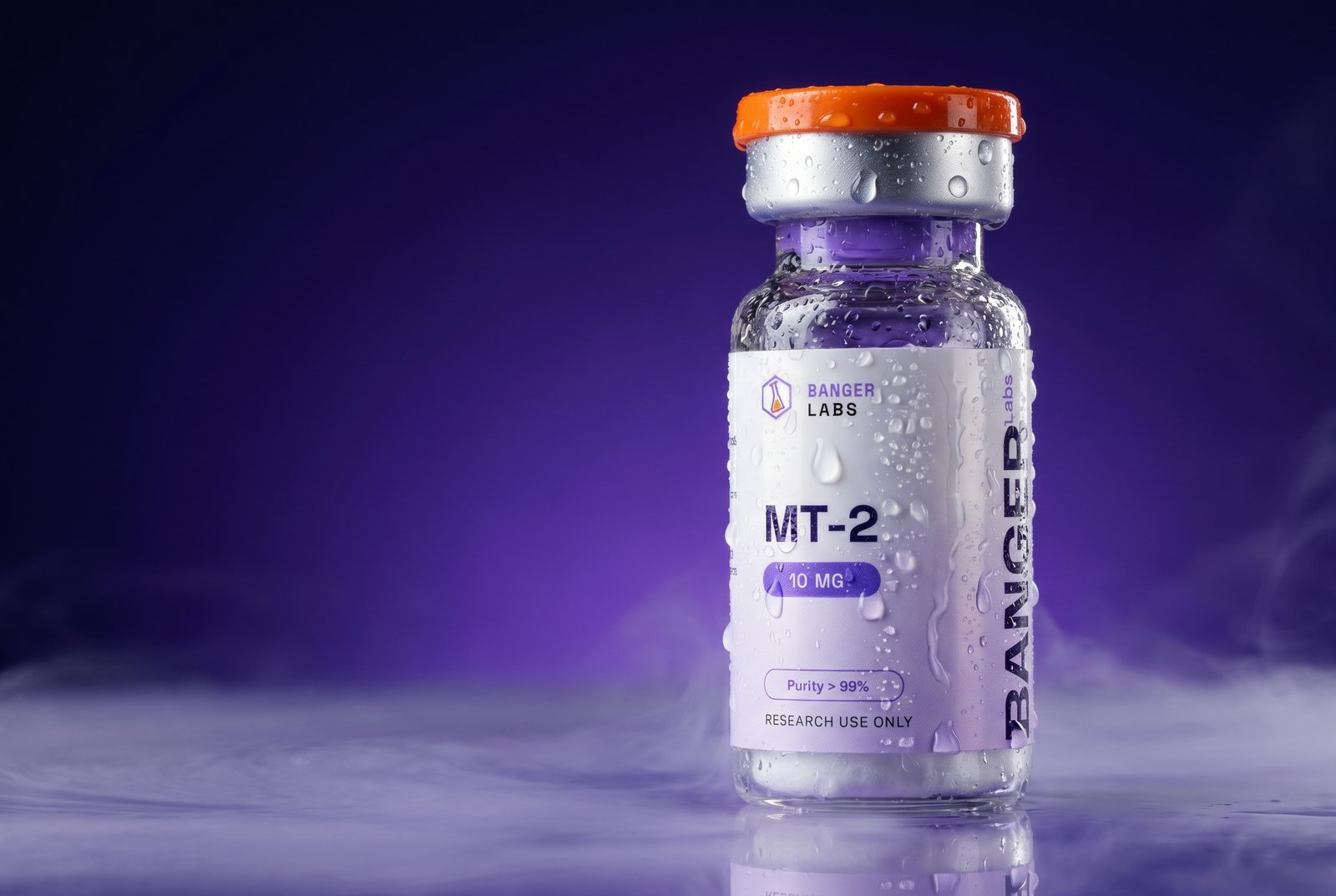
PT-141, Kisspeptin-10, and Gonadorelin are frequently grouped together because all three appear in literature touching sexual behavior and reproductive physiology — but they are mechanistically distinct molecules acting at different control points. PT-141 (bremelanotide) is a melanocortin receptor agonist that works centrally in the brain; Kisspeptin-10 is an upstream neuropeptide signal that gates the entire reproductive (hypothalamic-pituitary-gonadal, or HPG) axis; and Gonadorelin is synthetic gonadotropin-releasing hormone (GnRH) that acts one step downstream on the pituitary. This guide is written for research use only — not for human consumption and exists to help researchers cleanly distinguish what each compound does, what the preclinical and clinical literature has actually examined, and how their handling and safety profiles differ.
Three different control points, one axis
The single most useful thing to understand about these three peptides is that they intervene at three separate levels of physiology. Confusing them is common, but their mechanisms barely overlap. This article is intended strictly for laboratory and educational reference; none of the descriptions below are dosing guidance or therapeutic recommendations.
- PT-141 (bremelanotide) — acts on the melanocortin system, primarily melanocortin-4 (MC4R) and MC3R receptors in the central nervous system. It is *not* a sex hormone and does not act on the HPG axis at all.
- Kisspeptin-10 — acts at the top of the HPG axis, stimulating GnRH neurons in the hypothalamus via the KISS1R (GPR54) receptor. It is the upstream gatekeeper of reproductive signaling.
- Gonadorelin — is synthetic GnRH itself, acting one level down on the anterior pituitary to trigger release of luteinizing hormone (LH) and follicle-stimulating hormone (FSH).
PT-141 (bremelanotide): the melanocortin agonist
PT-141 is a cyclic heptapeptide derived from the melanocortin peptide melanotan II. Unlike the other two peptides on this page, it has nothing to do with GnRH or gonadotropins. Its documented activity in the research literature is as an agonist at melanocortin receptors — particularly MC4R, which is densely expressed in central nervous system regions associated with sexual arousal and appetite regulation.
What the literature has examined
In animal and clinical research, melanocortin pathway activation has been studied in the context of sexual-behavior signaling that originates centrally in the brain rather than through changes in circulating sex hormones. This is a key mechanistic distinction from Kisspeptin-10 and Gonadorelin, which act through the endocrine HPG cascade. Bremelanotide has been the subject of formal clinical investigation, and reported research observations include transient effects on blood pressure and skin pigmentation consistent with broad melanocortin receptor engagement (PT-141 is structurally related to the tanning peptide Melanotan II).
Kisspeptin-10: the upstream gatekeeper
Kisspeptin-10 is a 10-amino-acid fragment of the longer kisspeptin peptide encoded by the KISS1 gene. In the reproductive neuroendocrine literature it is recognized as a master regulator of the HPG axis: kisspeptin signaling through the KISS1R/GPR54 receptor is required to drive the GnRH neurons that initiate the entire reproductive cascade. Loss-of-function in this system is associated with failure of pubertal onset in the genetic literature, which established kisspeptin’s gatekeeper role.
Why researchers distinguish it from Gonadorelin
Kisspeptin acts *one step above* GnRH. Where Gonadorelin substitutes for the GnRH signal directly at the pituitary, Kisspeptin-10 stimulates the body’s own GnRH neurons in the hypothalamus. A frequently noted feature in preclinical and clinical research is that kisspeptin tends to evoke a more physiologic, pulsatile pattern of downstream GnRH/LH secretion, because it works through the native neuronal circuitry rather than bypassing it.
- Receptor: KISS1R (GPR54)
- Level of action: hypothalamus (stimulates endogenous GnRH neurons)
- Downstream effect studied: GnRH release → LH/FSH → gonadal steroid signaling
- Notable research context: pubertal onset, HPG-axis activation studies
Gonadorelin: synthetic GnRH at the pituitary
Gonadorelin is a synthetic decapeptide identical to native gonadotropin-releasing hormone (GnRH). It acts directly on GnRH receptors of the anterior pituitary to stimulate secretion of LH and FSH. Because it is the natural hormone itself, it occupies the level of the axis immediately below kisspeptin.
Pulsatile vs. continuous signaling
One of the best-established findings in GnRH pharmacology is that the *pattern* of receptor stimulation matters profoundly. Pulsatile GnRH receptor stimulation drives gonadotropin release, whereas continuous stimulation leads to receptor desensitization and downregulation — the principle behind the entire class of long-acting GnRH agonists used as suppressors. This biphasic behavior is a defining property researchers must account for when interpreting Gonadorelin studies.
Gonadorelin is mechanistically distinct from hCG, which is sometimes grouped alongside it. hCG acts even further downstream, mimicking LH at the gonadal LH receptor rather than acting on the pituitary. Researchers comparing HPG-axis tools should be precise about which level each compound targets — these and related compounds are organized in the specialty compounds category.
Side-by-side comparison
The table below summarizes the core mechanistic distinctions. All entries describe published research pharmacology and are provided for laboratory reference only.
| Feature | PT-141 | Kisspeptin-10 | Gonadorelin |
|---|---|---|---|
| Class | Melanocortin agonist (heptapeptide) | Kisspeptin fragment (10-mer) | Synthetic GnRH (decapeptide) |
| Primary receptor | MC4R / MC3R (melanocortin) | KISS1R / GPR54 | GnRH receptor (pituitary) |
| Site of action | Central nervous system | Hypothalamus (upstream) | Anterior pituitary |
| Axis | Melanocortin (NOT HPG) | Top of HPG axis | Mid HPG axis |
| Downstream signal studied | Central sexual-behavior pathways | Endogenous GnRH → LH/FSH | Direct LH/FSH release |
| Acts via sex hormones? | No | Yes (indirectly, native circuitry) | Yes (directly) |
| Signaling-pattern note | Receptor engagement | Tends toward physiologic pulsatility | Pulsatile drives; continuous desensitizes |
Handling, stability, and research safety notes
All three are lyophilized peptides reconstituted with bacteriostatic water for laboratory work and stored cold; see the general reconstitution and storage guide for handling principles. Peptides degrade with repeated freeze-thaw cycles and prolonged room-temperature exposure, so aliquoting and consistent cold storage preserve integrity for research reproducibility.
Purity and verification
Because the differences between these compounds are functional and receptor-specific, identity and purity matter for valid research. Every batch should be backed by a certificate of analysis — review the how to read a peptide COA guide to interpret HPLC purity and mass-spec identity data before using any material in an experimental model.
Common questions
Do PT-141, Kisspeptin-10, and Gonadorelin all do the same thing?
No. PT-141 acts on the melanocortin system in the brain and is not part of the reproductive hormone axis at all. Kisspeptin-10 acts at the very top of the HPG axis, stimulating the hypothalamus’s own GnRH neurons. Gonadorelin is synthetic GnRH and acts one step lower, on the pituitary. They are grouped together only because all three appear in reproductive and sexual-behavior research literature.
What is the difference between Kisspeptin-10 and Gonadorelin if both affect the HPG axis?
Kisspeptin-10 acts upstream, in the hypothalamus, stimulating the body’s native GnRH neurons via the KISS1R/GPR54 receptor. Gonadorelin is GnRH itself and acts directly on the pituitary’s GnRH receptors. Research notes that kisspeptin tends to evoke a more physiologic, pulsatile downstream response because it works through native circuitry rather than bypassing it.
Why is the pulsatile-versus-continuous distinction important for Gonadorelin?
A well-established principle of GnRH pharmacology is that pulsatile receptor stimulation drives LH/FSH release, whereas continuous stimulation causes receptor desensitization and downregulation. This biphasic behavior is fundamental to interpreting any Gonadorelin or GnRH-agonist research and is one of the most robust findings in reproductive endocrinology.
Is PT-141 a hormone?
No. PT-141 (bremelanotide) is a melanocortin receptor agonist, structurally related to the tanning peptide melanotan II. It does not act through sex hormones or the HPG axis. Its documented research activity centers on central melanocortin (MC4R/MC3R) signaling, which is a separate pathway from the GnRH-based mechanisms of the other two peptides.
How should these peptides be stored for research?
All three are lyophilized and are typically reconstituted with bacteriostatic water, kept cold, and protected from repeated freeze-thaw cycles to preserve integrity. Aliquoting reduces degradation from repeated handling. Always confirm identity and purity against a certificate of analysis before experimental use.
Related research reading
References
- Pinilla L, Aguilar E, Dieguez C, Millar RP, Tena-Sempere M. Kisspeptins and reproduction: physiological roles and regulatory mechanisms. Physiological Reviews. 2012;92(3):1235-1316.
- Millar RP, Lu ZL, Pawson AJ, et al. Gonadotropin-releasing hormone receptors. Endocrine Reviews. 2004;25(2):235-275.
- Molinoff PB, Shadiack AM, Earle D, Diamond LE, Quon CY. PT-141: a melanocortin agonist for the treatment of sexual dysfunction. Annals of the New York Academy of Sciences. 2003;994:96-102.
- U.S. National Library of Medicine, PubChem — Gonadorelin and Bremelanotide compound records. https://pubchem.ncbi.nlm.nih.gov/
Banger Labs supplies materials for laboratory and research use only. Not for human consumption. Not intended to diagnose, treat, cure, or prevent any disease. Statements have not been evaluated by the FDA.
Shop research peptides
Research-grade, ≥ 99% HPLC standard, COA per batch:
- BPC-157 vs TB-500: Research Comparison →
- CJC-1295 vs Ipamorelin: Research Comparison →
- GHRP-2 vs GHRP-6 vs Ipamorelin vs Hexarelin: Growth-Hormone Secretagogue Comparison →
Browse the full Research Library →
For research use only. Not for human or veterinary use. Not a drug, food, or cosmetic.