By the Banger Labs Research Team · Updated June 2026
What is NAD+?
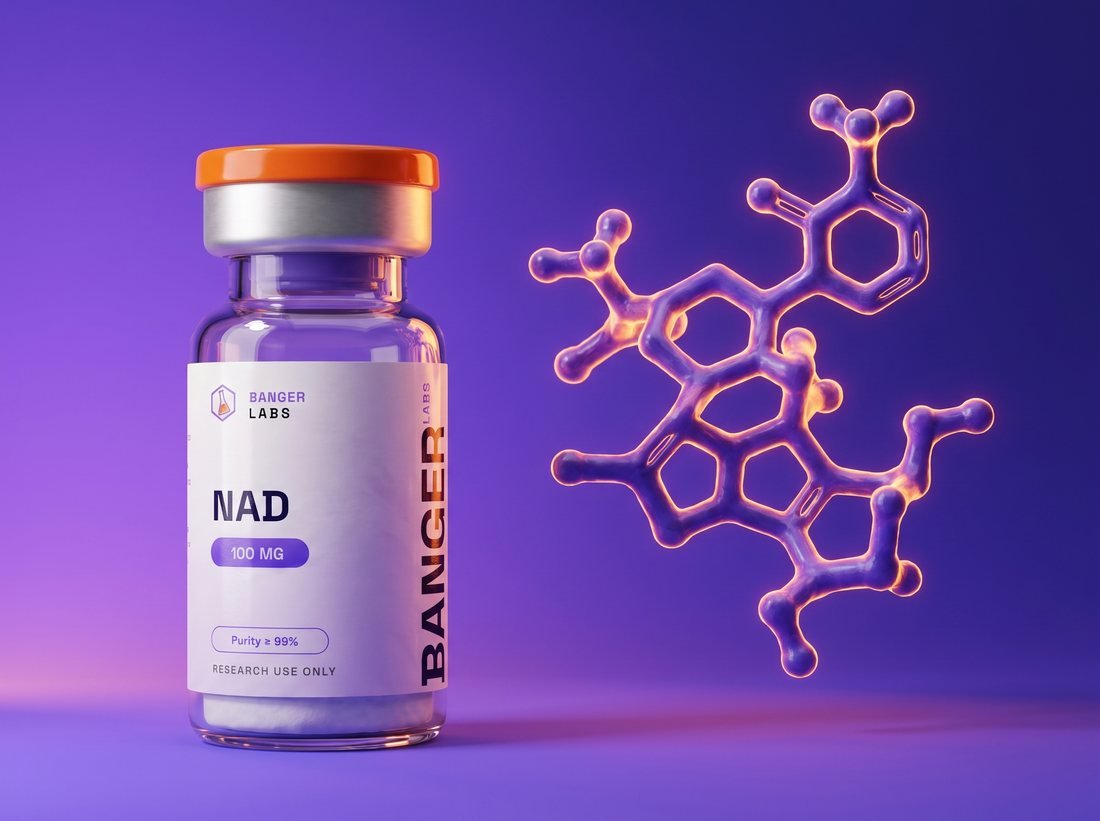
Nicotinamide adenine dinucleotide (NAD+) is a naturally occurring coenzyme composed of two nucleotides, one bearing an adenine base and the other a nicotinamide base, joined through their phosphate groups. It is not a peptide but a pyridine dinucleotide found in all living cells, existing in interconverting oxidized (NAD+) and reduced (NADH) forms. It is described here only as a research-use-only reference compound.
How NAD+ is studied
In the published research literature, NAD+ functions as an electron carrier in core metabolic redox reactions including glycolysis, the tricarboxylic acid cycle, oxidative phosphorylation, and fatty-acid beta-oxidation, cycling between NAD+ and NADH. It also serves as a consumed substrate (ADP-ribose donor) for non-redox enzymes such as sirtuins, poly(ADP-ribose) polymerases (PARPs), and CD38, which cleave NAD+ into nicotinamide and ADP-ribose. NAD+ is regenerated through de novo (tryptophan/kynurenine), Preiss-Handler, and salvage biosynthetic pathways, the latter recycling nicotinamide via NAMPT.
Research areas
- Studied as a redox cofactor in cellular energy-metabolism and mitochondrial research models
- Investigated in preclinical models of cellular aging and age-associated decline in tissue NAD+ levels
- Examined as a substrate in DNA-repair and PARP/sirtuin signaling research
- Researched in the context of chromatin remodeling, cellular senescence, and immune-cell function
- Used as a reference cofactor in in-vitro enzymology and biochemical assay development
These describe laboratory/preclinical research only. No therapeutic, medical, or efficacy claims are made.
NAD+ specifications
Handling & quality
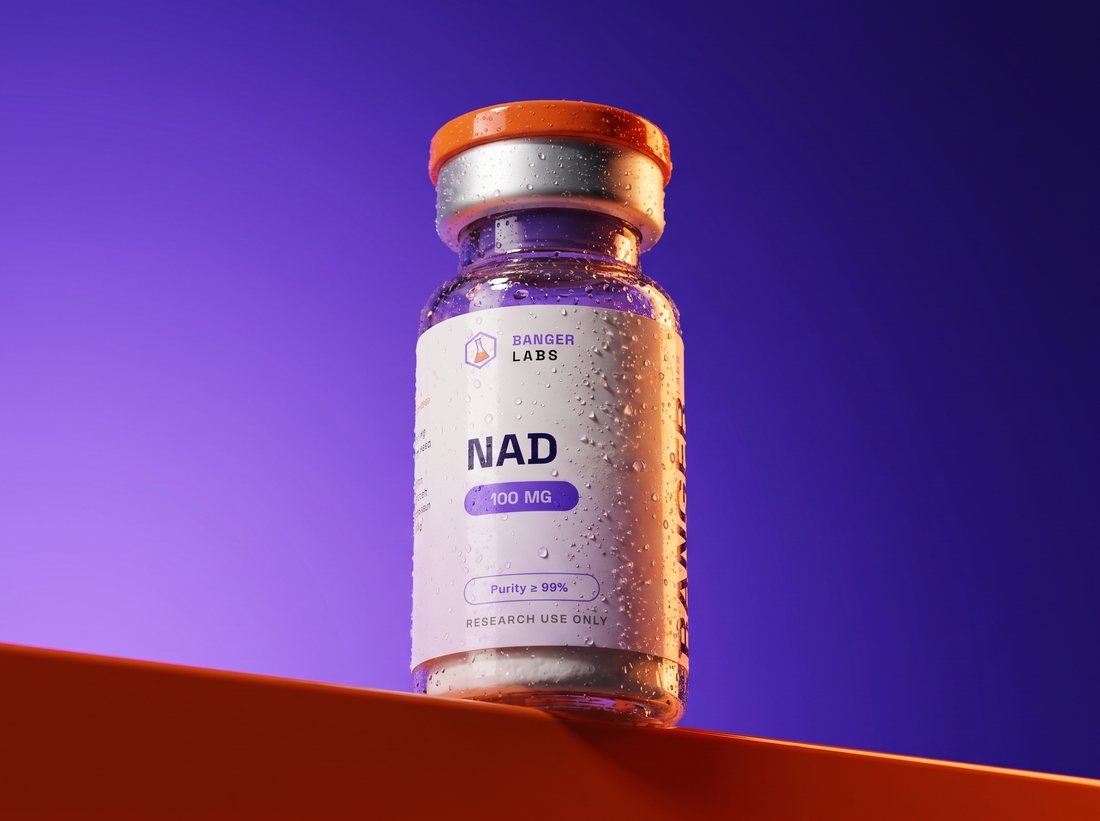
NAD+ is held to a ≥ 99% HPLC purity standard with a Certificate of Analysis available per batch. Reconstitute with bacteriostatic water and store refrigerated; handle strictly for research. See reconstitution & storage.
Frequently asked questions
What is NAD+?
Nicotinamide adenine dinucleotide (NAD+) is a naturally occurring coenzyme composed of two nucleotides, one bearing an adenine base and the other a nicotinamide base, joined through their phosphate groups. It is not a peptide but a pyridine dinucleotide found in all living cells, existing in interconverting oxidized (NAD+) and reduced (NADH) forms. It is described here only as a research-use-only reference compound.
Is NAD+ research use only?
Yes. NAD+ is supplied strictly for laboratory research — not for human or veterinary use, and not as a drug, food, or supplement.
Does Banger Labs provide a COA for NAD+?
Yes — a Certificate of Analysis (HPLC purity + mass-spec identity) is available per batch on request. See the COA Library.
References
- NAD+ metabolism and its roles in cellular processes during ageing — PMC / Nature Reviews Molecular Cell Biology
- Role of NAD+ in regulating cellular and metabolic signaling pathways — PMC / Molecular Metabolism
- Nicotinamide Adenine Dinucleotide Metabolism and Neurodegeneration — PMC / Antioxidants & Redox Signaling
- NAD+ metabolism, stemness, the immune response, and cancer — PMC / Signal Transduction and Targeted Therapy (Nature)
Sources are provided for scientific reference and describe laboratory/preclinical research; they do not constitute medical advice or efficacy claims.
Shop NAD+ & related research peptides
By the Banger Labs Research Team. For research use only. Not for human or veterinary use. Not a drug, food, or cosmetic. Educational information, not medical advice.