By the Banger Labs Research Team · Updated June 2026
What is HCG?
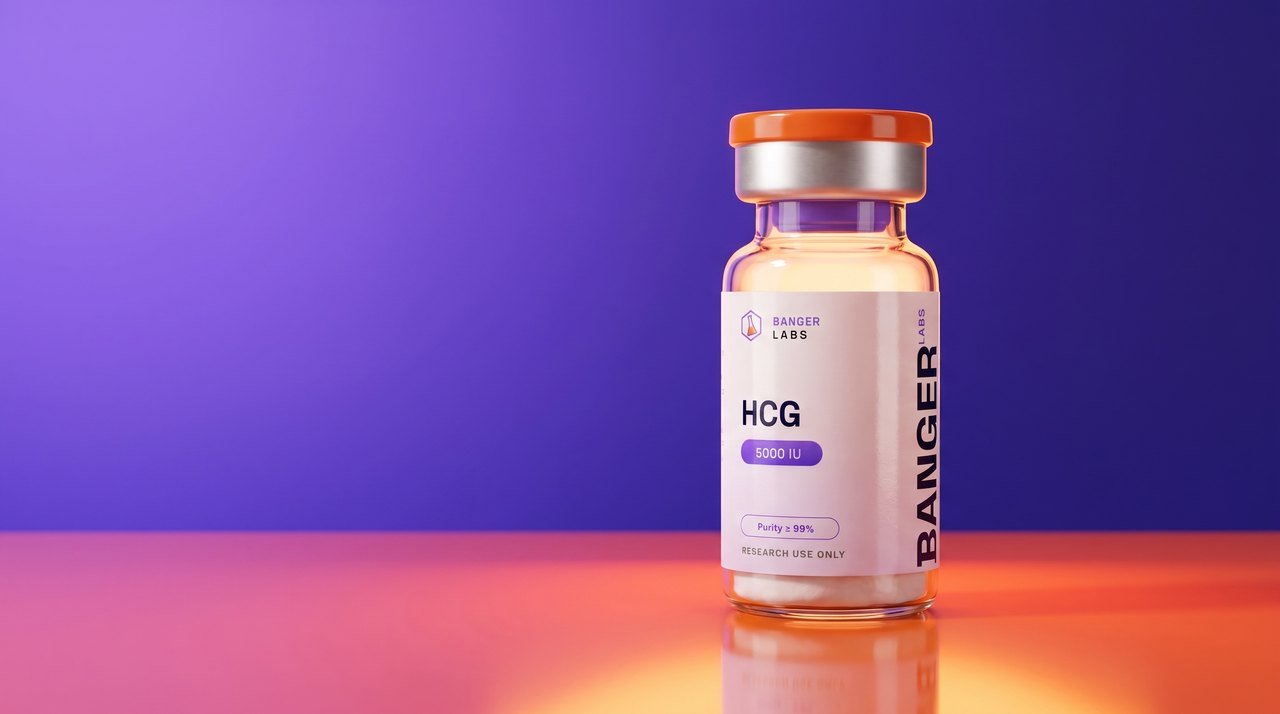
Human chorionic gonadotropin (HCG) is a ~36-40 kDa heterodimeric glycoprotein hormone composed of a non-covalently associated alpha subunit (~92 amino acids, shared with LH, FSH, and TSH) and a distinctive beta subunit (~145 residues, including a carboxy-terminal peptide extension unique among the glycoprotein hormones). It belongs to the cystine-knot glycoprotein hormone family and is naturally produced by placental trophoblast tissue. It is presented here strictly as a research compound for laboratory and educational reference.
How HCG is studied
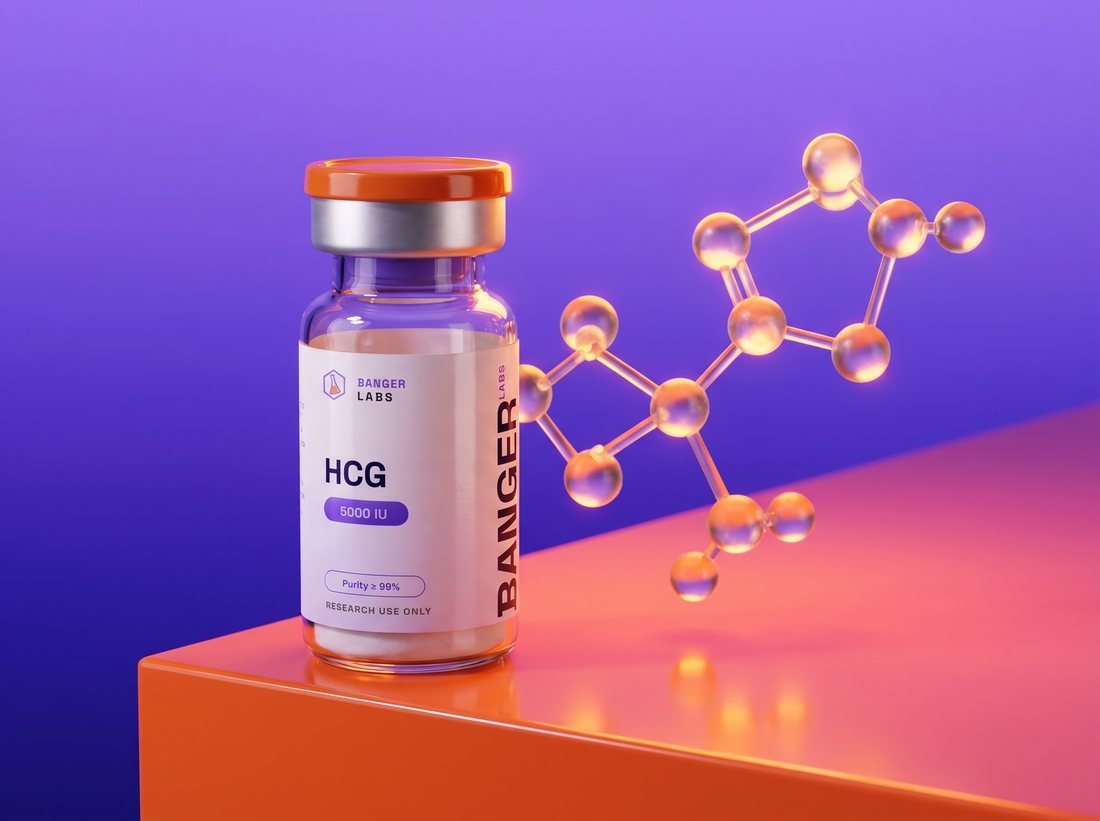
In published research, HCG binds the luteinizing hormone/choriogonadotropin receptor (LHCGR), a class A G-protein-coupled receptor expressed predominantly in gonadal tissue. Receptor activation is reported in the literature to couple primarily to Gs/adenylyl-cyclase/cAMP/PKA signaling, with additional ERK and PI3K/AKT pathway engagement described in cell models. Its beta-subunit carboxy-terminal peptide and added glycosylation are associated with a longer circulating half-life relative to LH in reported studies.
Research areas
- Studied as a model ligand for LHCGR receptor-binding and GPCR signal-transduction research
- Investigated in reproductive endocrinology and placental/trophoblast biology research models
- Used in preclinical steroidogenesis research (Leydig-cell and granulosa/luteal-cell models)
- Examined in assay-development and biomarker-detection research (subunit isoforms, free alpha/beta subunits)
- Referenced in structural-biology studies of cystine-knot glycoprotein hormones
These describe laboratory/preclinical research only. No therapeutic, medical, or efficacy claims are made.
HCG specifications
Handling & quality
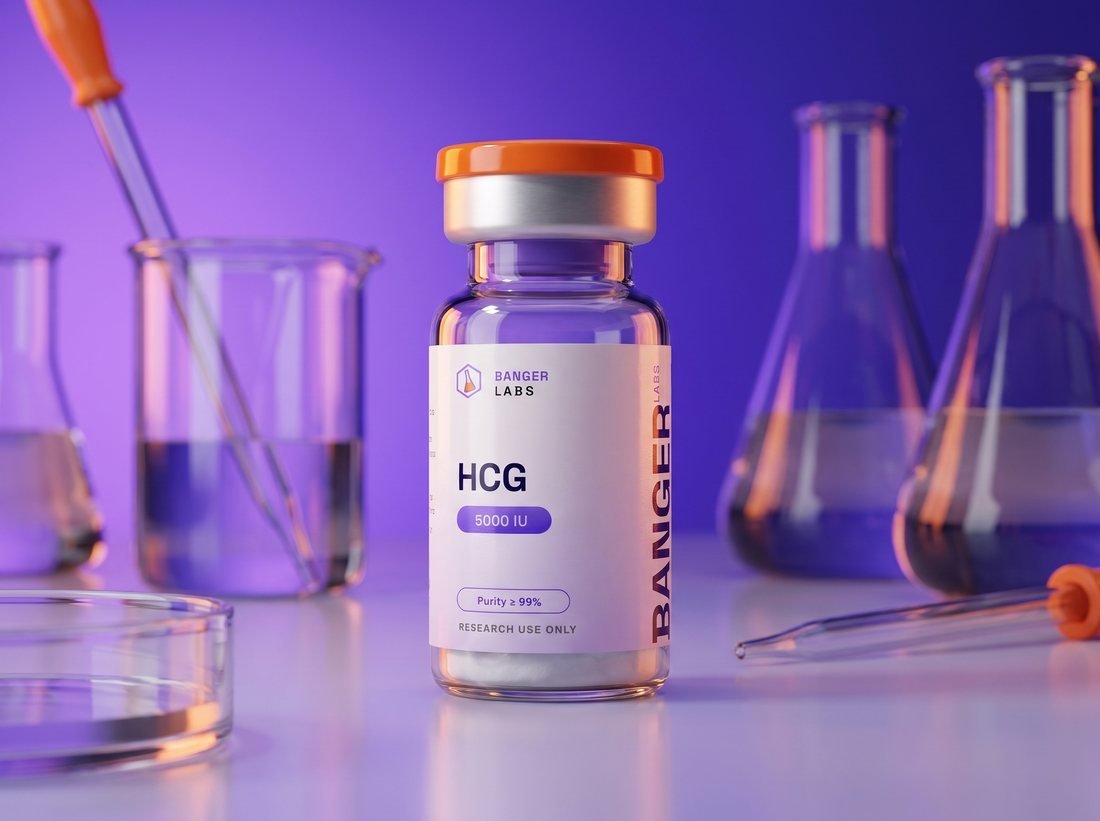
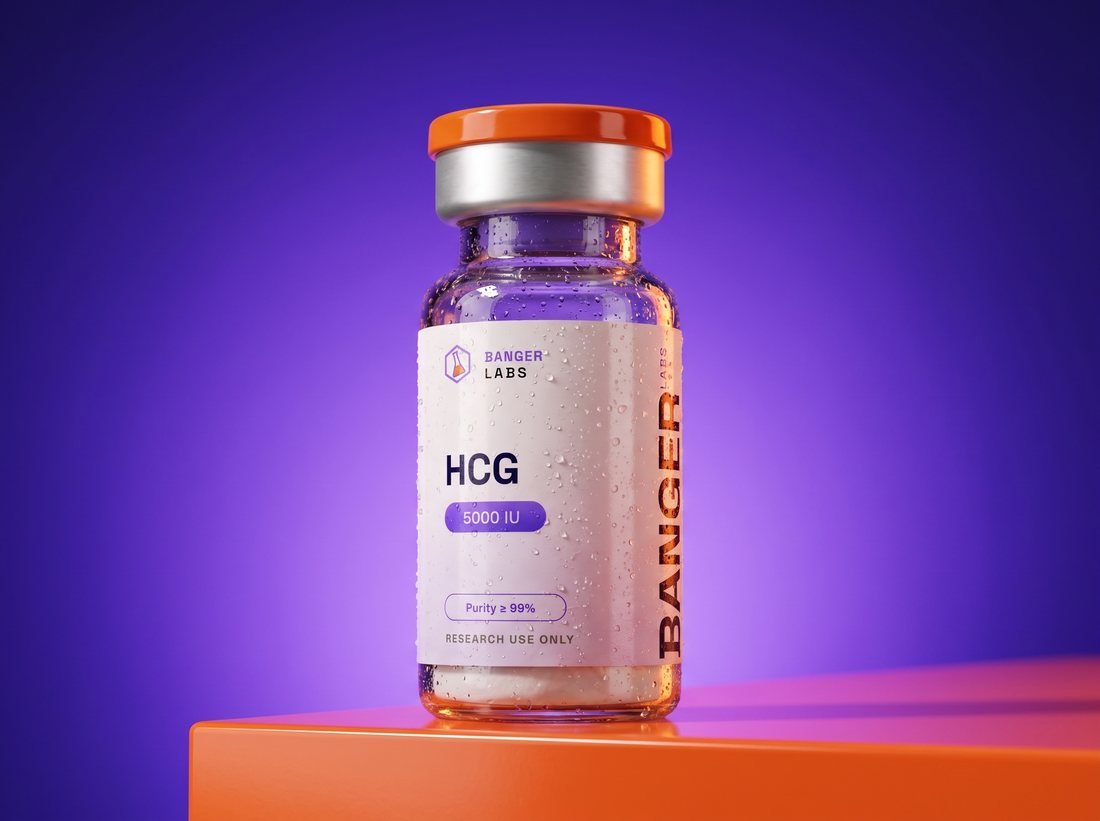
HCG is held to a ≥ 99% HPLC purity standard with a Certificate of Analysis available per batch. Reconstitute with bacteriostatic water and store refrigerated; handle strictly for research. See reconstitution & storage.
Frequently asked questions
What is HCG?
Human chorionic gonadotropin (HCG) is a ~36-40 kDa heterodimeric glycoprotein hormone composed of a non-covalently associated alpha subunit (~92 amino acids, shared with LH, FSH, and TSH) and a distinctive beta subunit (~145 residues, including a carboxy-terminal peptide extension unique among the glycoprotein hormones). It belongs to the cystine-knot glycoprotein hormone family and is naturally produced by placental trophoblast tissue. It is presented here strictly as a research compound for laboratory and educational reference.
Is HCG research use only?
Yes. HCG is supplied strictly for laboratory research — not for human or veterinary use, and not as a drug, food, or supplement.
Does Banger Labs provide a COA for HCG?
Yes — a Certificate of Analysis (HPLC purity + mass-spec identity) is available per batch on request. See the COA Library.
References
- Human Chorionic Gonadotropin — StatPearls — NCBI Bookshelf / StatPearls
- New discoveries on the biology and detection of human chorionic gonadotropin — PMC (Reproductive Biology and Endocrinology, 2009)
- Human chorionic gonadotropin, its receptor and mechanism of action — PubMed (Fed Proc, 1977)
- Unconventional Actions of Glycoprotein Hormone Subunits: A Comprehensive Review — PMC (Frontiers in Endocrinology, 2021)
Sources are provided for scientific reference and describe laboratory/preclinical research; they do not constitute medical advice or efficacy claims.
Shop HCG & related research peptides
By the Banger Labs Research Team. For research use only. Not for human or veterinary use. Not a drug, food, or cosmetic. Educational information, not medical advice.