By the Banger Labs Research Team · Updated June 2026
What is Glutathione?
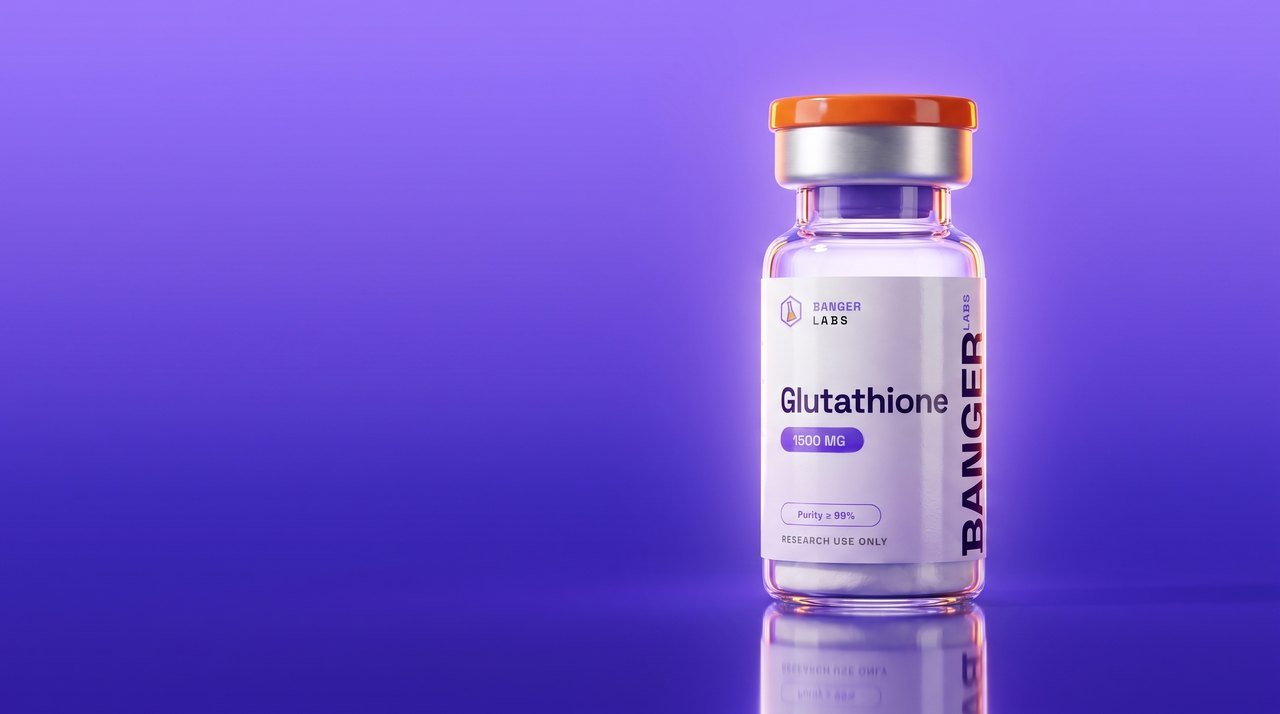
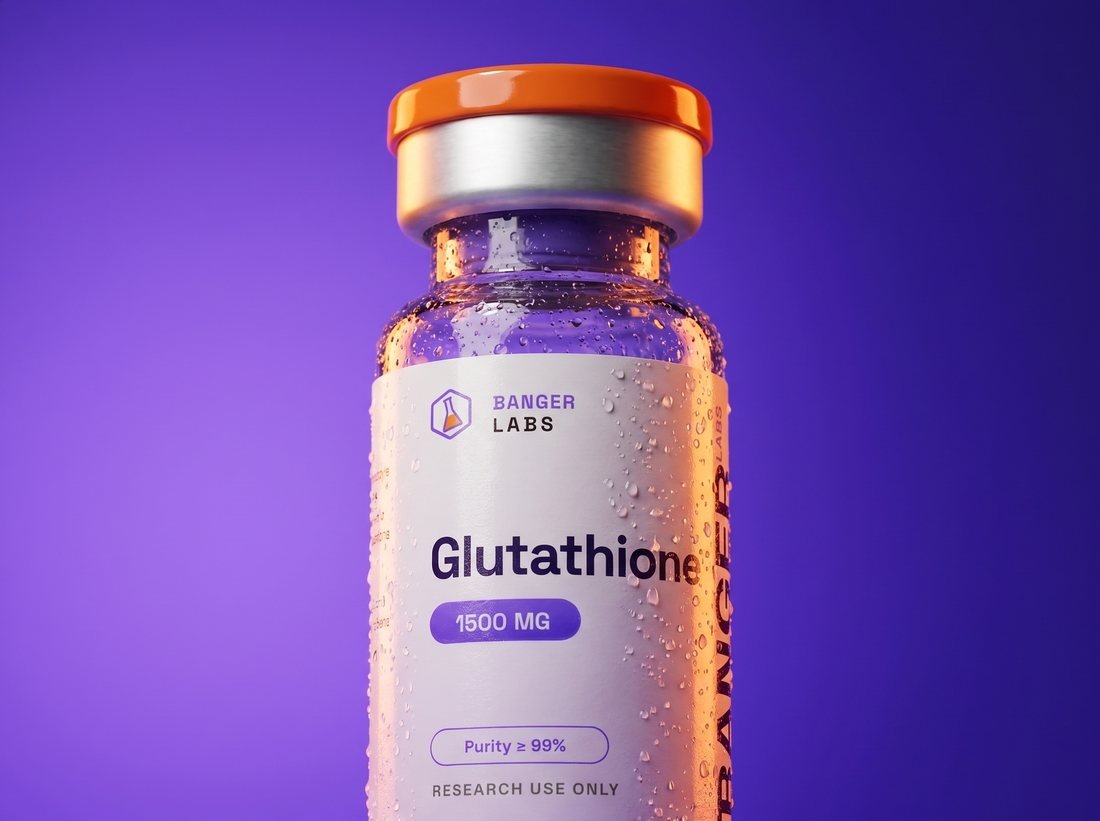
Glutathione is a ubiquitous, low-molecular-weight tripeptide composed of glutamate, cysteine, and glycine, written as gamma-glutamyl-cysteinyl-glycine (gamma-Glu-Cys-Gly). Its characteristic gamma-glutamyl peptide bond makes it resistant to non-specific proteolytic cleavage. It is one of the most abundant non-protein thiols found in mammalian and plant cells and is described in the literature as an antioxidant research compound.
How Glutathione is studied
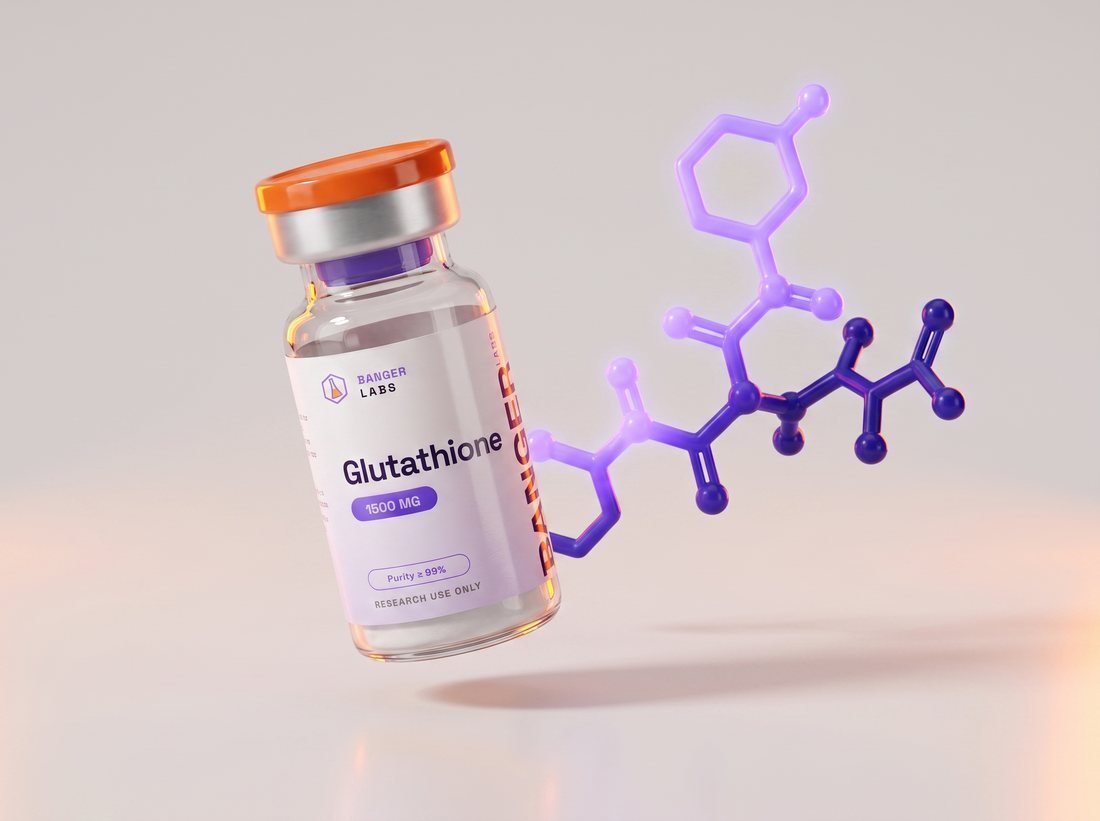
In published biochemical research, glutathione is synthesized intracellularly in two ATP-dependent steps catalyzed by gamma-glutamylcysteine ligase (the rate-limiting, GSH-feedback-inhibited step) and glutathione synthetase. Its reactive thiol (-SH) group reduces reactive oxygen species and is cycled between reduced (GSH) and oxidized (GSSG) forms via glutathione peroxidases and glutathione reductase. Glutathione S-transferases conjugate GSH to electrophilic compounds, and the GSH/glutaredoxin system participates in thiol-redox homeostasis and redox signaling.
Research areas
- Studied as a model system for cellular redox homeostasis and the GSH/GSSG redox couple in laboratory research
- Investigated in preclinical and in vitro detoxification research via glutathione S-transferase-mediated conjugation of electrophiles
- Examined as a biomarker of oxidative stress status in research models
- Studied in redox-signaling research, including glutathione/glutaredoxin-mediated processes
- Investigated in preclinical neurobiology research models exploring oxidative-stress-associated changes (research context only)
These describe laboratory/preclinical research only. No therapeutic, medical, or efficacy claims are made.
Glutathione specifications
Handling & quality
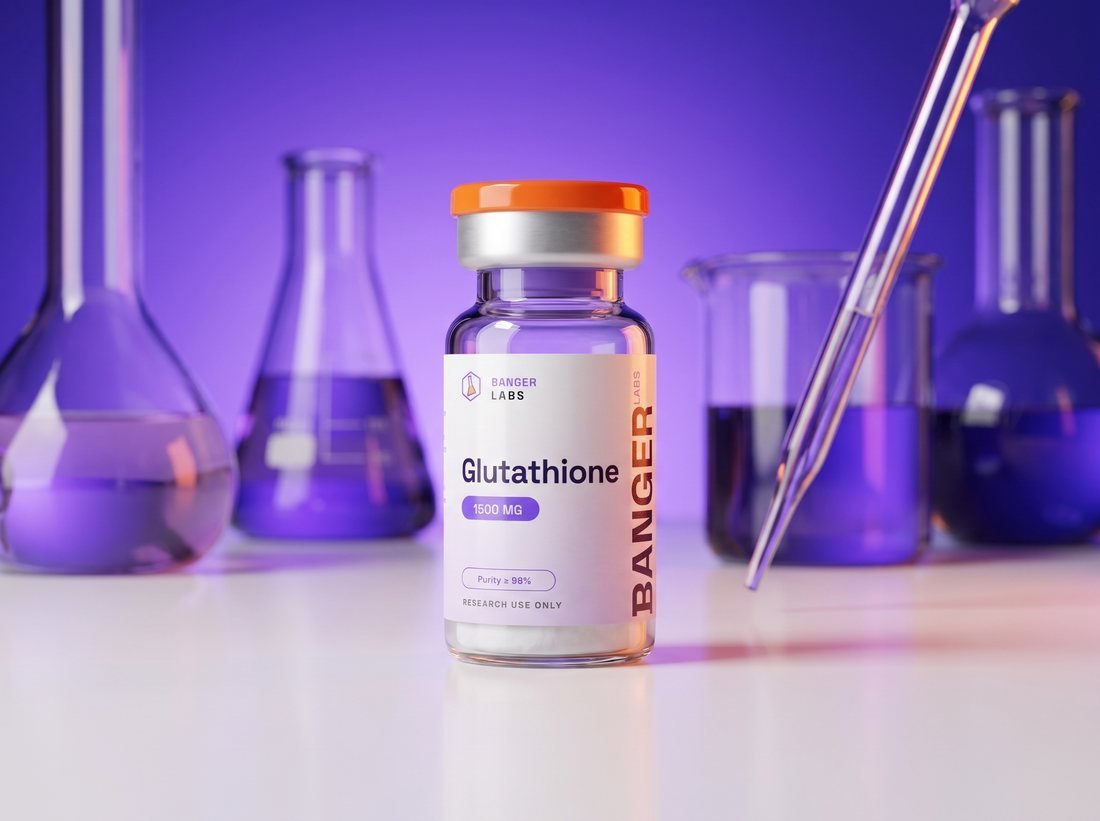
Glutathione is held to a ≥ 99% HPLC purity standard with a Certificate of Analysis available per batch. Reconstitute with bacteriostatic water and store refrigerated; handle strictly for research. See reconstitution & storage.
Frequently asked questions
What is Glutathione?
Glutathione is a ubiquitous, low-molecular-weight tripeptide composed of glutamate, cysteine, and glycine, written as gamma-glutamyl-cysteinyl-glycine (gamma-Glu-Cys-Gly). Its characteristic gamma-glutamyl peptide bond makes it resistant to non-specific proteolytic cleavage. It is one of the most abundant non-protein thiols found in mammalian and plant cells and is described in the literature as an antioxidant research compound.
Is Glutathione research use only?
Yes. Glutathione is supplied strictly for laboratory research — not for human or veterinary use, and not as a drug, food, or supplement.
Does Banger Labs provide a COA for Glutathione?
Yes — a Certificate of Analysis (HPLC purity + mass-spec identity) is available per batch on request. See the COA Library.
References
- Glutathione Homeostasis and Functions: Potential Targets for Medical Interventions — PMC (J Amino Acids)
- Glutathione: new roles in redox signaling for an old antioxidant — PMC (Front Pharmacol)
- The Key Role of GSH in Keeping the Redox Balance in Mammalian Cells: Mechanisms and Significance of GSH in Detoxification via Formation of Conjugates — PMC (Antioxidants)
- Glutathione and Glutaredoxin—Key Players in Cellular Redox Homeostasis and Signaling — PMC (Antioxidants)
Sources are provided for scientific reference and describe laboratory/preclinical research; they do not constitute medical advice or efficacy claims.
Shop Glutathione & related research peptides
By the Banger Labs Research Team. For research use only. Not for human or veterinary use. Not a drug, food, or cosmetic. Educational information, not medical advice.