By the Banger Labs Research Team · Updated June 2026
What is Epithalon?
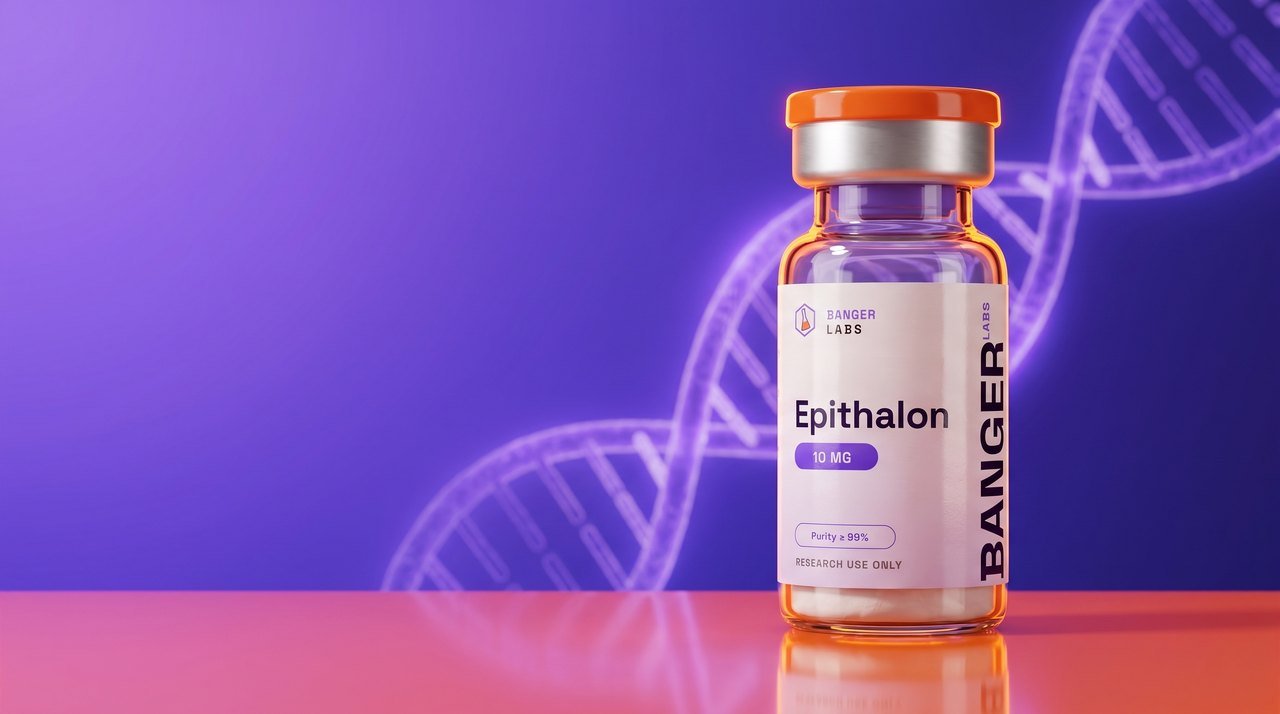
Epithalon is a short synthetic tetrapeptide with the amino acid sequence Ala-Glu-Asp-Gly (AEDG), designed as a simplified analog of Epithalamin, a peptide fraction originally derived from bovine pineal gland. It was developed in the laboratory of Vladimir Khavinson at the St. Petersburg Institute of Bioregulation and Gerontology and is studied as a “peptide bioregulator” in research settings.
How Epithalon is studied
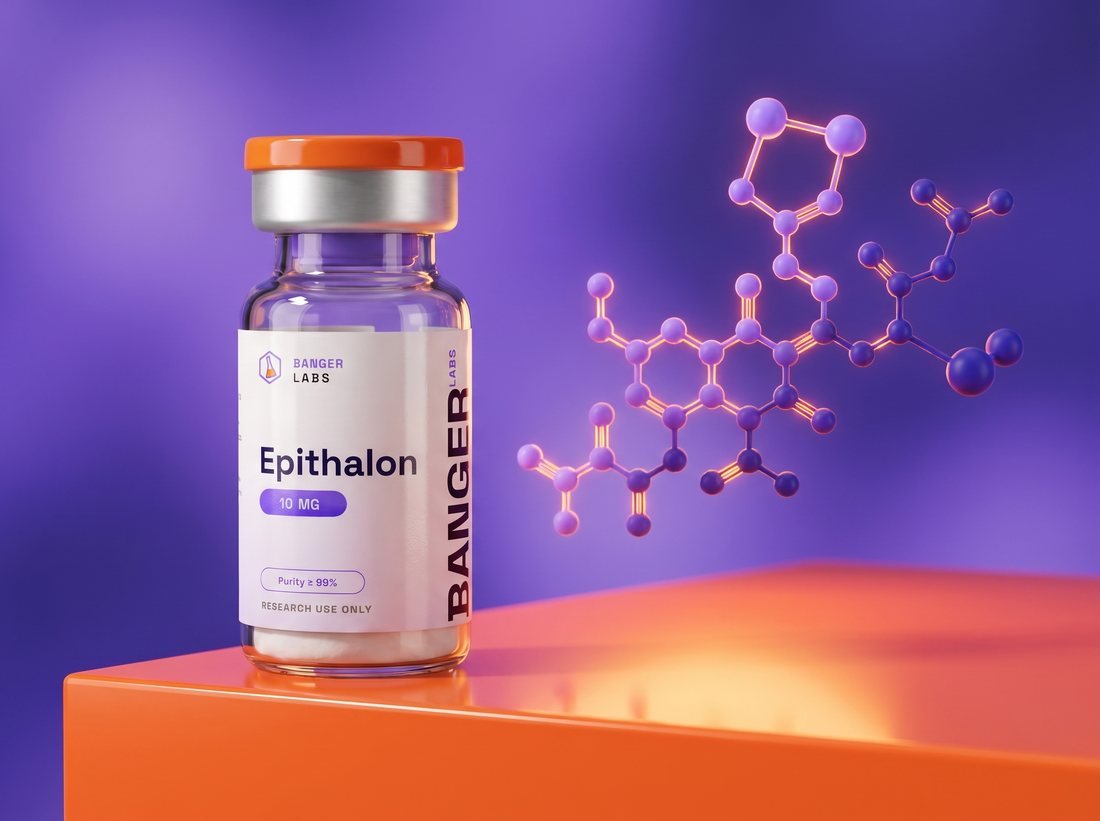
In published in vitro and preclinical reports, Epithalon has been investigated for its association with telomerase (hTERT) expression and telomere-length dynamics in cultured human cells. It has also been studied as a short peptide that may interact with chromatin/DNA and modulate gene expression and protein synthesis in cell and animal models. These are research-context observations of mechanism and not established human-therapeutic effects.
Research areas
- Studied in cell-culture models for telomerase (hTERT) activity and telomere-length changes
- Investigated in preclinical/in vitro research on cellular replicative capacity and aging models
- Examined in animal-model research related to pineal-gland signaling and circadian/melatonin rhythm parameters
- Explored in research on peptide-driven gene expression and protein synthesis (e.g., neurogenesis cell models)
- Used as a model AEDG ‘peptide bioregulator’ in in vitro, in vivo, and in silico research
These describe laboratory/preclinical research only. No therapeutic, medical, or efficacy claims are made.
Epithalon specifications
Handling & quality
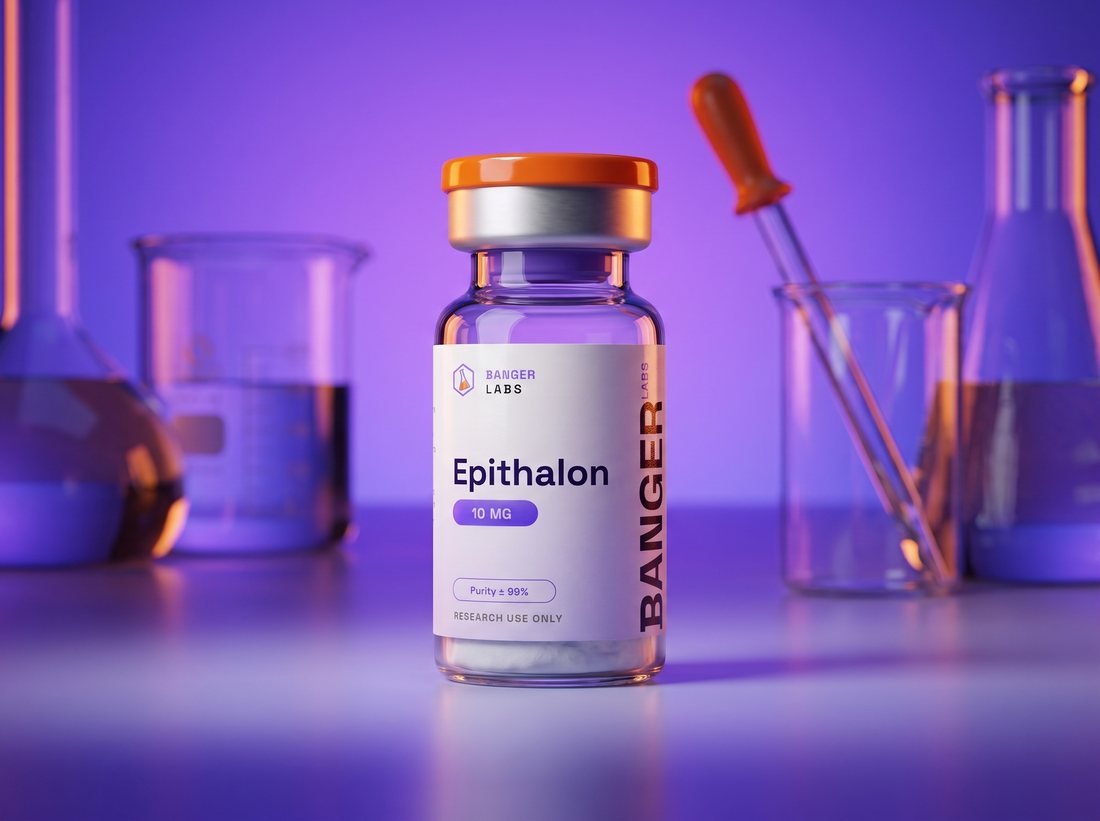
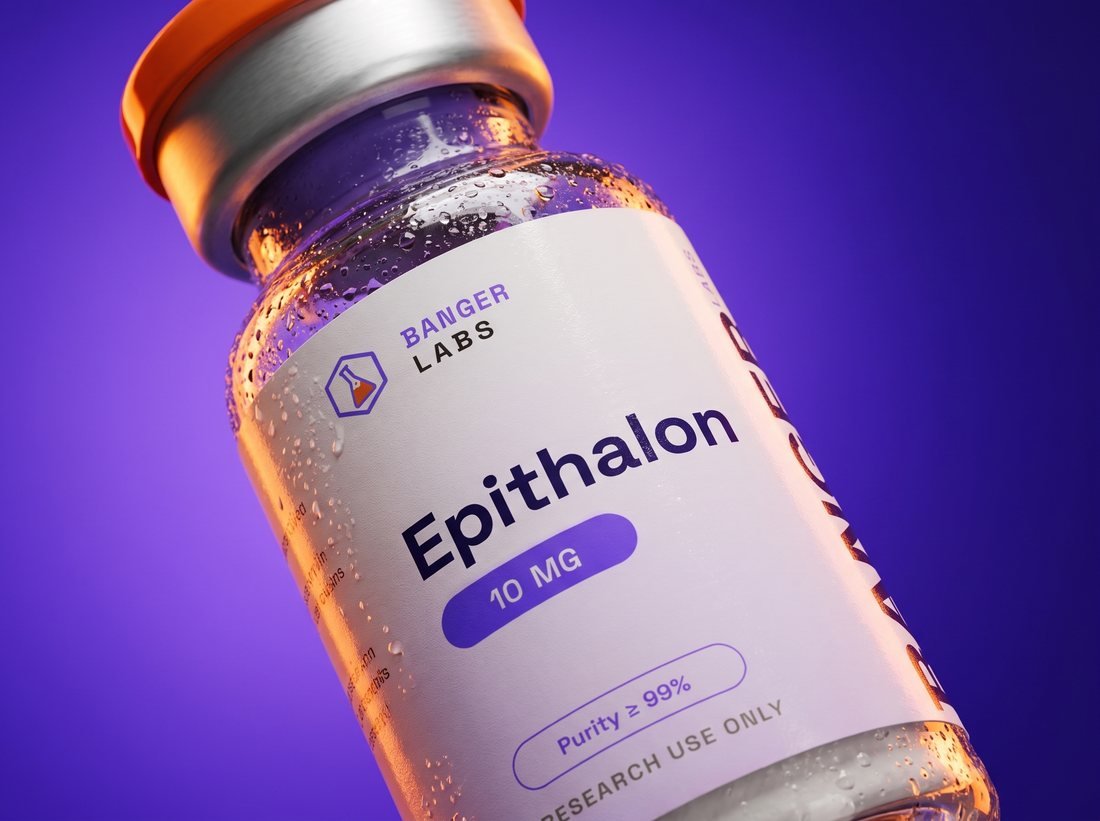
Epithalon is held to a ≥ 99% HPLC purity standard with a Certificate of Analysis available per batch. Reconstitute with bacteriostatic water and store refrigerated; handle strictly for research. See reconstitution & storage.
Frequently asked questions
What is Epithalon?
Epithalon is a short synthetic tetrapeptide with the amino acid sequence Ala-Glu-Asp-Gly (AEDG), designed as a simplified analog of Epithalamin, a peptide fraction originally derived from bovine pineal gland. It was developed in the laboratory of Vladimir Khavinson at the St. Petersburg Institute of Bioregulation and Gerontology and is studied as a “peptide bioregulator” in research settings.
Is Epithalon research use only?
Yes. Epithalon is supplied strictly for laboratory research — not for human or veterinary use, and not as a drug, food, or supplement.
Does Banger Labs provide a COA for Epithalon?
Yes — a Certificate of Analysis (HPLC purity + mass-spec identity) is available per batch on request. See the COA Library.
References
- Overview of Epitalon—Highly Bioactive Pineal Tetrapeptide with Promising Properties — PMC (peer-reviewed review)
- AEDG Peptide (Epitalon) Stimulates Gene Expression and Protein Synthesis during Neurogenesis: Possible Epigenetic Mechanism — PMC / Molecules 2020 (peer-reviewed)
- Epitalon increases telomere length in human cell lines through telomerase upregulation or ALT activity — PMC (peer-reviewed)
- Epitalon — Wikipedia (encyclopedic overview)
Sources are provided for scientific reference and describe laboratory/preclinical research; they do not constitute medical advice or efficacy claims.
Shop Epithalon & related research peptides

By the Banger Labs Research Team. For research use only. Not for human or veterinary use. Not a drug, food, or cosmetic. Educational information, not medical advice.