By the Banger Labs Research Team · Updated June 2026
What is AICAR?
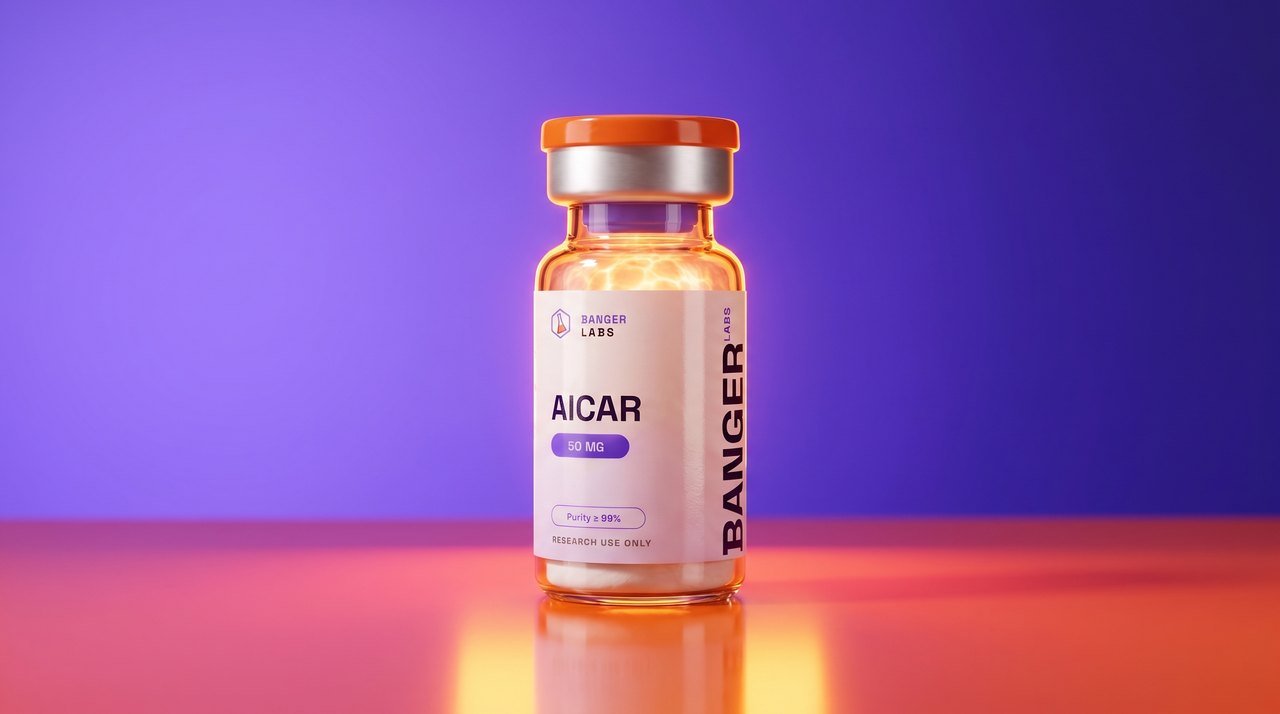
AICAR is a synthetic nucleoside analog of adenosine; its intracellular phosphorylated form (the ribotide ZMP) corresponds to a naturally occurring intermediate in de novo purine biosynthesis. Structurally it is 5-aminoimidazole-4-carboxamide ribonucleoside; it is a small molecule rather than a peptide. In the research literature it is widely used as a tool compound to activate the cellular energy sensor AMPK.
How AICAR is studied
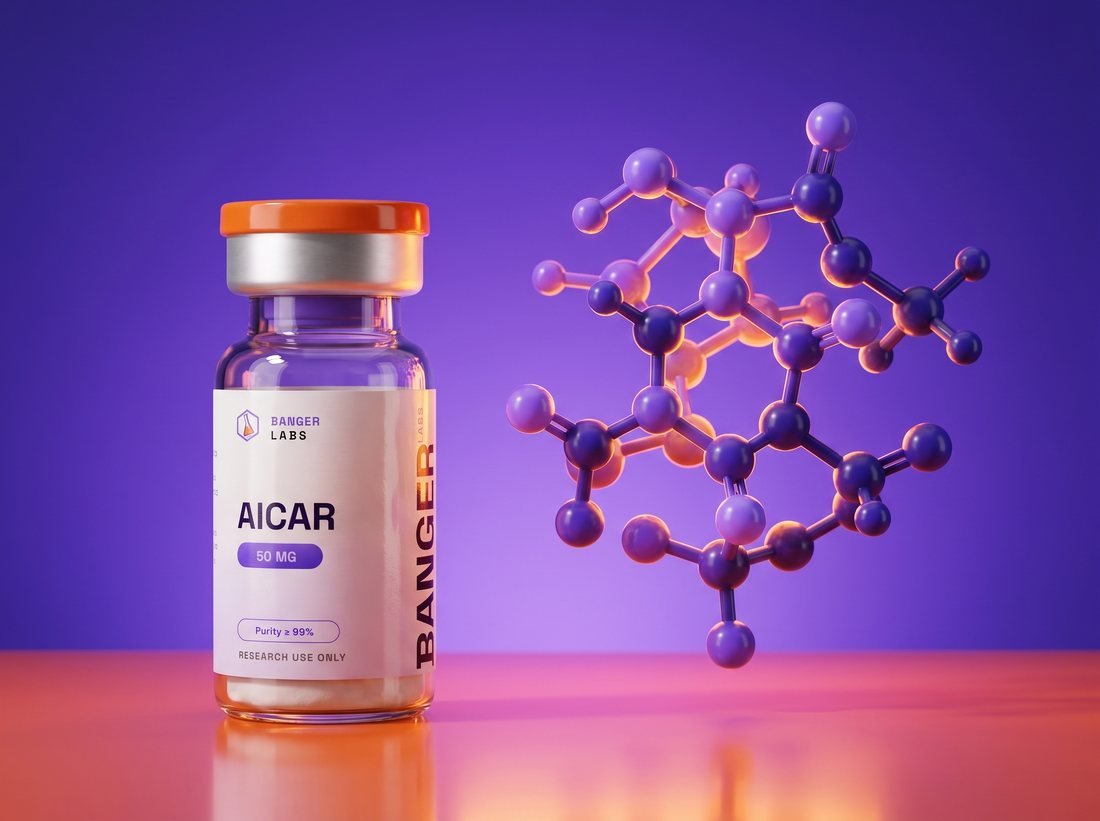
In cells, AICAR is taken up by adenosine transporters and phosphorylated by adenosine kinase to its monophosphate form, ZMP, which mimics AMP. ZMP binds the gamma-subunit of AMPK and promotes its activation, a pathway studied in connection with downstream events such as acetyl-CoA carboxylase inactivation and GLUT4 translocation in preclinical models. Literature reviews also document AMPK-independent (off-target) effects, which researchers are advised to account for when interpreting data.
Research areas
- Used as a reference pharmacological tool for activating AMPK in cell and tissue energy-metabolism research
- Studied in preclinical skeletal-muscle models examining glucose uptake and GLUT4 transporter translocation
- Investigated in research on fatty-acid oxidation and malonyl-CoA/ACC signaling
- Explored in laboratory exercise-mimetic and mitochondrial/metabolic-adaptation studies
- Used in cell-biology research probing mTOR signaling and cell-cycle regulation, including AMPK-independent effects
These describe laboratory/preclinical research only. No therapeutic, medical, or efficacy claims are made.
AICAR specifications
Handling & quality
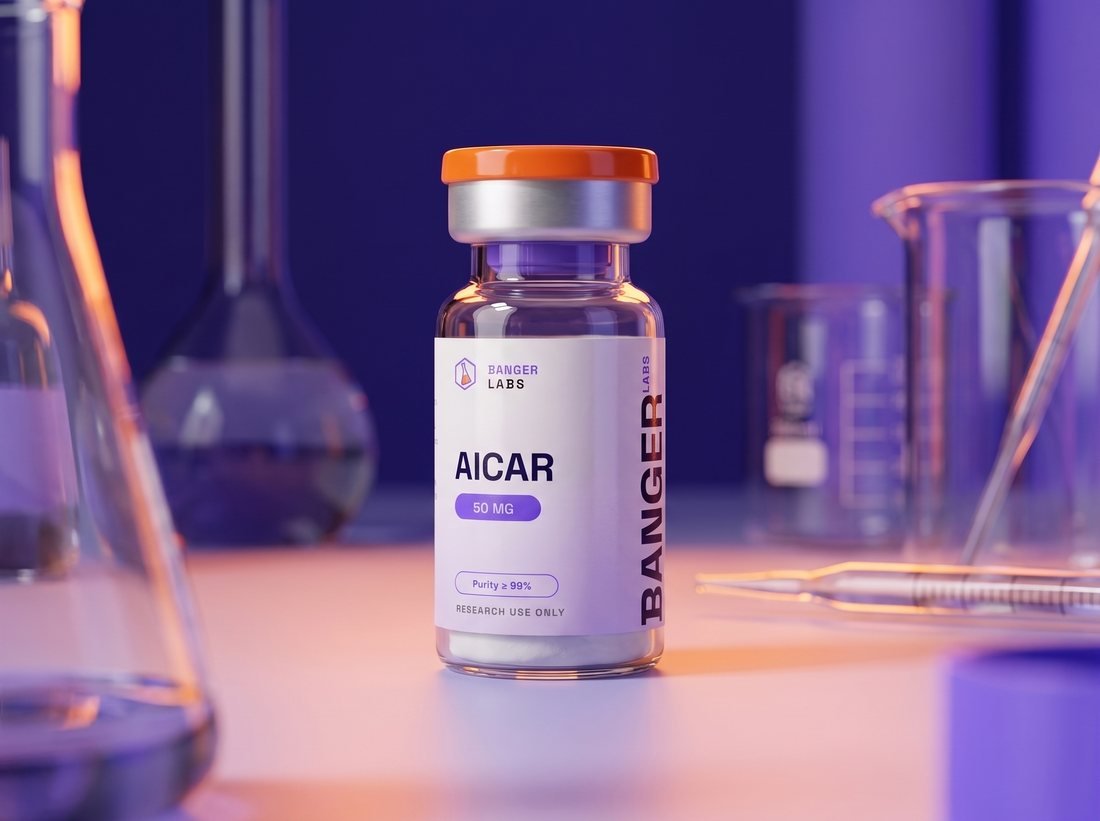
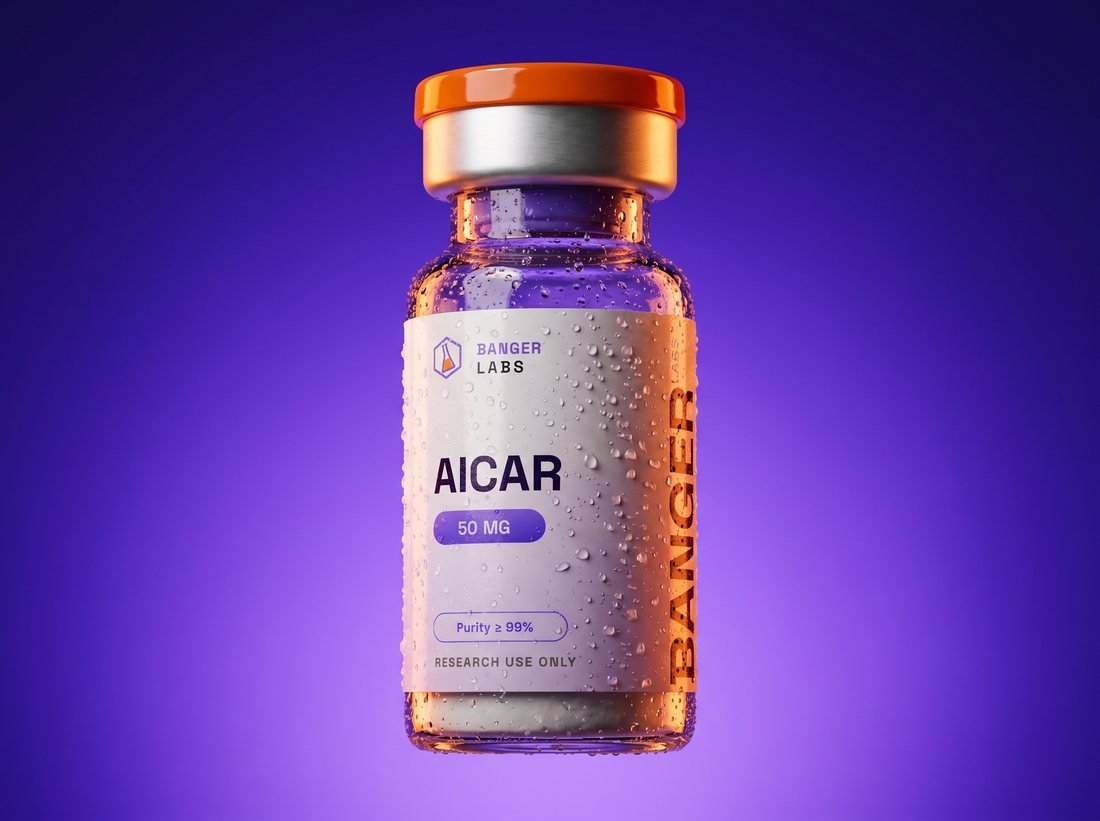
AICAR is held to a ≥ 99% HPLC purity standard with a Certificate of Analysis available per batch. Reconstitute with bacteriostatic water and store refrigerated; handle strictly for research. See reconstitution & storage.
Frequently asked questions
What is AICAR?
AICAR is a synthetic nucleoside analog of adenosine; its intracellular phosphorylated form (the ribotide ZMP) corresponds to a naturally occurring intermediate in de novo purine biosynthesis. Structurally it is 5-aminoimidazole-4-carboxamide ribonucleoside; it is a small molecule rather than a peptide. In the research literature it is widely used as a tool compound to activate the cellular energy sensor AMPK.
Is AICAR research use only?
Yes. AICAR is supplied strictly for laboratory research — not for human or veterinary use, and not as a drug, food, or supplement.
Does Banger Labs provide a COA for AICAR?
Yes — a Certificate of Analysis (HPLC purity + mass-spec identity) is available per batch on request. See the COA Library.
References
- AICAr, a Widely Used AMPK Activator with Important AMPK-Independent Effects: A Systematic Review — Cells (PMC8147799)
- AMPK activators: mechanisms of action and physiological activities — Experimental & Molecular Medicine (PMC4855276)
- Activation of AMPK is essential for AICAR-induced glucose uptake by skeletal muscle but not adipocytes — PubMed (PMID 12006353)
- AICA riboside increases AMP-activated protein kinase, fatty acid oxidation, and glucose uptake in rat muscle — PubMed (PMID 9435525)
Sources are provided for scientific reference and describe laboratory/preclinical research; they do not constitute medical advice or efficacy claims.
Shop AICAR & related research peptides


By the Banger Labs Research Team. For research use only. Not for human or veterinary use. Not a drug, food, or cosmetic. Educational information, not medical advice.