By the Banger Labs Research Team · Updated June 2026
What is Thymalin?
Thymalin is a polypeptide complex originally isolated from the thymus gland of calves and first developed in the Soviet Union/Russia (Institute of Bioregulation and Gerontology, St. Petersburg). In the research literature it is characterized as a mixture of short peptides rather than a single defined molecule, and is grouped with other thymic peptide preparations such as thymogen and thymulin.
How Thymalin is studied
In published preclinical and laboratory studies, Thymalin’s reported activity is attributed to short peptide constituents (notably the dipeptide Glu-Trp/EW and related short peptides such as Lys-Glu/KE) that are proposed to interact with DNA and chromatin and to modulate gene expression. Research reports describe effects on T-lymphocyte differentiation, cytokine signaling (e.g., interleukin-2, interferon), and differentiation of hematopoietic stem cell populations in experimental systems. These are mechanistic research observations only and do not establish any therapeutic effect.
Research areas
- Studied in research models of immune regulation and T-lymphocyte differentiation
- Investigated in laboratory studies of hematopoietic stem cell differentiation and cell-surface marker expression (e.g., CD28, CD117)
- Examined in aging/gerontology research models of immune function
- Explored in research-literature reviews of thymic peptides and immunomodulation
- Used as a reference thymic-peptide preparation in comparative immunopharmacology research
These describe laboratory/preclinical research only. No therapeutic, medical, or efficacy claims are made.
Thymalin specifications
Handling & quality
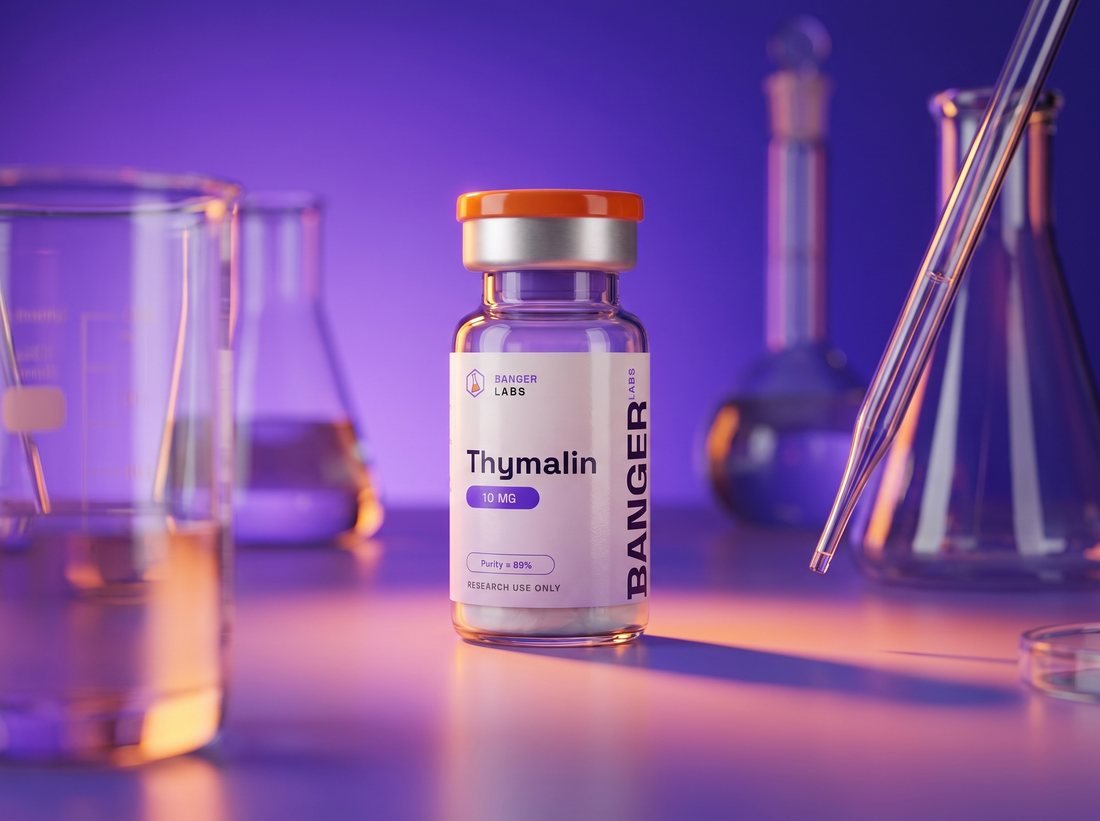
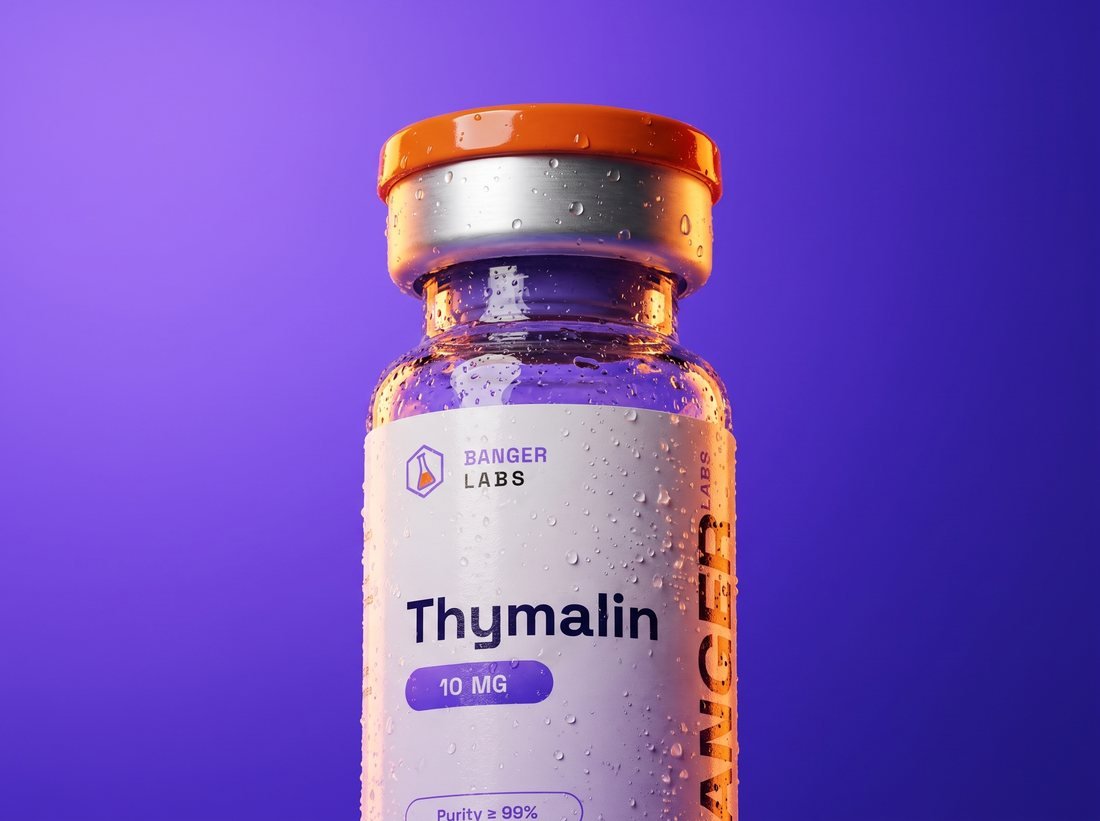
Thymalin is held to a ≥ 99% HPLC purity standard with a Certificate of Analysis available per batch. Reconstitute with bacteriostatic water and store refrigerated; handle strictly for research. See reconstitution & storage.
Frequently asked questions
What is Thymalin?
Thymalin is a polypeptide complex originally isolated from the thymus gland of calves and first developed in the Soviet Union/Russia (Institute of Bioregulation and Gerontology, St. Petersburg). In the research literature it is characterized as a mixture of short peptides rather than a single defined molecule, and is grouped with other thymic peptide preparations such as thymogen and thymulin.
Is Thymalin research use only?
Yes. Thymalin is supplied strictly for laboratory research — not for human or veterinary use, and not as a drug, food, or supplement.
Does Banger Labs provide a COA for Thymalin?
Yes — a Certificate of Analysis (HPLC purity + mass-spec identity) is available per batch on request. See the COA Library.
References
- Natural and synthetic thymic peptides as therapeutics for immune dysfunction (Morozov VG, Khavinson VK) — International Journal of Immunopharmacology, 1997 (PubMed)
- Thymalin: Activation of Differentiation of Human Hematopoietic Stem Cells (Khavinson VKh et al.) — Bulletin of Experimental Biology and Medicine, 2020 (PMC)
- Review of Thymic Peptides and Hormones: From Their Properties to Clinical Application — International Journal of Peptide Research and Therapeutics, 2024 (Springer)
Sources are provided for scientific reference and describe laboratory/preclinical research; they do not constitute medical advice or efficacy claims.
Shop Thymalin & related research peptides
By the Banger Labs Research Team. For research use only. Not for human or veterinary use. Not a drug, food, or cosmetic. Educational information, not medical advice.