By the Banger Labs Research Team · Updated June 2026
What is TB-500?
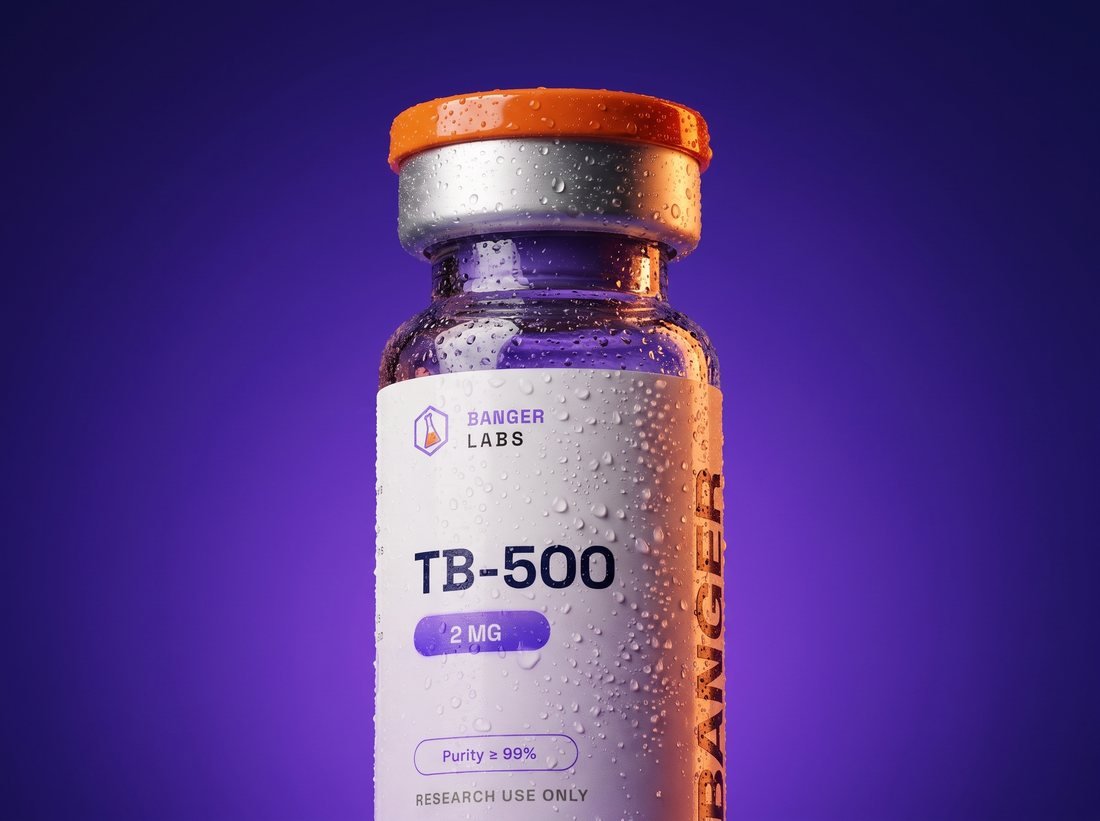
Thymosin beta-4 (Tβ4) is a water-soluble, ~4.9 kDa, 43-amino-acid polypeptide that is one of the most abundant intracellular actin-monomer-binding (G-actin-sequestering) proteins. TB-500 refers to a short synthetic fragment, the acetylated heptapeptide Ac-LKKTETQ, that maps to the central actin-binding motif (residues 17-23) of the parent Tβ4 sequence. It is supplied as a laboratory reference compound for research purposes only.
How TB-500 is studied
In published cell and biochemical studies, Thymosin beta-4 binds monomeric G-actin in a 1:1 stoichiometry and inhibits its polymerization into filamentous F-actin, thereby acting as an actin-sequestering buffer; when bound it also blocks nucleotide exchange on actin. The LKKTETQ motif within residues 17-23 has been identified as the core actin-binding region required for this activity. These are descriptions of molecular and cellular mechanisms studied in preclinical/laboratory models, not statements of clinical effect.
Research areas
- Studied in laboratory models of actin cytoskeletal dynamics and G-actin/F-actin equilibrium
- Investigated in preclinical research on cell migration of cell types such as endothelial cells and keratinocytes
- Examined in preclinical angiogenesis research, where the actin-binding motif has been linked to angiogenic activity
- Studied in animal/preclinical models of tissue-repair and inflammation-related signaling (e.g., NF-κB pathway studies)
- Investigated in experimental models of central-nervous-system and cardiac injury as a research probe
These describe laboratory/preclinical research only. No therapeutic, medical, or efficacy claims are made.
TB-500 specifications
Handling & quality
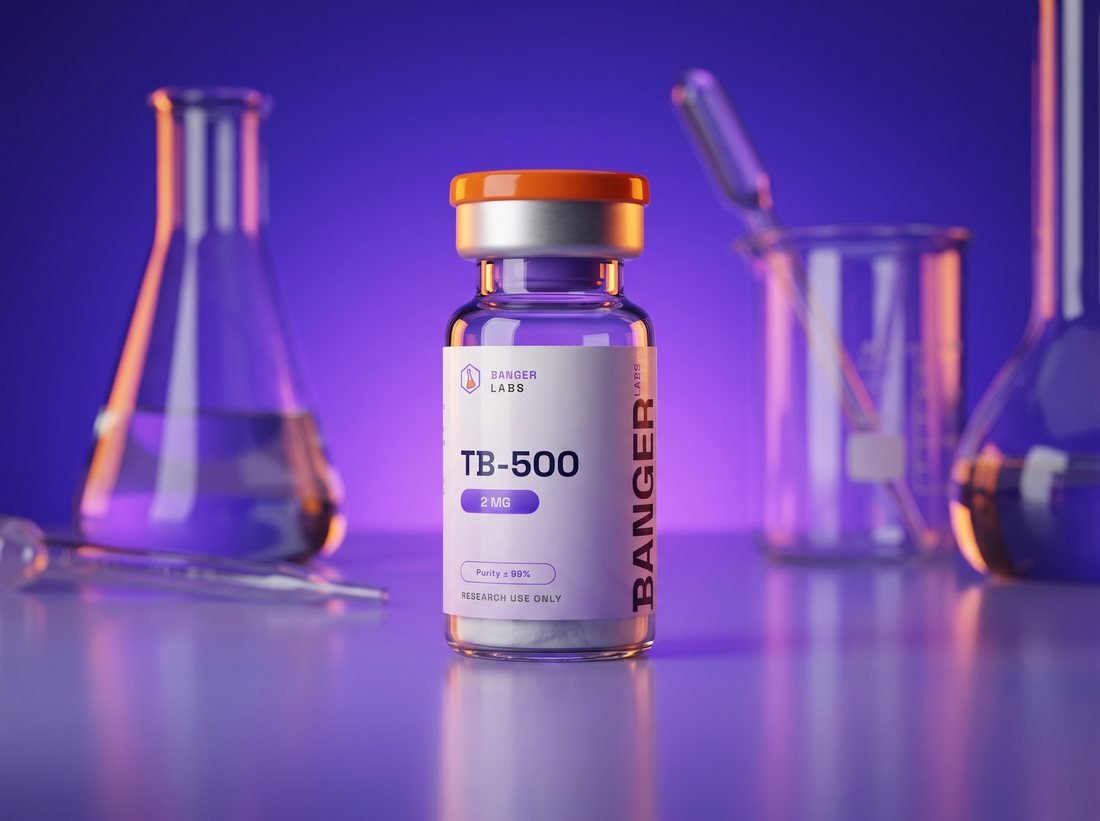
TB-500 is held to a ≥ 99% HPLC purity standard with a Certificate of Analysis available per batch. Reconstitute with bacteriostatic water and store refrigerated; handle strictly for research. See reconstitution & storage.
Frequently asked questions
What is TB-500?
Thymosin beta-4 (Tβ4) is a water-soluble, ~4.9 kDa, 43-amino-acid polypeptide that is one of the most abundant intracellular actin-monomer-binding (G-actin-sequestering) proteins. TB-500 refers to a short synthetic fragment, the acetylated heptapeptide Ac-LKKTETQ, that maps to the central actin-binding motif (residues 17-23) of the parent Tβ4 sequence. It is supplied as a laboratory reference compound for research purposes only.
Is TB-500 research use only?
Yes. TB-500 is supplied strictly for laboratory research — not for human or veterinary use, and not as a drug, food, or supplement.
Does Banger Labs provide a COA for TB-500?
Yes — a Certificate of Analysis (HPLC purity + mass-spec identity) is available per batch on request. See the COA Library.
References
- Thymosin beta 4 (Fx peptide) is a potent regulator of actin polymerization in living cells — PMC / PNAS
- The actin binding site on thymosin beta4 promotes angiogenesis — PubMed / FASEB J
- The control of actin nucleotide exchange by thymosin beta 4 and profilin. A potential regulatory mechanism for actin polymerization in cells — PMC / Molecular Biology of the Cell
- Thymosin β4 inhibits TNF-α-induced NF-κB activation, IL-8 expression, and the sensitizing effects by its partners PINCH-1 and ILK — PMC / FASEB J
Sources are provided for scientific reference and describe laboratory/preclinical research; they do not constitute medical advice or efficacy claims.
Shop TB-500 & related research peptides
By the Banger Labs Research Team. For research use only. Not for human or veterinary use. Not a drug, food, or cosmetic. Educational information, not medical advice.