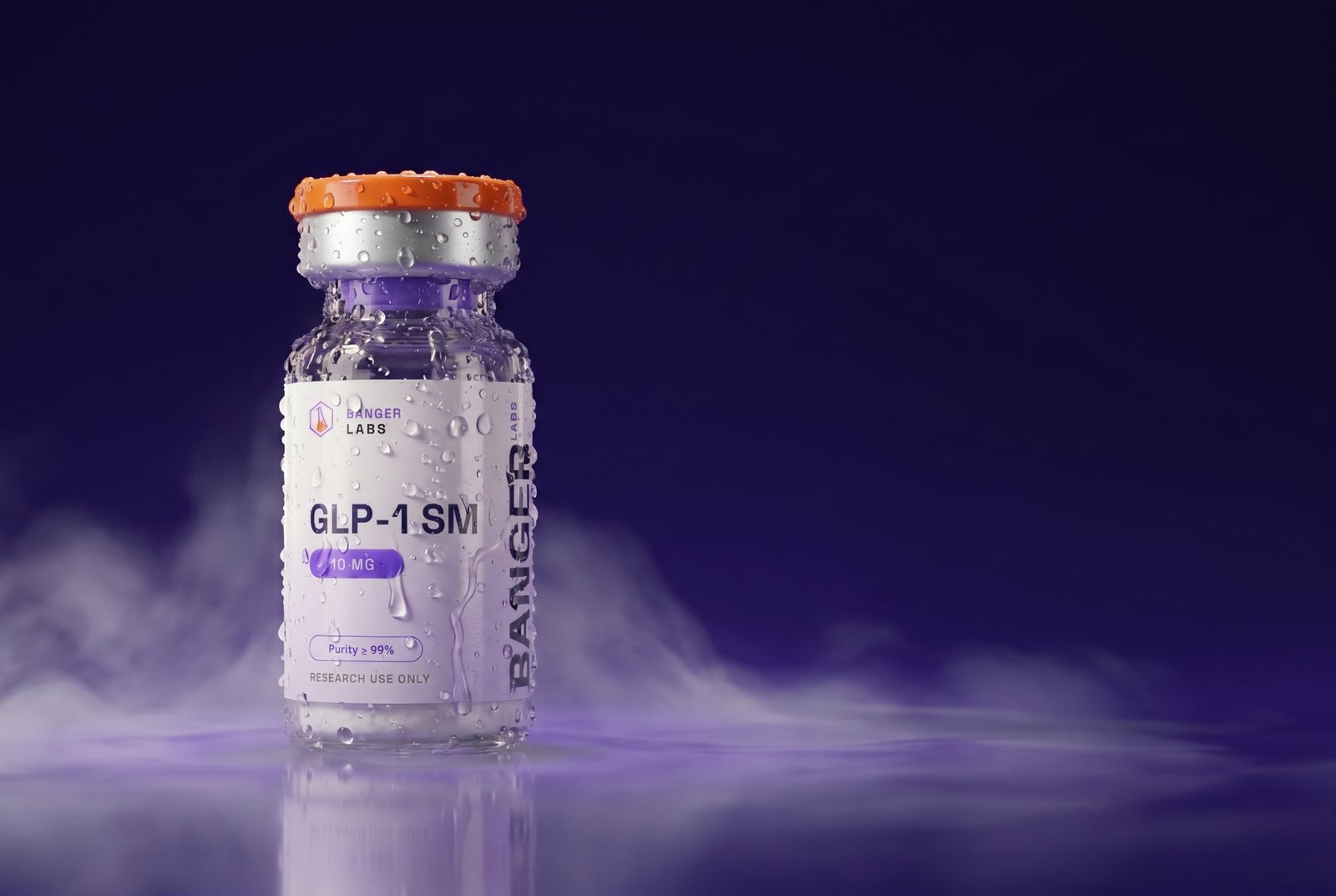
The first generation of incretin research peptides was defined by a single receptor: GLP-1. The next generation is defined by everything around it. Investigators are now characterizing molecules that recruit the amylin system, the glucagon receptor, and combinations of incretin pathways acting in concert — moving the field from single-target agonism toward coordinated, multi-receptor signaling. GLP-5 C, a long-acting amylin analog, and GLP-4 SV, a glucagon/GLP-1 receptor dual agonist, sit at the leading edge of this shift. This overview maps the emerging class for laboratory researchers: the receptor biology that distinguishes each candidate, what the preclinical and clinical-research literature has established about their mechanisms, and where combination approaches are headed. All materials referenced here are intended strictly for research use only — not for human consumption.
Beyond GLP-1: Why the Class Is Expanding
GLP-1 receptor agonism is one of the most thoroughly studied mechanisms in metabolic peptide research, and the foundational pharmacology is covered in our GLP-1 class research peptides explainer. But GLP-1 is only one node in a wider network of gut- and pancreas-derived signaling peptides that regulate energy balance, satiety signaling, and glucose handling. The incretin and incretin-adjacent system also includes glucose-dependent insulinotropic polypeptide (GIP), the pancreatic hormone amylin (islet amyloid polypeptide), and glucagon — each acting through its own receptor.
The next-generation research thesis is straightforward: engaging more than one of these receptors, or a non-GLP-1 receptor entirely, may produce signaling profiles that single-pathway agonists cannot. This is why the contemporary literature distinguishes carefully between mono-agonists (one receptor), co-administration strategies (two separate molecules dosed together in study designs), and engineered multi-agonists (one molecule, multiple receptors). GLP-5 C and GLP-4 SV illustrate two different answers to the same question.
GLP-5 C: The Amylin Arm
GLP-5 C is a long-acting analog of amylin, a peptide hormone co-secreted with insulin from pancreatic beta cells. Amylin signals through a family of receptors formed when the calcitonin receptor pairs with receptor activity-modifying proteins (RAMPs), and in the research literature its native roles include slowing gastric emptying and contributing to satiation signaling in the central nervous system. Native human amylin is notoriously prone to aggregation, which historically complicated its study; GLP-5 C is engineered for solubility and a prolonged half-life suitable for sustained-exposure research models.
What distinguishes the amylin pathway
Because amylin acts through calcitonin-receptor-based complexes rather than the incretin receptors, it represents a mechanistically orthogonal axis to GLP-1. In preclinical and clinical-research investigations, amylin analogs are studied both as standalone agents and, increasingly, in combination with GLP-1 receptor agonists — the rationale being that two non-overlapping satiety-signaling mechanisms may be additive. This combination logic is the single most active area of next-gen amylin research and is the reason GLP-5 C is frequently studied alongside GLP-1 SM in the literature.
- Receptor class: calcitonin receptor + RAMP complexes (amylin receptors AMY1–3) — distinct from GLP-1R
- Established native roles studied: gastric-emptying modulation, central satiation signaling, post-prandial glucagon regulation
- Engineering goal: reduced aggregation and extended half-life versus native amylin
- Active research direction: combination / co-formulation with GLP-1 receptor agonists
GLP-4 SV: Glucagon/GLP-1 Dual Agonism
GLP-4 SV takes the engineered multi-agonist route. It is a single peptide designed to activate two receptors at once: the GLP-1 receptor and the glucagon receptor. Adding glucagon-receptor agonism to a GLP-1 backbone is a deliberate strategy — glucagon receptor activity is associated in the research literature with increased energy expenditure and hepatic lipid metabolism, signals that are complementary to, and mechanistically separate from, the satiety and insulinotropic actions attributed to GLP-1.
The balance problem
Dual glucagon/GLP-1 agonism is a balancing act that researchers study closely: glucagon and GLP-1 have partly opposing effects on glucose, so the ratio of potency at each receptor is a defining property of any such molecule. Much of the GLP-4 SV preclinical literature concerns precisely this — how the engineered receptor-activity balance shapes the observed metabolic phenotype in animal and cell models. This makes GLP-4 SV a useful reference compound for investigators studying structure-activity relationships across the glucagon/GLP-1 dual-agonist family.
Mapping the Emerging Class
The table below organizes the next-generation incretin and incretin-adjacent research peptides by their receptor targets. It is a research-orientation map, not a recommendation — the goal is to show how each candidate sits relative to the others by mechanism.
| Research peptide | Receptor target(s) | Class | Distinguishing mechanism (per literature) |
|---|---|---|---|
| GLP-1 SM | GLP-1R | Mono-agonist | Reference GLP-1 receptor agonist; satiety + glucose-dependent insulinotropic signaling |
| GLP-2 T | GIP + GLP-1R | Dual agonist | Adds GIP-receptor agonism to a GLP-1 backbone |
| GLP-4 SV | Glucagon + GLP-1R | Dual agonist | Adds glucagon-receptor agonism (energy expenditure / hepatic lipid axis) |
| GLP-3 R | GIP + GLP-1 + glucagon R | Triple agonist | Engages all three incretin/glucagon receptors in one molecule |
| GLP-5 C | Amylin (CTR + RAMP) | Amylin analog | Orthogonal satiety axis; studied in combination with GLP-1R agonists |
Read top to bottom, the table traces the trajectory of the field: from single-receptor reference compounds like GLP-1 SM, through dual agonists (GLP-2 T and GLP-4 SV), to the triple agonist GLP-3 R, with GLP-5 C opening a parallel non-incretin axis. The full set is grouped under our receptor agonists research category.
Combination Research: The Defining Theme
If first-generation work asked ‘how potent is GLP-1 agonism?’, the defining question of the emerging class is ‘what happens when mechanisms are combined?’ There are two structurally different ways researchers pursue this, and confusing them is a common error in study design:
- Engineered multi-agonism — a single peptide built to hit several receptors. GLP-4 SV (glucagon/GLP-1), GLP-2 T (GIP/GLP-1), and GLP-3 R (GIP/GLP-1/glucagon) are the canonical examples. The receptor-activity ratio is fixed by the molecule’s design.
- Combination / co-formulation — two distinct peptides studied together, where the ratio is set by the experimenter. The most prominent example is GLP-5 C paired with a GLP-1 receptor agonist, combining the amylin and incretin axes as separate molecules.
Both approaches are active and neither has ‘won.’ Engineered multi-agonists offer a fixed, reproducible signaling profile in a single compound; combination strategies offer tunable ratios and the ability to pair mechanisms that are difficult to engineer into one sequence. Researchers comparing the glucagon/GLP-1 and GIP/GLP-1 dual classes often use these two frameworks as the primary axis of analysis.
The frontier of incretin research is no longer a single receptor — it is the coordination of multiple metabolic-signaling pathways, whether built into one molecule or assembled from several.
Handling, Purity & Documentation
Next-generation incretin peptides are supplied lyophilized and require careful reconstitution and cold storage to preserve integrity for laboratory work. Because these are larger, engineered sequences, batch-to-batch purity verification matters: every research material should arrive with a certificate of analysis. See our guides on how to read a peptide COA and reconstitution and storage before beginning any in-vitro work.
Common questions
How is GLP-5 C mechanistically different from a GLP-1 peptide?
GLP-5 C is an amylin analog. It acts through calcitonin-receptor/RAMP complexes (the amylin receptors), which are entirely separate from the GLP-1 receptor. That orthogonality is exactly why it is studied in combination with GLP-1 agonists in the literature — the two mechanisms do not overlap, so investigators examine whether their satiety-signaling effects are additive in research models.
What makes GLP-4 SV a ‘dual agonist’?
GLP-4 SV is a single engineered peptide that activates two receptors: the GLP-1 receptor and the glucagon receptor. This is different from dosing two separate peptides together — it is one molecule with a fixed, designed balance of activity at each receptor. The glucagon-receptor component adds an energy-expenditure and hepatic-lipid signaling axis distinct from GLP-1 action.
How does GLP-4 SV compare to GLP-2 T and GLP-3 R?
All three are engineered multi-agonists, but they target different receptor sets. GLP-2 T is GIP/GLP-1, GLP-4 SV is glucagon/GLP-1, and GLP-3 R engages all three (GIP, GLP-1, and glucagon). The defining variable across the family is which receptors are recruited and at what relative potency, which is why structure-activity comparisons are central to the research literature.
Why are GLP-5 C and a GLP-1 agonist studied together so often?
Because they engage non-overlapping satiety-signaling systems — amylin via calcitonin-receptor complexes and GLP-1 via its own receptor. The research rationale is that combining two independent mechanisms may produce a more complete signaling profile than either alone. It is the most prominent example of the ‘co-formulation’ branch of next-gen incretin research, as opposed to single-molecule multi-agonism.
Are these next-generation peptides approved for any use?
These materials are offered strictly for research use only and not for human consumption. Regulatory status varies and is irrelevant to their sale here — they are laboratory reagents for in-vitro and preclinical investigation. Mechanistic descriptions in this article reflect published preclinical and clinical-research literature, not approval, endorsement, or any therapeutic claim.
Related research reading
References
- Hay DL, Chen S, Lutz TA, Parkes DG, Roth JD. Amylin: Pharmacology, Physiology, and Clinical Potential. Pharmacological Reviews. 2015;67(3):564-600. PMID: 26071095.
- Müller TD, Finan B, Bloom SR, et al. Glucagon-like peptide 1 (GLP-1). Molecular Metabolism. 2019;30:72-130. PMID: 31767182.
- U.S. National Library of Medicine, PubChem — GLP-4 SV (compound summary). https://pubchem.ncbi.nlm.nih.gov/
- Coskun T, Sloop KW, Loghin C, et al. GLP-2 T and the engineering of unimolecular multi-receptor incretin agonists. Molecular Metabolism. 2018;18:3-14. PMID: 30473097.
Banger Labs supplies materials for laboratory and research use only. Not for human consumption. Not intended to diagnose, treat, cure, or prevent any disease. Statements have not been evaluated by the FDA.
Shop research peptides
Research-grade, ≥ 99% HPLC standard, COA per batch:
- GHK-Cu Research Overview: Copper Peptide Mechanisms & Forms →
- GLP-1 Class Research Peptides Explained: Incretin Biology, Single vs Dual vs Triple Agonists →
- Peptide Mechanisms of Action: How the Major Research Classes Work →
Browse the full Research Library →
For research use only. Not for human or veterinary use. Not a drug, food, or cosmetic.