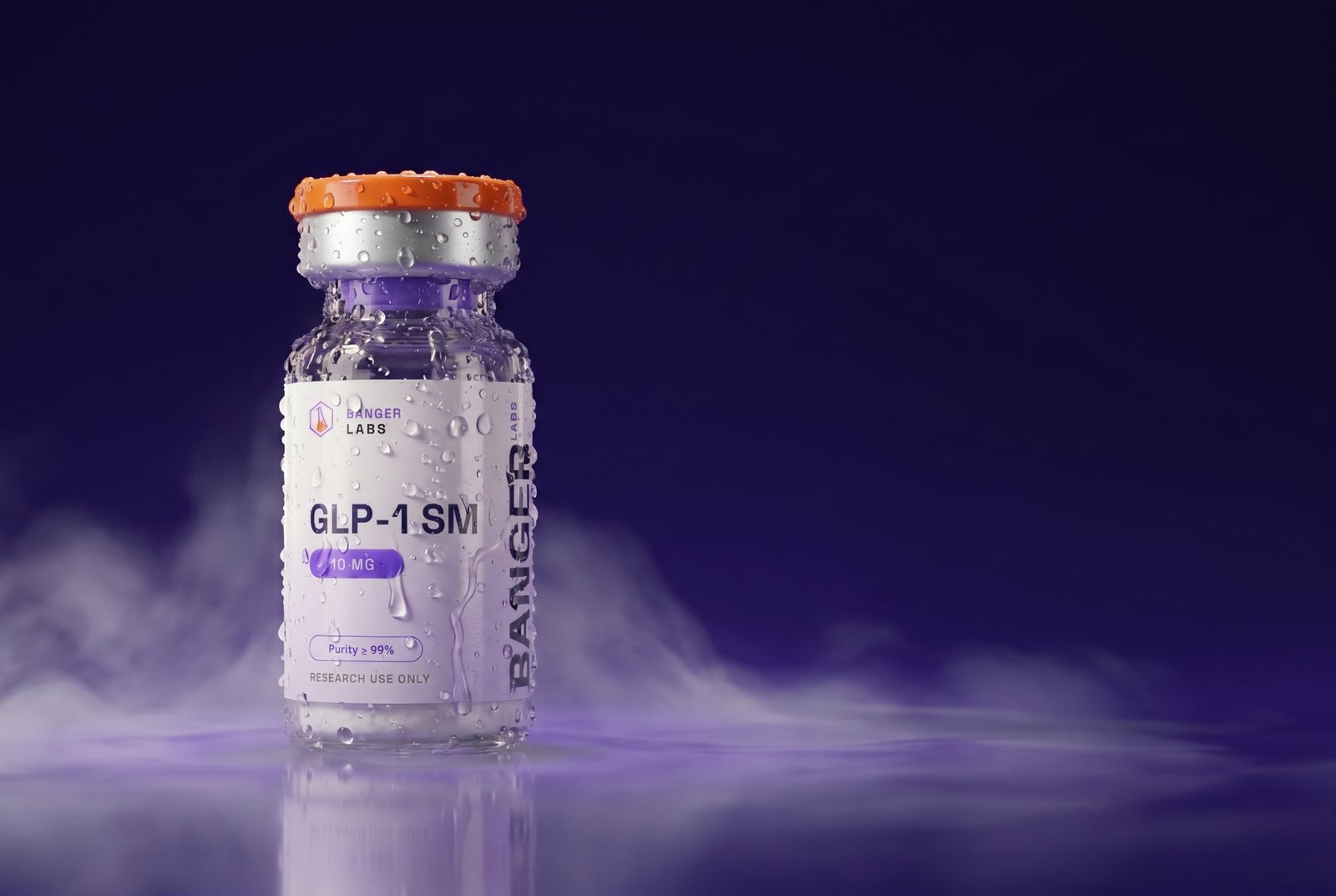
Few peptide classes have generated as much research interest as the incretin mimetics — the family loosely grouped under the “GLP-1” banner. But that shorthand obscures a fast-moving design space in which molecules now engage two, three, or even a combination of complementary receptors. This guide unpacks the underlying incretin biology, distinguishes single from dual and triple receptor agonists, and maps the most-studied compounds — GLP-1 SM, GLP-2 T, GLP-3 R, GLP-5 C, and GLP-4 SV — to the receptors they target. Everything here is framed strictly for laboratory and educational context: these materials are sold for research use only and are not for human consumption, and every mechanism described is drawn from preclinical and published clinical pharmacology literature, not dosing guidance.
Incretin biology: the receptors that define the class
To understand the GLP-1 class, start with the incretin effect — the well-documented observation that orally delivered glucose elicits a larger insulin response than the same glucose dose delivered intravenously. The difference is attributed to gut-derived hormones released in response to nutrient intake. Two incretins dominate the literature: glucagon-like peptide-1 (GLP-1) and glucose-dependent insulinotropic polypeptide (GIP). A handful of related receptors round out the targets that modern multi-agonists engage.
The four receptors that matter
- GLP-1 receptor (GLP-1R) — a class B G-protein-coupled receptor. In preclinical and clinical pharmacology studies, GLP-1R activation is associated with glucose-dependent insulin secretion, suppression of glucagon, and slowed gastric emptying.
- GIP receptor (GIPR) — the other incretin receptor. GIP is the principal incretin by secreted quantity in humans; its receptor pharmacology is more nuanced, and the research literature continues to debate the net metabolic consequences of agonism versus antagonism.
- Glucagon receptor (GCGR) — distinct from the glucagon-LIKE peptide receptor. In animal models, glucagon receptor signaling is linked to hepatic glucose output and to energy expenditure, which is why it appears as a deliberate third target in some designs.
- Amylin receptor — a receptor complex formed by the calcitonin receptor paired with receptor-activity-modifying proteins (RAMPs). Amylin is co-secreted with insulin from pancreatic beta cells; in preclinical work it is studied for satiety signaling that is mechanistically separate from the incretin axis.
Native GLP-1 has a very short half-life because the enzyme dipeptidyl peptidase-4 (DPP-4) rapidly cleaves it. Much of the engineering behind the research peptides in this class — fatty-acid acylation, amino-acid substitutions at the DPP-4 cleavage site — exists to resist that degradation and extend circulating duration. That structural backstory explains why the molecules below look so different despite hitting overlapping receptors.
Single, dual, and triple agonists: a design taxonomy
The cleanest way to organize this class is by how many receptors a single molecule activates. Each added target is a deliberate pharmacological choice, supported in the literature by distinct receptor biology rather than by simply ‘stacking’ compounds.
Mono-agonists
A mono-agonist engages one receptor. The archetype is a selective GLP-1R agonist. Decades of pharmacology make GLP-1R the best-characterized single target in the class, which is part of why mono-agonists remain a common starting point in comparative research.
Dual agonists
A dual agonist is a single peptide engineered to activate two receptors at once. Two pairings dominate the published work: GLP-1R + GIPR (combining both incretin receptors) and GLP-1R + GCGR (pairing an incretin receptor with the glucagon receptor). A separate strategy pairs an amylin-receptor agonist with a GLP-1R agonist as co-administered but distinct molecules — a combination approach rather than a single dual peptide.
Triple agonists
A triple agonist activates GLP-1R, GIPR, and GCGR from one molecule. This is the most pharmacologically ambitious design in the class and the newest to enter the research literature. The rationale, as described in preclinical reports, is that the three receptors contribute complementary metabolic signals.
Mapping the compounds to their targets
Here is where the named research peptides fit. Each entry below describes the receptor profile reported in the pharmacology literature — nothing about outcomes in people.
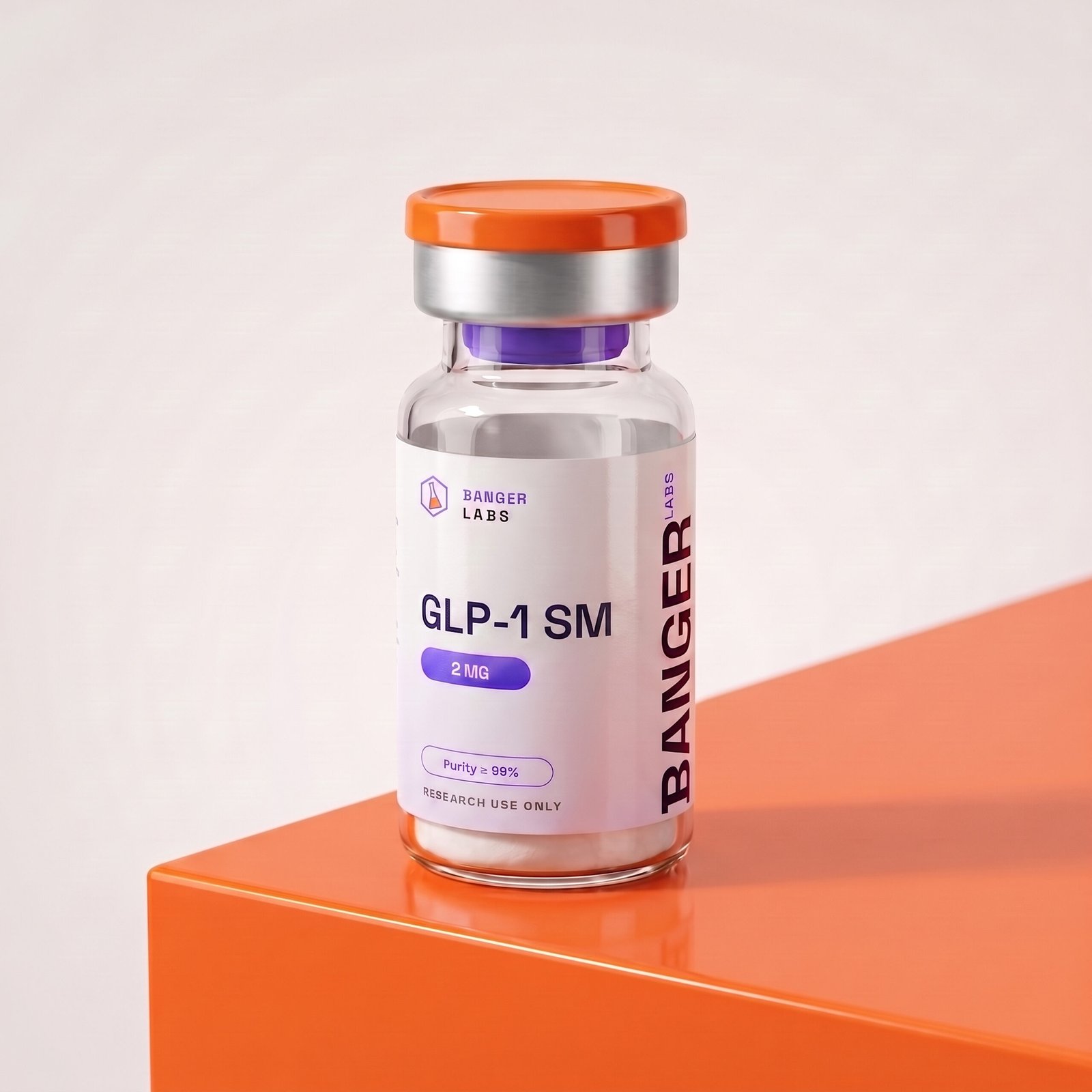
- GLP-1 SM — a selective GLP-1 receptor mono-agonist. An acylated, DPP-4-resistant analog of native GLP-1, it is the reference single-target molecule for much comparative research in this class.
- GLP-2 T — a dual GLP-1R + GIPR agonist (a ‘twincretin’). A single peptide engineered to activate both incretin receptors, it is the most-studied dual-incretin molecule in the literature.
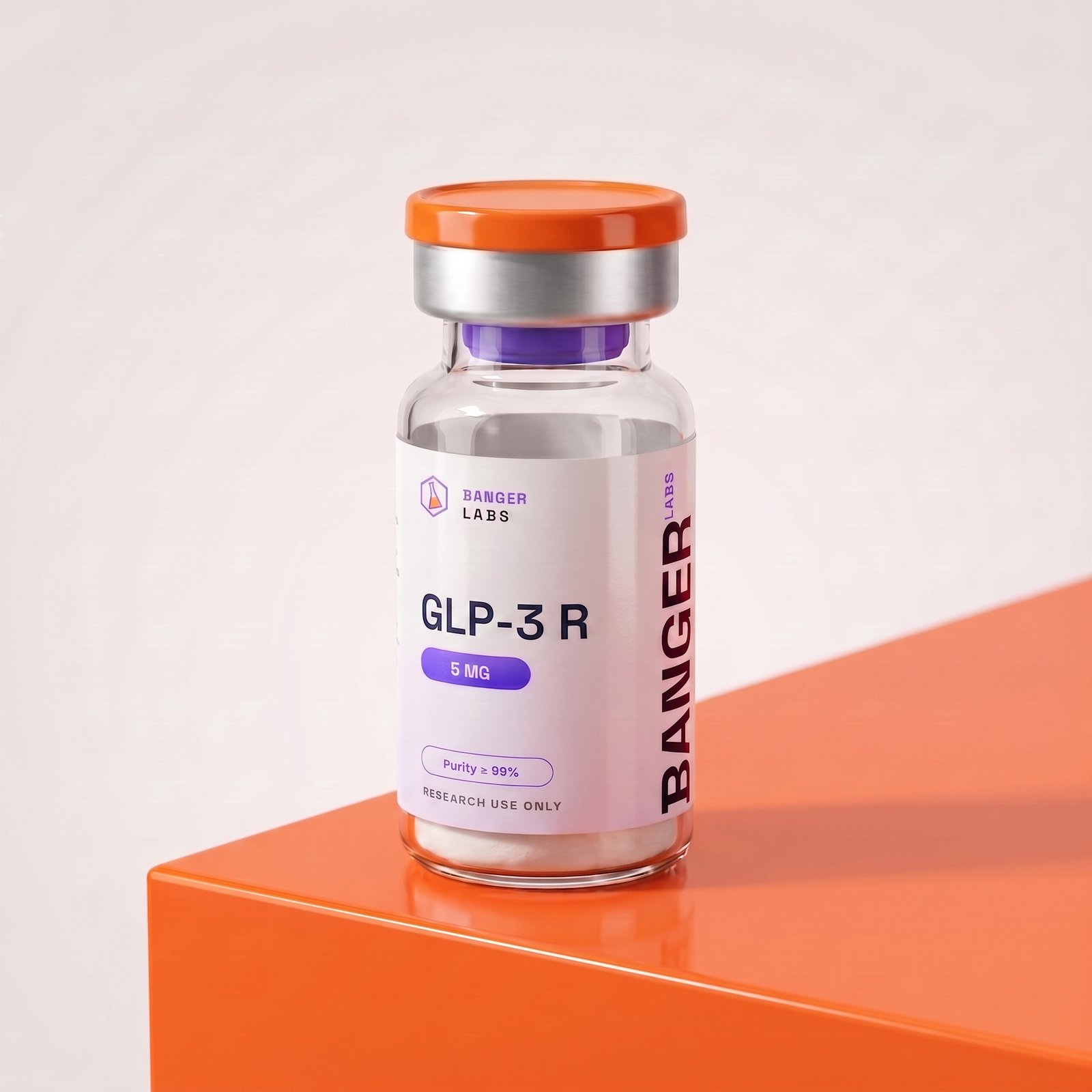
- GLP-3 R — a triple GLP-1R + GIPR + GCGR agonist. One molecule engaging both incretin receptors plus the glucagon receptor; it represents the triple-agonist frontier in published research.
- GLP-4 SV — a dual GLP-1R + GCGR agonist. It pairs an incretin receptor with the glucagon receptor rather than with GIPR, making it a useful contrast to GLP-2 T in receptor-mechanism studies.
- GLP-5 C — a long-acting amylin-receptor agonist (an amylin analog). It sits outside the incretin axis and is frequently studied alongside a GLP-1R agonist as a combination, not as a single multi-receptor peptide.
Notice the pattern: two distinct dual strategies (incretin+incretin in GLP-2 T vs incretin+glucagon in GLP-4 SV), a triple that unites them (GLP-3 R), a pure GLP-1 reference (GLP-1 SM), and an entirely separate amylin pathway (GLP-5 C). Browse the full receptor agonists research category to see how these reference materials are catalogued.
Side-by-side comparison
The table below summarizes receptor targets and structural class for the most-referenced compounds. It is a mechanism map, not a ranking — and it carries no implication of comparative effect in humans.
| Compound | GLP-1R | GIPR | GCGR | Amylin | Class |
|---|---|---|---|---|---|
| GLP-1 SM | Yes | — | — | — | GLP-1 mono-agonist |
| GLP-2 T | Yes | Yes | — | — | Dual incretin (GLP-1R/GIPR) |
| GLP-4 SV | Yes | — | Yes | — | Dual (GLP-1R/GCGR) |
| GLP-3 R | Yes | Yes | Yes | — | Triple agonist |
| GLP-5 C | — | — | — | Yes | Amylin analog |
Structure, half-life, and why the molecules differ
Two molecules can share a receptor target yet behave very differently in a research setting because of structural engineering. Three features recur across this class:
- DPP-4 resistance. Native GLP-1 is cleaved within minutes. Substitutions near the cleavage site blunt that, dramatically extending the molecule’s measured circulating duration in pharmacokinetic studies.
- Fatty-acid acylation. Attaching a lipid side chain promotes reversible binding to albumin, which slows renal clearance and is the basis for the long-acting profiles reported for several compounds in this class.
- Backbone redesign. Multi-agonists are often built on hybrid sequences — for example, a GIP-based backbone tuned to also engage GLP-1R — so the peptide can satisfy two or three receptor binding pockets at once.
These details matter for any benchtop or analytical work. Purity, identity, and stability all depend on getting reconstitution and storage right; our reconstitution and storage guide covers the handling fundamentals, and every lot ships with documentation you can cross-check using how to read a peptide COA.
What ‘research use only’ actually requires
Because this class draws so much attention, it is worth being explicit about scope. The compounds described here are reference materials intended for in-vitro and laboratory research and analytical method development. They are not drugs, not supplements, and not for human consumption. No section of this article describes a protocol for use in people, and none should be inferred.
Mechanism is not a recommendation. Describing how a receptor behaves in animal and cell-based studies says nothing about how — or whether — a compound should ever be administered to a human.
If you are new to this framing, what ‘research use only’ means explains the regulatory and practical boundaries, and our research disclaimer sets out the terms under which these materials are supplied. Treating the compliance framing as central — not as fine print — is the responsible default for anyone working with this class.
Common questions
What is the difference between GLP-1 and GIP?
Both are incretin hormones released by the gut after nutrient intake, but they act on different receptors (GLP-1R and GIPR respectively). GIP is the more abundant incretin by quantity secreted in humans, while GLP-1R is the more extensively characterized pharmacological target. Some research molecules engage one, the other, or both. This is mechanistic background only — these materials are for research use, not human consumption.
Is GLP-5 C a GLP-1 agonist?
No. GLP-5 C is a long-acting amylin-receptor agonist. Amylin signaling is mechanistically separate from the incretin (GLP-1/GIP) axis, which is why GLP-5 C is studied as its own pathway and frequently paired with a GLP-1R agonist as a co-administered combination rather than as a single multi-receptor peptide.
Why would a single molecule target three receptors instead of one?
Preclinical reports describe GLP-1R, GIPR, and GCGR as contributing complementary metabolic signals. A unimolecular triple agonist like GLP-3 R lets researchers study all three together with a single pharmacokinetic profile, rather than juggling three separate molecules with different half-lives and distribution.
How do GLP-2 T and GLP-4 SV differ if both are dual agonists?
They pair GLP-1R with different second receptors. GLP-2 T combines the two incretin receptors (GLP-1R + GIPR), while GLP-4 SV combines an incretin receptor with the glucagon receptor (GLP-1R + GCGR). That makes them useful contrasts in receptor-mechanism research even though both are ‘dual.’
Why does native GLP-1 need to be re-engineered for research analogs?
Native GLP-1 is cleaved within minutes by the enzyme DPP-4, giving it a very short measured half-life. Research analogs use DPP-4-resistant substitutions and fatty-acid acylation to extend circulating duration in pharmacokinetic studies, which is the main reason engineered analogs exist.
Related research reading
References
- Drucker DJ. Mechanisms of Action and Therapeutic Application of Glucagon-like Peptide-1. Cell Metabolism. NCBI/PubMed: https://pubmed.ncbi.nlm.nih.gov/29320711/
- Nauck MA, Meier JJ. Incretin hormones: Their role in health and disease. Diabetes, Obesity and Metabolism. https://pubmed.ncbi.nlm.nih.gov/29364588/
- Glucagon-like peptide 1 (GLP-1) entry, PubChem / NCBI: https://pubchem.ncbi.nlm.nih.gov/
- Müller TD, et al. Glucagon-like peptide 1 (GLP-1). Molecular Metabolism. https://pubmed.ncbi.nlm.nih.gov/31767182/
Banger Labs supplies materials for laboratory and research use only. Not for human consumption. Not intended to diagnose, treat, cure, or prevent any disease. Statements have not been evaluated by the FDA.
Shop research peptides
Research-grade, ≥ 99% HPLC standard, COA per batch:
- GHK-Cu Research Overview: Copper Peptide Mechanisms & Forms →
- Peptide Mechanisms of Action: How the Major Research Classes Work →
- Thymosin Alpha-1, Thymalin, LL-37 & TB-500: Immune & Repair Peptide Research →
Browse the full Research Library →
For research use only. Not for human or veterinary use. Not a drug, food, or cosmetic.