By the Banger Labs Research Team · Updated June 2026
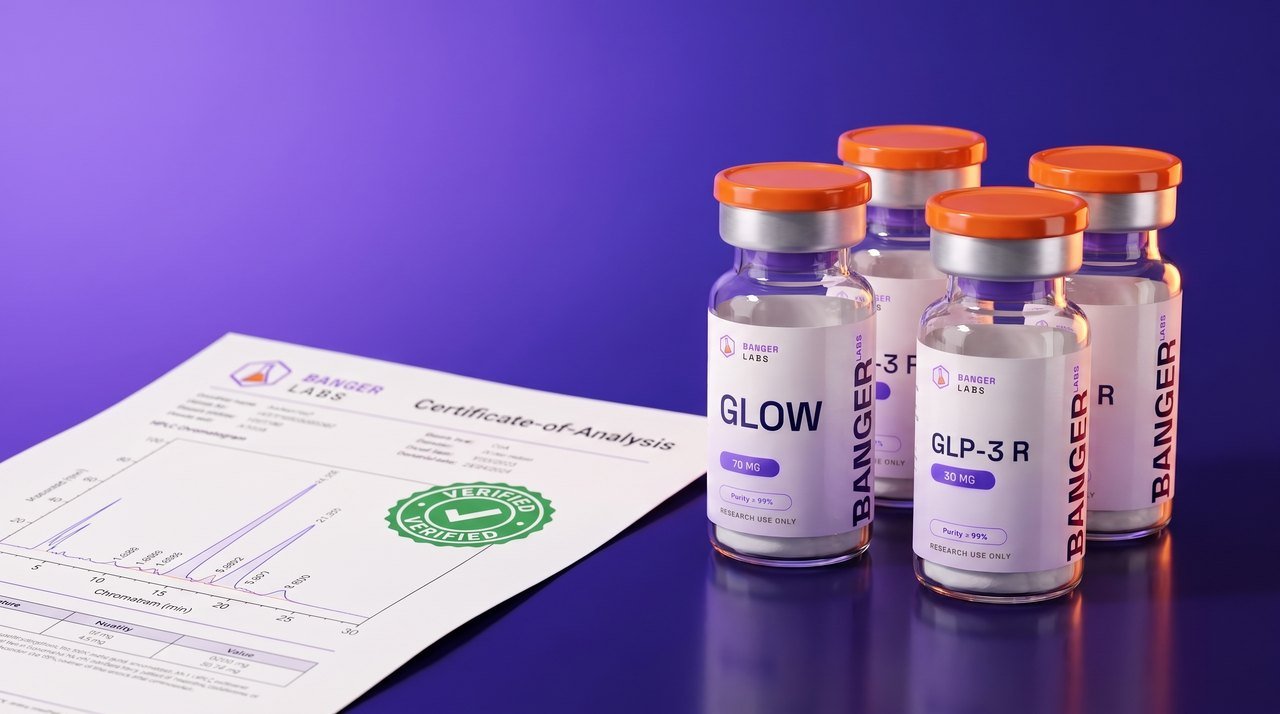
Short answer: A peptide COA is a lab document for a specific lot showing identity (usually mass spectrometry) and purity (usually HPLC %). The four things to check: a named third-party lab, the lot number matching your vial, an HPLC purity figure (≥ 99% is excellent, ≥ 96% the floor), and a mass-spec identity confirmation.
What each section means
Red flags
- A generic COA reused across products or lots.
- No third-party lab named (in-house only).
- Uniform “99.95%” on everything — a known fake-COA tell.
- “Email us for the COA” with nothing published.
Banger Labs provides a Certificate of Analysis per batch on request — see our testing & quality standards.
Frequently asked questions
What purity should a peptide COA show?
≥ 99% HPLC is considered excellent; ≥ 96% is the common floor.
How do I verify a COA is real?
Check that a named third-party lab ran it, the lot matches your vial, and (for labs like Janoshik) verify it on the lab’s own database.
Shop research peptides
Keep exploring
By the Banger Labs Research Team. For research use only. Not for human or veterinary use. Not a drug, food, or cosmetic. Educational information, not medical advice.