By the Banger Labs Research Team · Updated June 2026
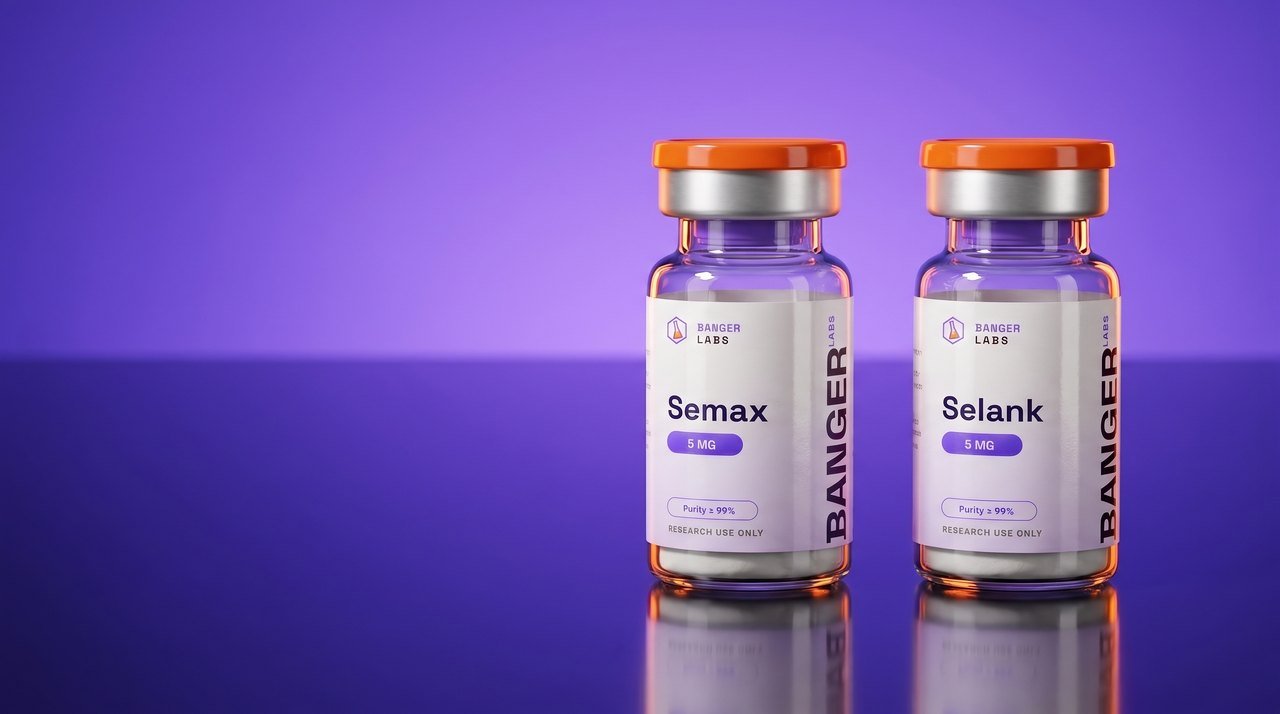
Semax vs Selank at a glance
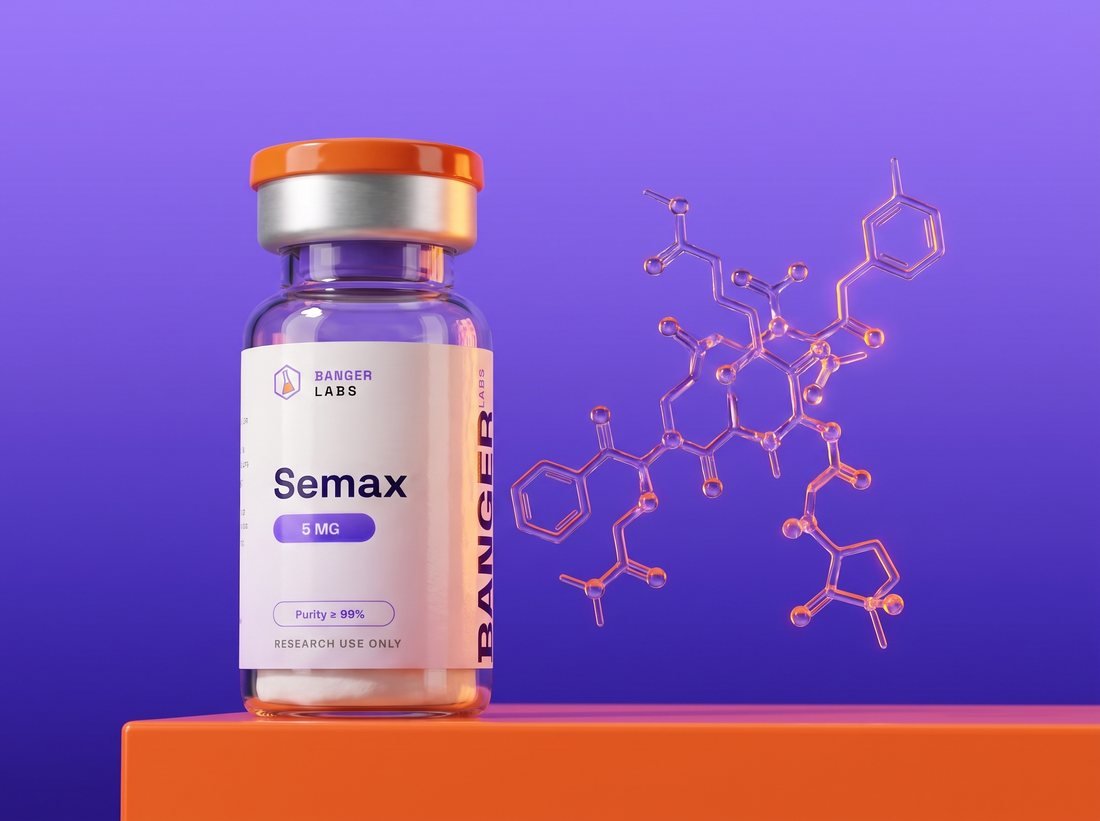
What is Semax?
Semax is a synthetic heptapeptide with the sequence Met-Glu-His-Phe-Pro-Gly-Pro, derived from the 4-7 fragment of the N-terminal region of adrenocorticotropic hormone (ACTH) joined to a C-terminal Pro-Gly-Pro tripeptide. It was developed in Russia as an ACTH(4-10) analog and is reported in the literature to be devoid of the hormonal (corticotropic) activity of the parent peptide. It is used as a research compound in neuropeptide and neurochemistry investigations.
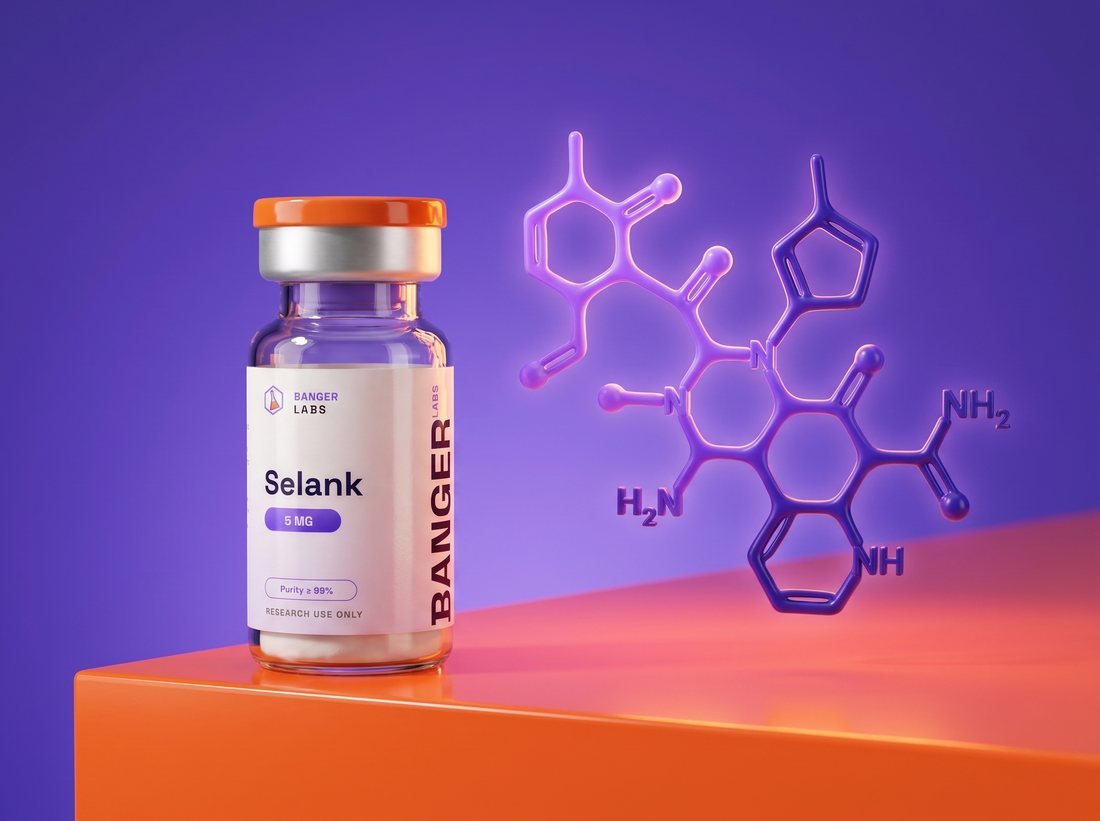
What is Selank?
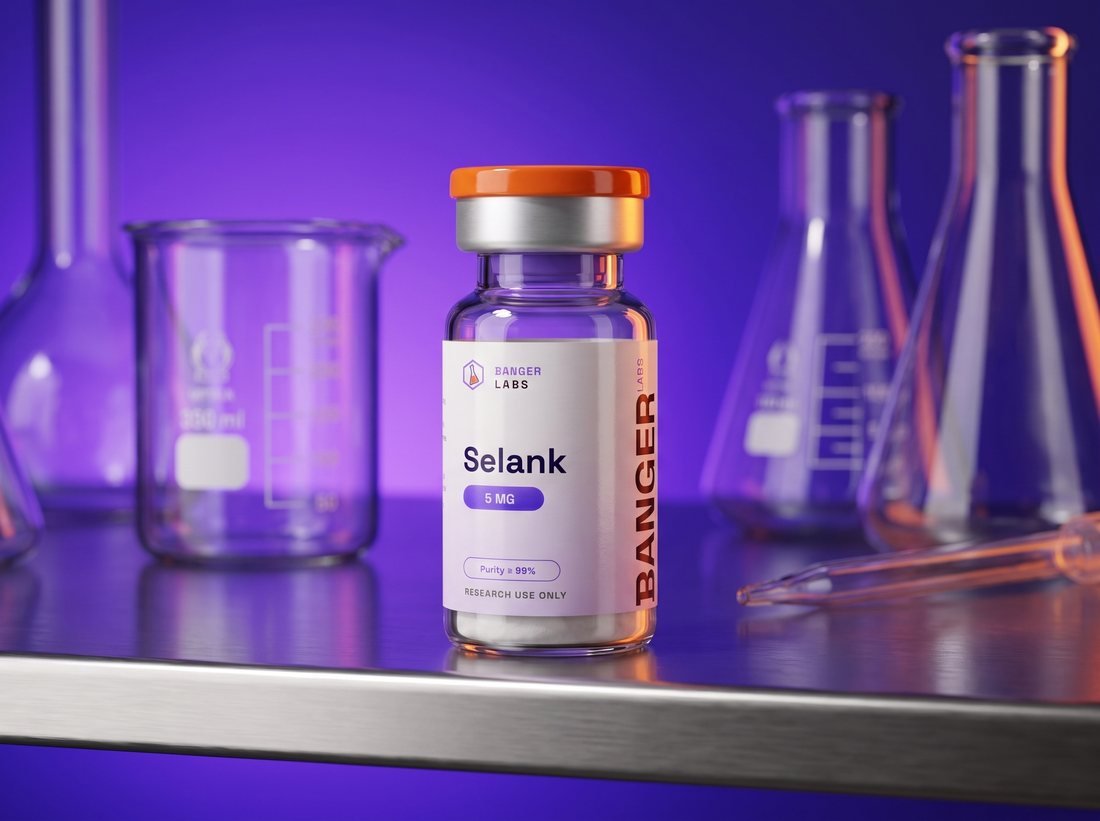
Selank is a synthetic heptapeptide (sequence Thr-Lys-Pro-Arg-Pro-Gly-Pro) developed at the Institute of Molecular Genetics of the Russian Academy of Sciences. It is structurally derived from the endogenous immunomodulatory tetrapeptide tuftsin (Thr-Lys-Pro-Arg), extended with a C-terminal Pro-Gly-Pro tripeptide that increases metabolic/enzymatic stability. It is referenced in this overview solely as a research-use-only compound.
How they differ
In preclinical/in vitro and animal studies, Semax has been reported to modulate the expression and transcription of neurotrophic factors such as BDNF and NGF and their receptor genes. Additional research describes interactions with monoaminergic systems (dopaminergic and serotonergic) in rodent models and copper(II) ion binding. These mechanisms are characterized only in experimental research settings and are not established human pharmacology. By contrast, In preclinical research models, Selank has been studied for allosteric modulation of the GABAergic system rather than direct GABA-receptor activation, with gene-expression studies in rat frontal cortex showing correlated changes between Selank and GABA. Research has also examined effects on monoamine neurotransmitters (serotonin and dopamine metabolism) and immune-related signaling, including expression of interleukin-6 (IL-6) and the balance of T-helper cytokines. These mechanisms are characterized in laboratory and animal-model contexts only.
These describe laboratory/preclinical research only. No therapeutic, medical, or efficacy claims are made.
Frequently asked questions
Are Semax and Selank the same?
No — see the comparison table above; they differ in class and the research contexts in which they are studied.
Are these research use only?
Yes. Both are supplied strictly for laboratory research — not for human or veterinary use.
References
- Semax, an ACTH(4-10) analogue with nootropic properties, activates dopaminergic and serotoninergic brain systems in rodents — PubMed (Neurochem Res, 2005)
- Semax and Pro-Gly-Pro Activate the Transcription of Neurotrophins and Their Receptor Genes after Cerebral Ischemia — PubMed Central (PMC)
- Semax, an ACTH4-10 peptide analog with high affinity for copper(II) ion and protective ability against metal induced cell toxicity — PubMed (J Inorg Biochem, 2015)
- The Potential of the Peptide Drug Semax and Its Derivative for Correcting Pathological Impairments in the Animal Model of Alzheimer’s Disease — PubMed Central (PMC)
- Selank Administration Affects the Expression of Some Genes Involved in GABAergic Neurotransmission — Frontiers in Pharmacology (2016), PMC
- Selank, a Peptide Analog of Tuftsin, Attenuates Aversive Signs of Morphine Withdrawal in Rats — Bulletin of Experimental Biology and Medicine (2022), PubMed
- Selank — Wikipedia (overview of structure/origin)
Shop these research peptides
By the Banger Labs Research Team. For research use only. Not for human or veterinary use. Educational information, not medical advice.