By the Banger Labs Research Team · Updated June 2026
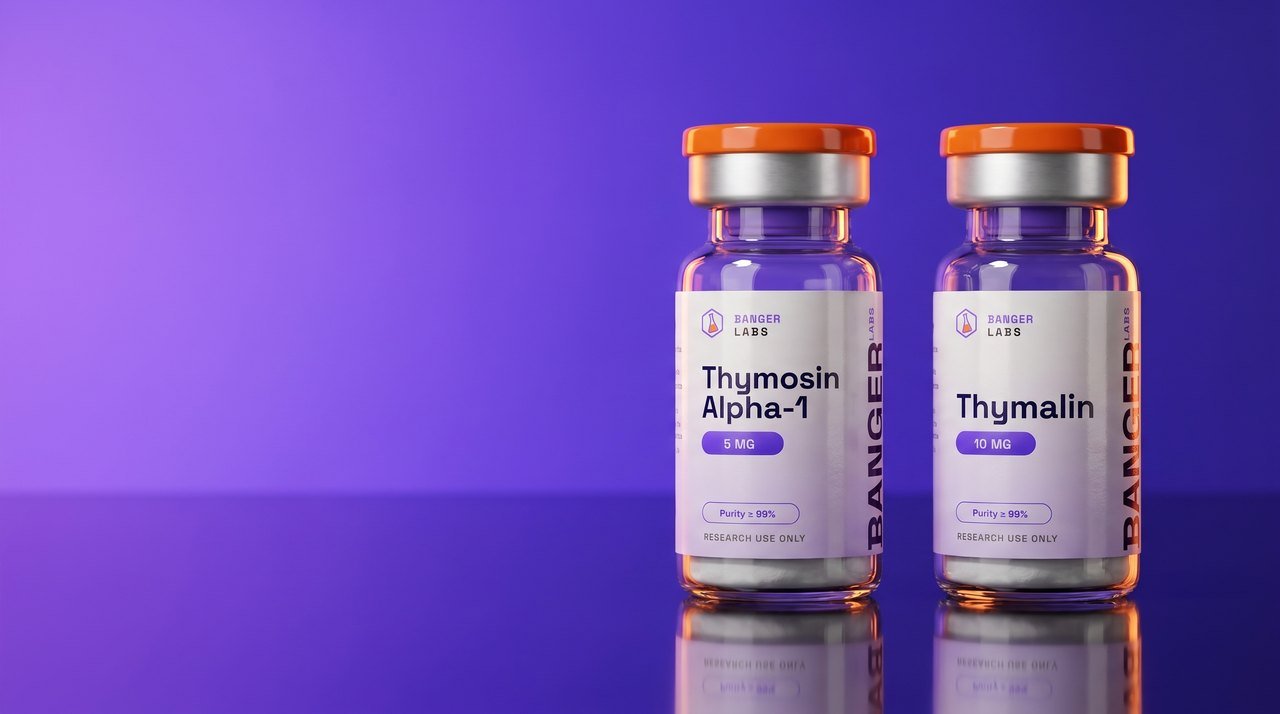
Thymosin Alpha-1 vs Thymalin at a glance
What is Thymosin Alpha-1?
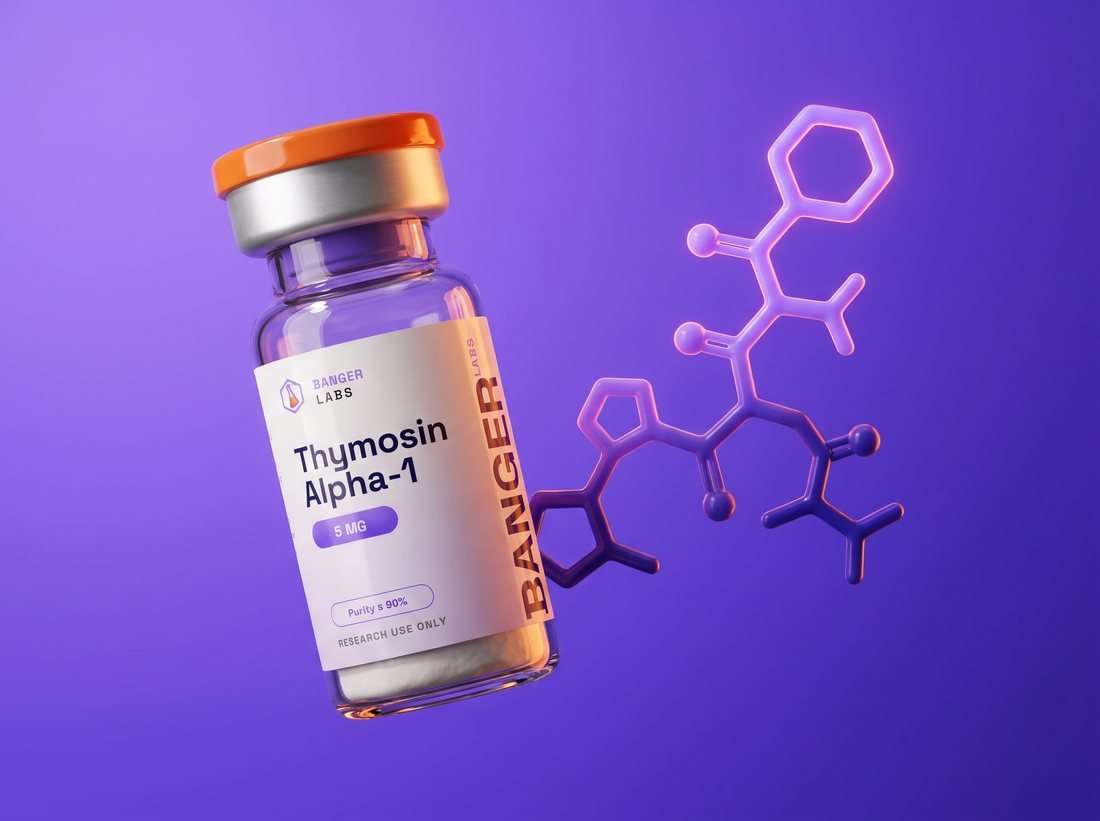
Thymosin Alpha-1 (Tα1) is a 28-amino-acid, highly acidic, heat-stable peptide first isolated from thymic tissue (thymosin fraction 5) and characterized by Goldstein and colleagues. Endogenously it arises as the N-terminal proteolytic cleavage product of the precursor protein prothymosin alpha. Its sequence is conserved across mammalian species, and the chemically synthesized form used in research mirrors the native peptide.
What is Thymalin?
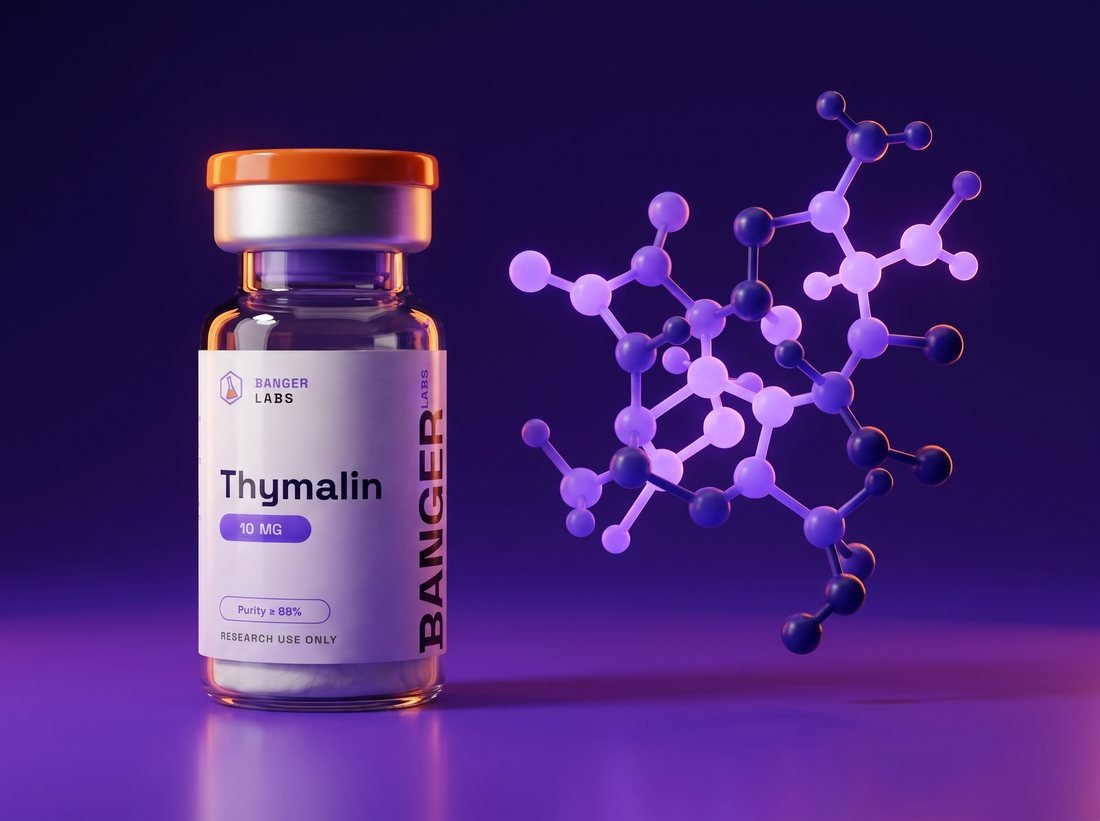
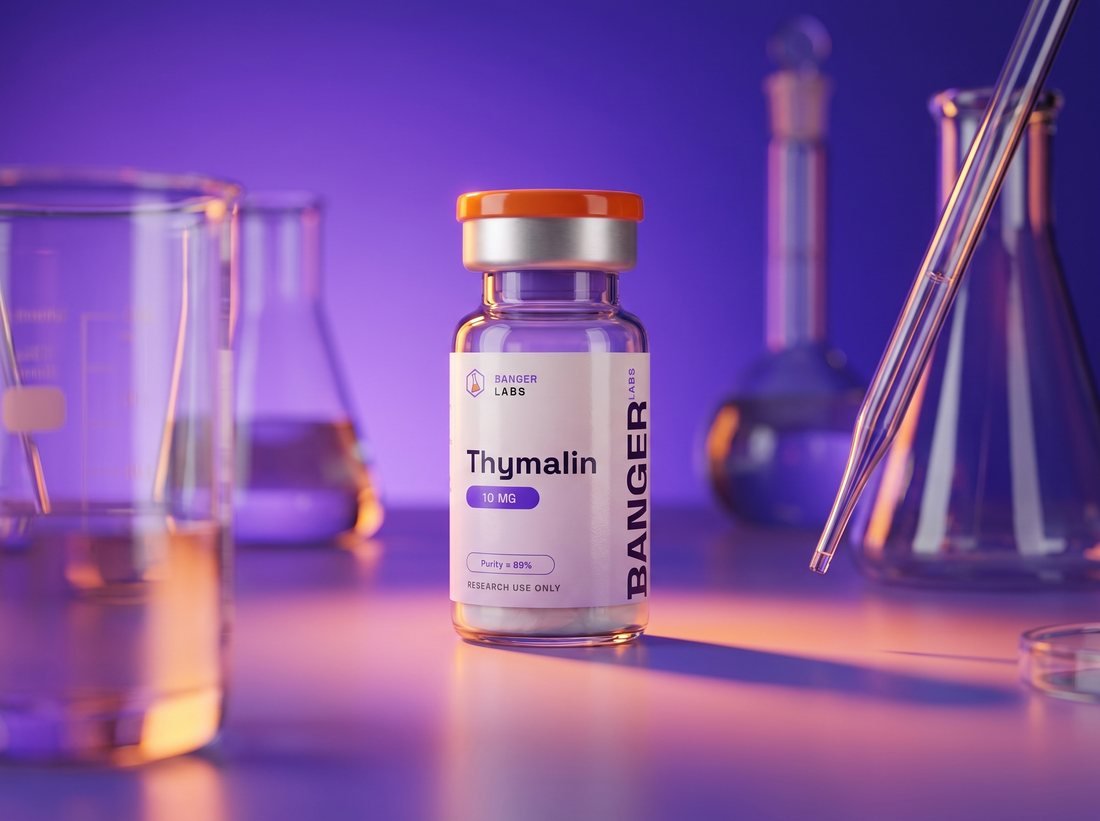
Thymalin is a polypeptide complex originally isolated from the thymus gland of calves and first developed in the Soviet Union/Russia (Institute of Bioregulation and Gerontology, St. Petersburg). In the research literature it is characterized as a mixture of short peptides rather than a single defined molecule, and is grouped with other thymic peptide preparations such as thymogen and thymulin.
How they differ
In preclinical and in vitro research, Thymosin Alpha-1 has been characterized as a Toll-like receptor (TLR) agonist, with reported binding to TLR2 and TLR9 (and described interactions with TLR3/4/7). In research models, engagement of these receptors is associated with downstream IRF3, NF-κB, and p38 MAPK signaling. These pathways have been studied in connection with dendritic cell maturation, modulation of T-cell differentiation, and natural killer cell activity. By contrast, In published preclinical and laboratory studies, Thymalin’s reported activity is attributed to short peptide constituents (notably the dipeptide Glu-Trp/EW and related short peptides such as Lys-Glu/KE) that are proposed to interact with DNA and chromatin and to modulate gene expression. Research reports describe effects on T-lymphocyte differentiation, cytokine signaling (e.g., interleukin-2, interferon), and differentiation of hematopoietic stem cell populations in experimental systems. These are mechanistic research observations only and do not establish any therapeutic effect.
These describe laboratory/preclinical research only. No therapeutic, medical, or efficacy claims are made.
Frequently asked questions
Are Thymosin Alpha-1 and Thymalin the same?
No — see the comparison table above; they differ in class and the research contexts in which they are studied.
Are these research use only?
Yes. Both are supplied strictly for laboratory research — not for human or veterinary use.
References
- Thymosin alpha 1: A comprehensive review of the literature — World Journal of Virology (2020) — PubMed
- Thymosin alpha1: isolation and sequence analysis of an immunologically active thymic polypeptide — PNAS (1977) — PMC (primary isolation & sequence)
- Thymosin α1 and Its Role in Viral Infectious Diseases: The Mechanism and Clinical Application — Molecules (2023) — PMC
- Thymosin alpha 1: Biological activities, applications and genetic engineering production — Peptides (2010) review — PMC
- Natural and synthetic thymic peptides as therapeutics for immune dysfunction (Morozov VG, Khavinson VK) — International Journal of Immunopharmacology, 1997 (PubMed)
- Thymalin: Activation of Differentiation of Human Hematopoietic Stem Cells (Khavinson VKh et al.) — Bulletin of Experimental Biology and Medicine, 2020 (PMC)
- Review of Thymic Peptides and Hormones: From Their Properties to Clinical Application — International Journal of Peptide Research and Therapeutics, 2024 (Springer)
Shop these research peptides
Shop Thymosin Alpha-1 →Shop Thymalin →
By the Banger Labs Research Team. For research use only. Not for human or veterinary use. Educational information, not medical advice.