By the Banger Labs Research Team · Updated June 2026
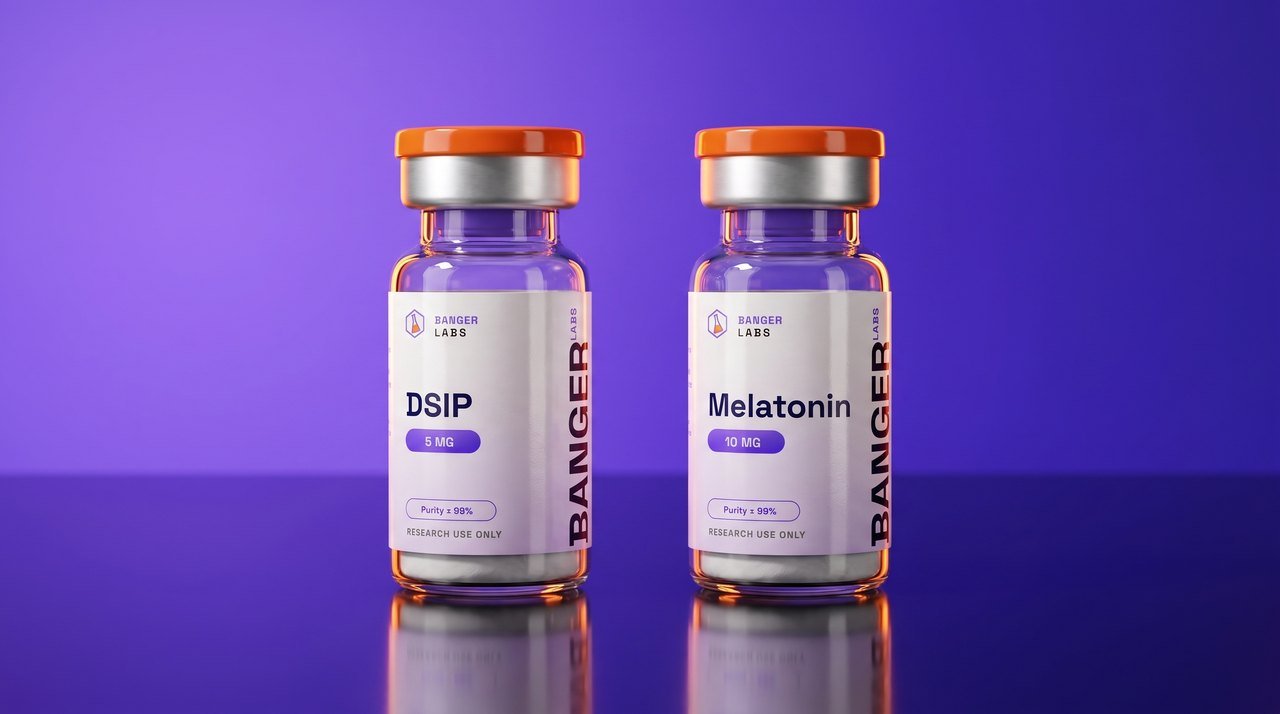
DSIP vs Melatonin at a glance
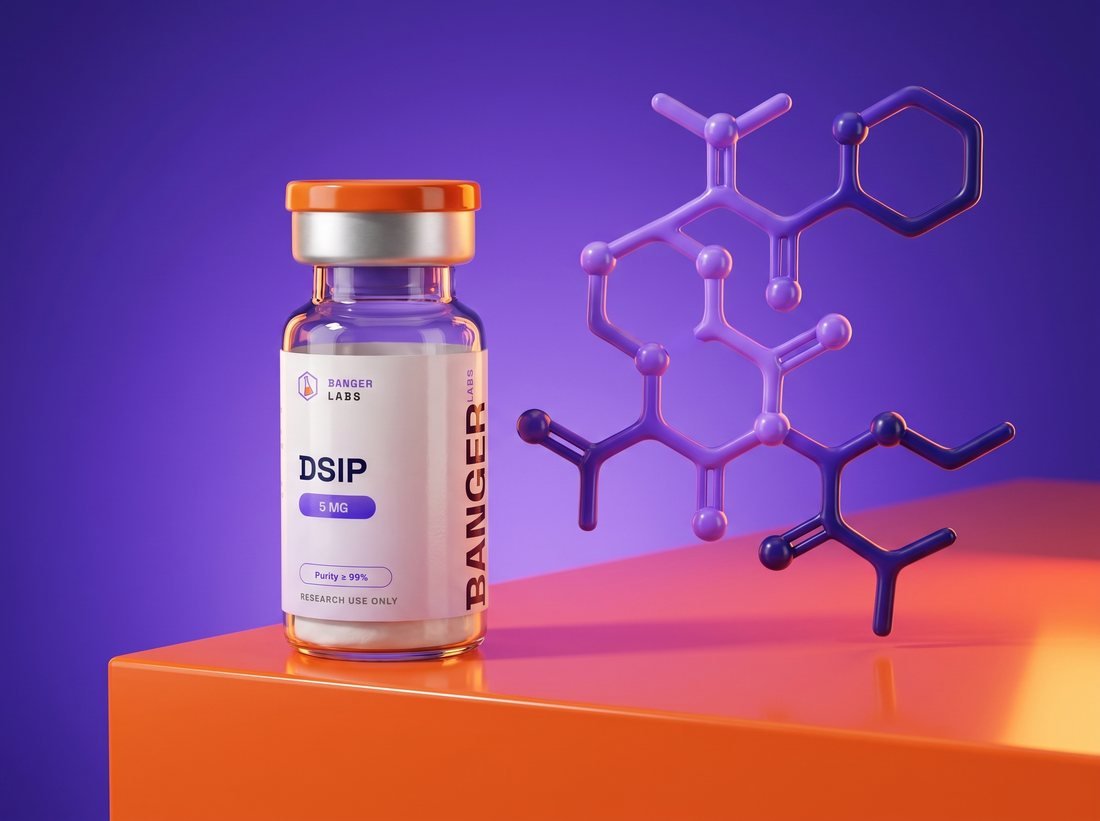
What is DSIP?
Delta sleep-inducing peptide (DSIP) is an amphiphilic nonapeptide with the sequence Trp-Ala-Gly-Gly-Asp-Ala-Ser-Gly-Glu and a molecular weight of approximately 849. It was first isolated by Monnier, Schoenenberger and colleagues in the 1970s from the cerebral venous blood dialysate of rabbits during electrically induced slow-wave sleep, and its structure was confirmed by amino-acid analysis and chemical synthesis. It is classified as an endogenous neuropeptide rather than a synthetic analog of any drug class.
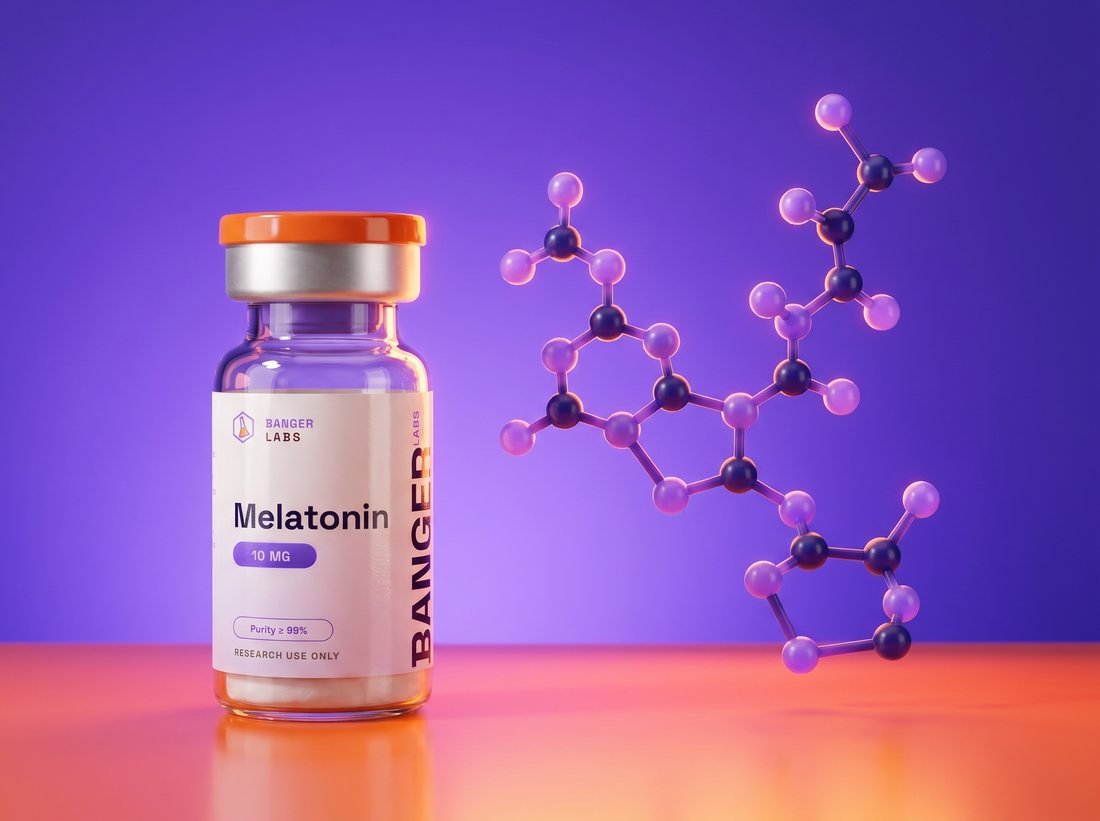
What is Melatonin?
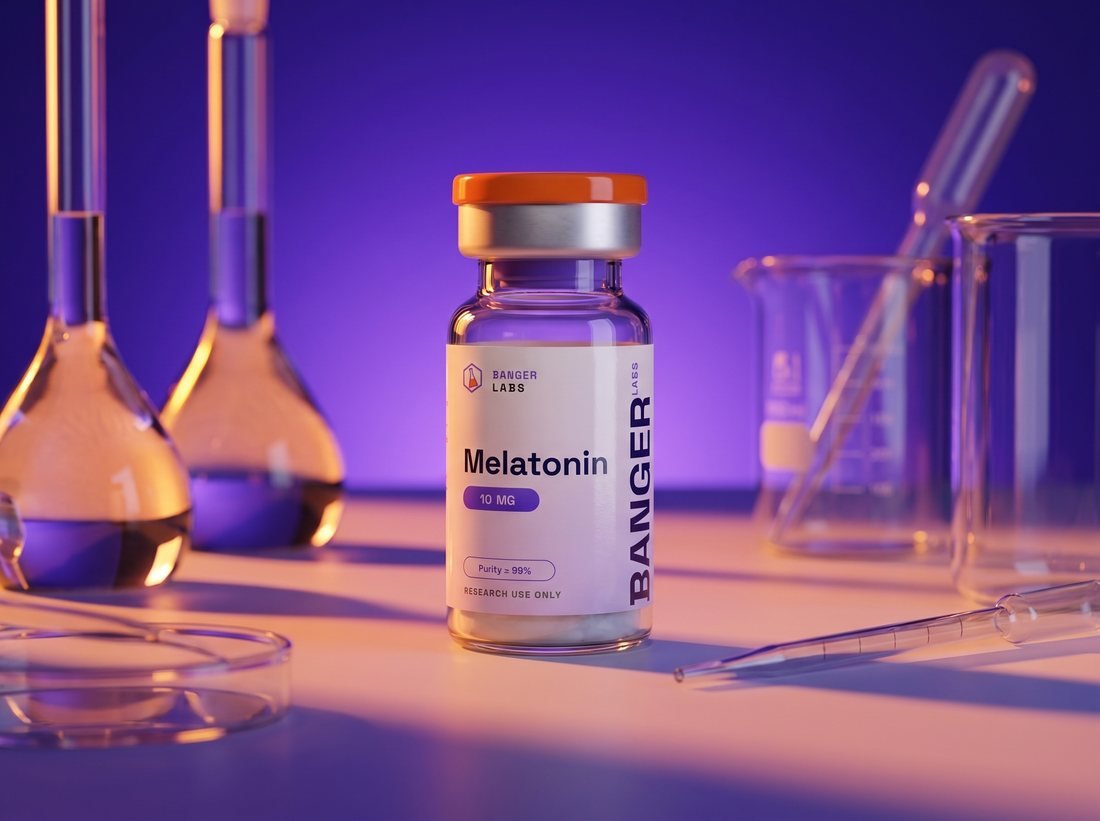
Melatonin is an endogenous indoleamine (chemical name N-acetyl-5-methoxytryptamine), not a peptide, synthesized and released primarily by the pineal gland and also locally in the retina and other peripheral tissues. It is derived biosynthetically from the amino acid L-tryptophan via serotonin and N-acetylserotonin intermediates. This brief is provided for research-use-only, educational reference and describes only established structural and preclinical findings.
How they differ
The molecular mechanism of DSIP remains unresolved in the research literature; no specific DSIP gene, precursor protein, or dedicated receptor has been definitively identified. Reported preclinical observations suggest possible interactions with neurotransmitter systems, including modulation of adrenergic transmission and effects on serotonergic, noradrenergic, and GABAergic signaling. In vitro it shows low metabolic stability (a short half-life attributed to aminopeptidase-like degradation), and structure-activity studies indicate that amino-acid substitutions or truncation reduce or abolish measured activity. By contrast, In mammalian research models, melatonin acts as an agonist at two high-affinity G protein-coupled receptors, MT1 (MTNR1A) and MT2 (MTNR1B), which are expressed in the suprachiasmatic nucleus and various peripheral tissues. Receptor activation modulates downstream G-protein signaling associated with circadian and seasonal physiological rhythms in study systems. Melatonin has also been characterized in vitro as a direct free-radical scavenger and antioxidant molecule.
These describe laboratory/preclinical research only. No therapeutic, medical, or efficacy claims are made.
Frequently asked questions
Are DSIP and Melatonin the same?
No — see the comparison table above; they differ in class and the research contexts in which they are studied.
Are these research use only?
Yes. Both are supplied strictly for laboratory research — not for human or veterinary use.
References
- Delta sleep-inducing peptide (DSIP): a still unresolved riddle — PubMed — J Neurochem (2006 review)
- The delta EEG (sleep)-inducing peptide (DSIP). XI. Amino-acid analysis, sequence, synthesis and activity of the nonapeptide — PubMed — Pflugers Arch (1978)
- Characterization of a delta-electroencephalogram (-sleep)-inducing peptide — PMC — Proc Natl Acad Sci USA (1977)
- Delta-sleep-inducing peptide (DSIP): an update — PubMed — Peptides (1986 review)
- MT1 and MT2 Melatonin Receptors: A Therapeutic Perspective — PMC / Annual Review of Pharmacology and Toxicology
- Melatonin and Health: Insights of Melatonin Action, Biological Functions, and Associated Disorders — PMC / Cellular and Molecular Neurobiology
- Melatonin Synthesis and Function: Evolutionary History in Animals and Plants — PMC / Frontiers in Endocrinology
Shop these research peptides
By the Banger Labs Research Team. For research use only. Not for human or veterinary use. Educational information, not medical advice.