By the Banger Labs Research Team · Updated June 2026
CJC-1295 (DAC) vs Sermorelin at a glance
What is CJC-1295 (DAC)?
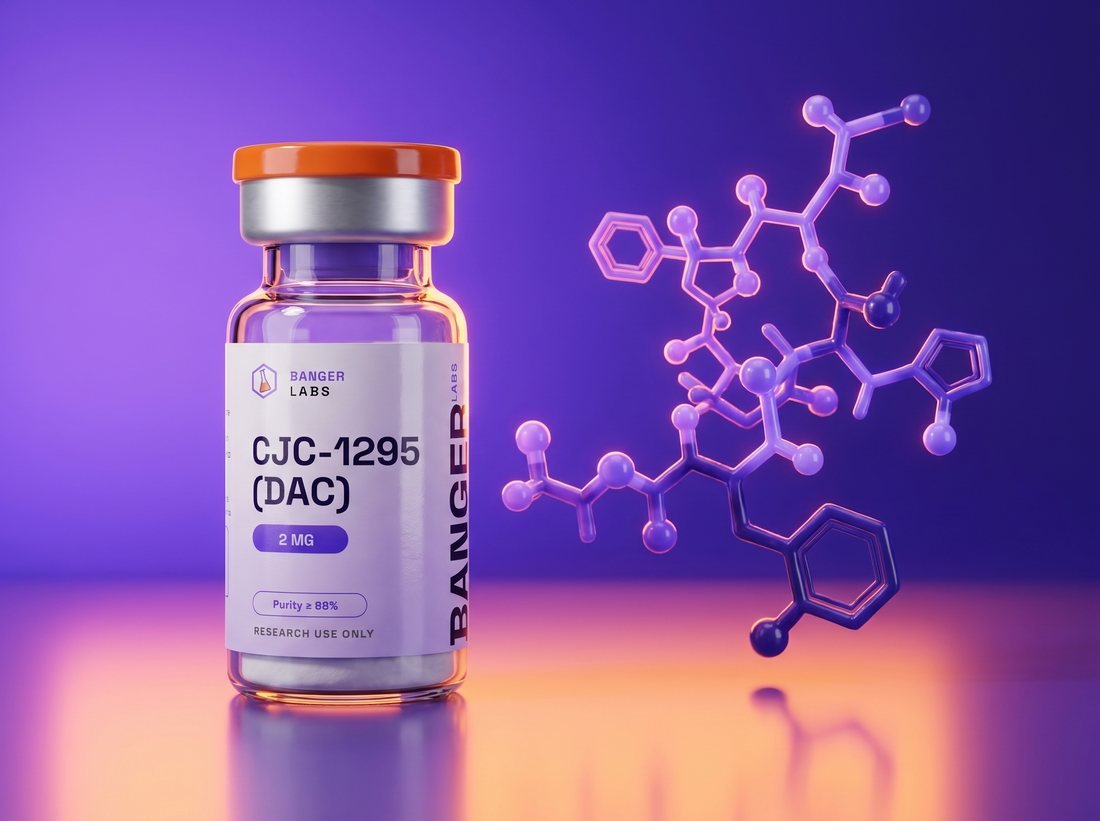
CJC-1295 with DAC (also referred to in the literature as DAC:GRF) is a synthetic analog of the first 29 amino acids of human growth hormone-releasing hormone (GHRH/GRF 1-29), originally developed by ConjuChem Biotechnologies. It carries four stabilizing amino acid substitutions (D-Ala at position 2, Gln at 8, Ala at 15, Leu at 27) plus a lysine-linked maleimidopropionamide group constituting the Drug Affinity Complex (DAC). It is presented here as a research chemical for in vitro and preclinical investigational use only.
What is Sermorelin?
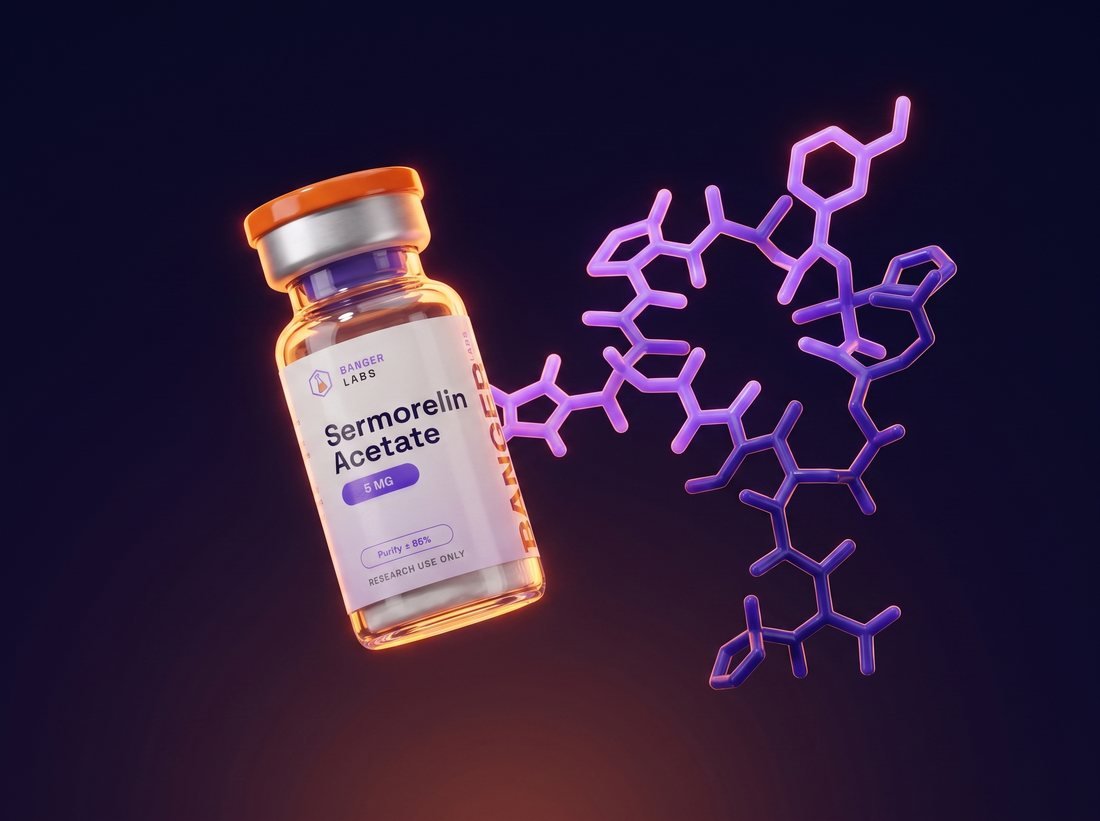
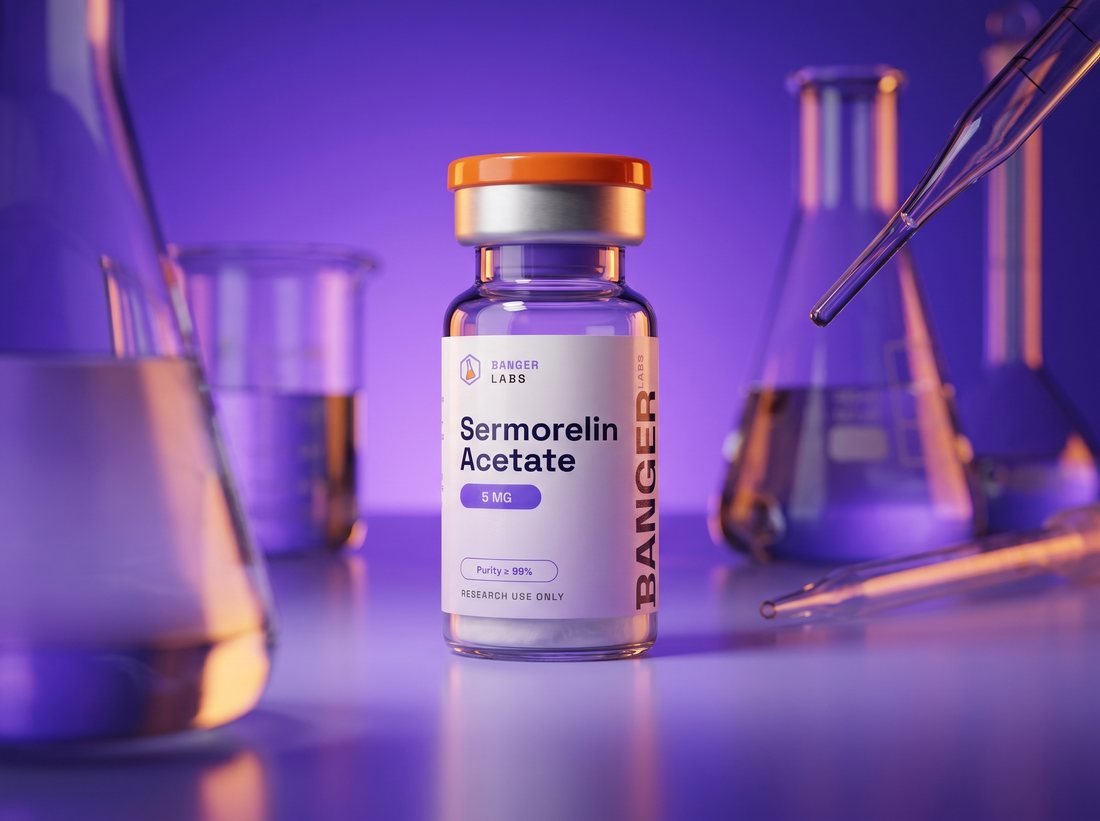
Sermorelin (GRF(1-29)-NH2) is a synthetic peptide consisting of the first 29 amino acids of endogenous human growth hormone-releasing hormone, which is itself a 44-residue hypothalamic peptide. This 1-29 segment is the shortest fragment reported to retain the full intrinsic GHRH activity of the parent molecule, and it is classified as a GHRH analog / growth hormone secretagogue. It is described here strictly for research and educational reference.
How they differ
In research models, CJC-1295 acts as an agonist at the GHRH receptor (GRF receptor) on anterior pituitary somatotrophs. Its DAC moiety, a maleimide derivative, reacts covalently with a free thiol on circulating serum albumin, which substantially prolongs its plasma residence; published pharmacokinetic research has characterized an extended plasma half-life on the order of several days (estimated approximately 5.8 to 8.1 days; Teichman 2006). Receptor-binding studies and animal data describe activation of the GRF receptor and downstream cAMP/PKA signaling associated with growth hormone synthesis and release. By contrast, In published pharmacology, sermorelin binds the growth hormone-releasing hormone receptor (GHRHR), a G-protein-coupled receptor on anterior pituitary somatotroph cells, where receptor activation is coupled to adenylate cyclase and cAMP/PKA signaling. In research models this is characterized as a secretagogue action that prompts the pituitary to release its own (endogenous) growth hormone in a pulsatile manner, rather than supplying exogenous growth hormone, and it remains subject to negative feedback by somatostatin. Reported pharmacokinetics describe a short circulating half-life (~11-12 minutes) and rapid degradation, including dipeptidyl peptidase-IV (DPP-IV) cleavage.
These describe laboratory/preclinical research only. No therapeutic, medical, or efficacy claims are made.
Frequently asked questions
Are CJC-1295 (DAC) and Sermorelin the same?
No — see the comparison table above; they differ in class and the research contexts in which they are studied.
Are these research use only?
Yes. Both are supplied strictly for laboratory research — not for human or veterinary use.
References
- Prolonged stimulation of growth hormone (GH) and insulin-like growth factor I secretion by CJC-1295, a long-acting analog of GH-releasing hormone, in healthy adults (Teichman SL, et al.) — J Clin Endocrinol Metab. 2006 Mar;91(3):799-805 (PMID 16352683)
- Human growth hormone-releasing factor (hGRF)1-29-albumin bioconjugates activate the GRF receptor on the anterior pituitary in rats: identification of CJC-1295 as a long-lasting GRF analog (Jetté L, et al.) — Endocrinology. 2005 Jul;146(7):3052-8 (PMID 15817669)
- CJC-1295 — Wikipedia (overview, structure and developer)
- Sermorelin — Wikipedia (encyclopedic summary with referenced primary literature)
- Pharmacokinetics of growth hormone-releasing hormone(1-29)-NH2 and stimulation of growth hormone secretion in healthy subjects after intravenous or intranasal administration — PubMed (primary research article)
- Testing with growth hormone-releasing factor (GRF(1-29)NH2) and somatomedin C measurements for the evaluation of growth hormone deficiency — PubMed (primary research article)
Shop these research peptides
Shop CJC-1295 (DAC) →Shop Sermorelin →
By the Banger Labs Research Team. For research use only. Not for human or veterinary use. Educational information, not medical advice.