By the Banger Labs Research Team · Updated June 2026
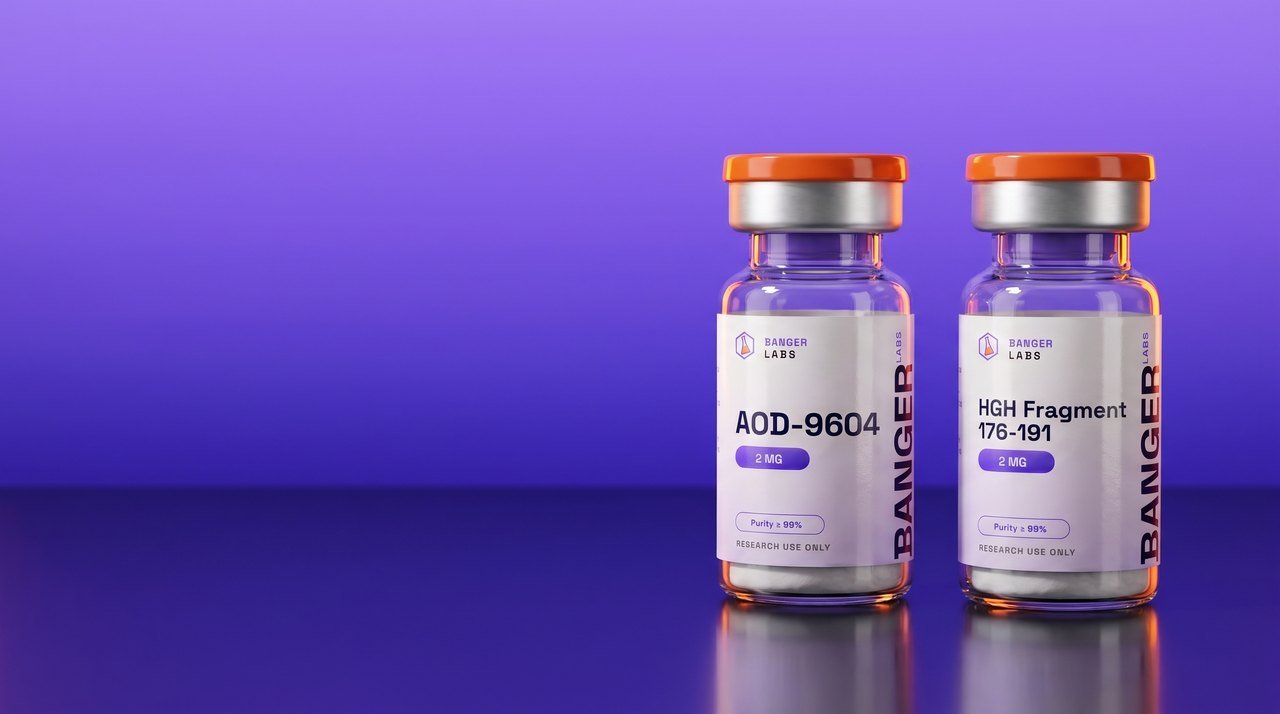
AOD-9604 vs HGH Fragment 176-191 at a glance
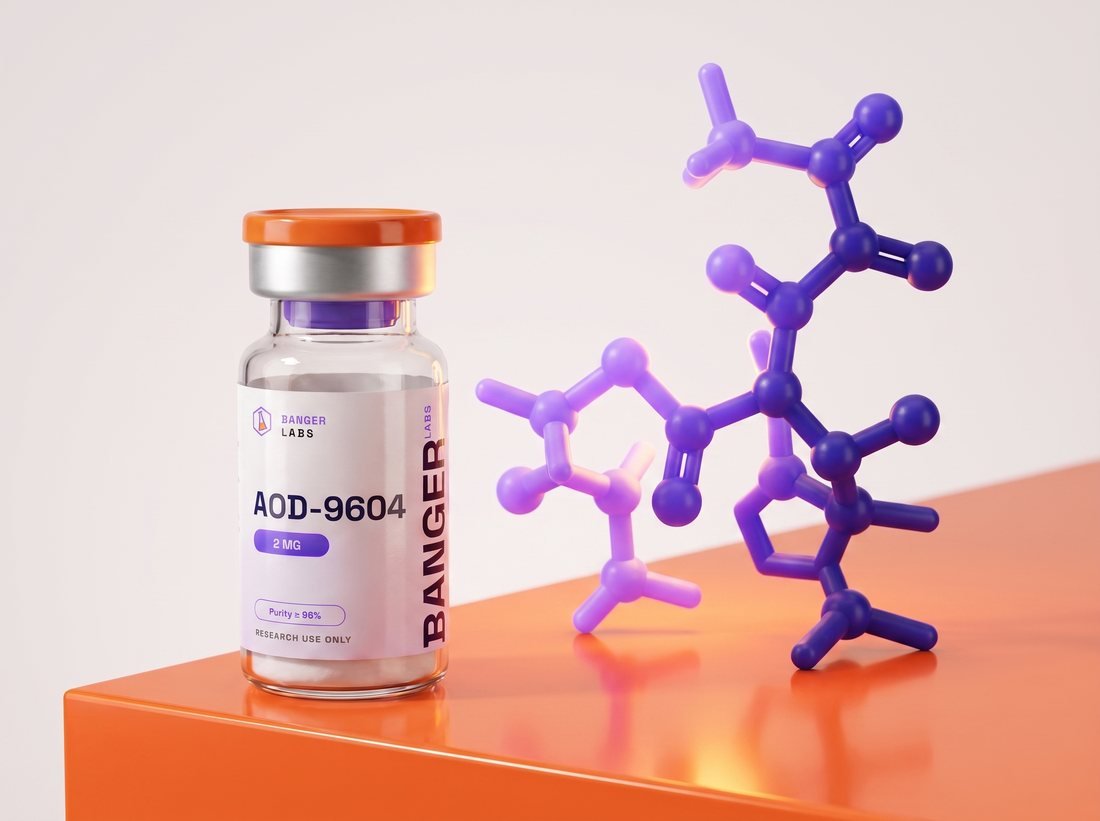
What is AOD-9604?
AOD-9604 is a synthetic peptide derived from the C-terminal region of human growth hormone, corresponding to residues 176-191, with a tyrosine substituted for the phenylalanine at the N-terminal position. It is a 16-amino-acid peptide (hexadecapeptide) and, in published studies, has been characterized as not binding the growth hormone receptor or inducing IGF-1 production. It is supplied strictly as a research-use-only compound and is not an approved drug; its name historically derives from the abbreviation ‘AOD’ used during early research.
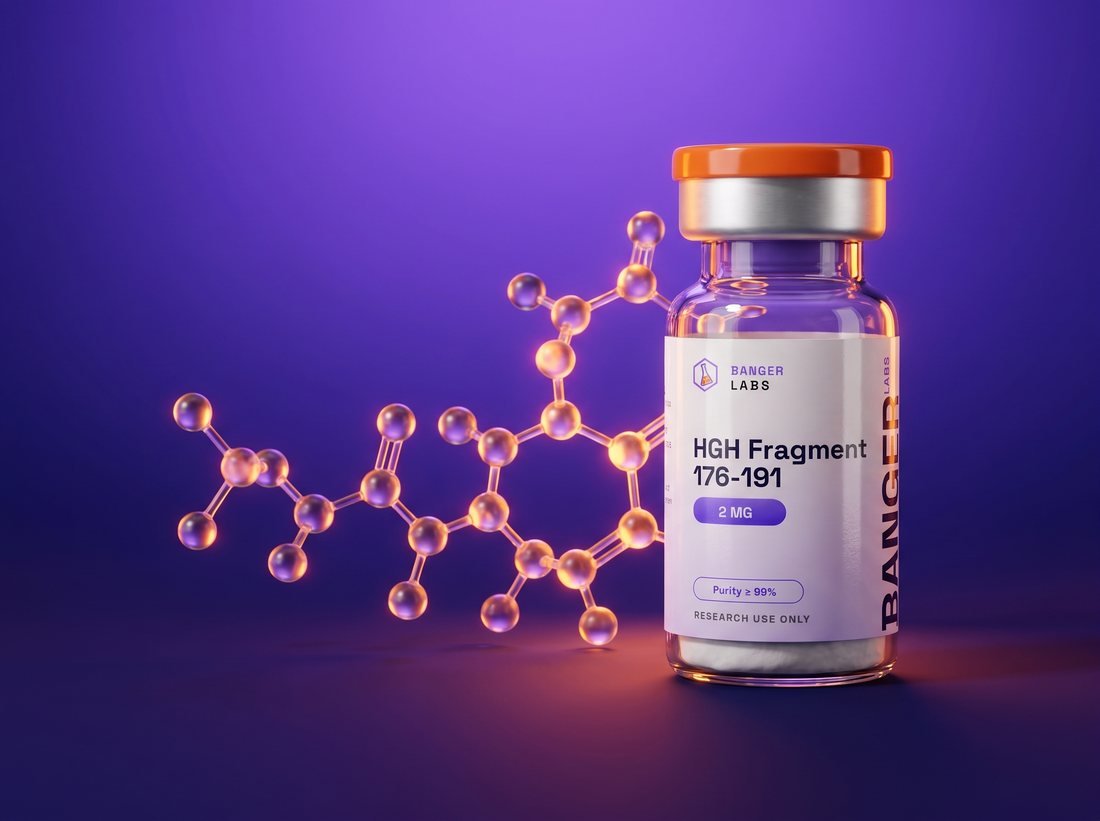
What is HGH Fragment 176-191?
HGH Fragment 176-191 is a synthetic peptide that reproduces the C-terminal amino acid sequence (residues 176-191) of the human growth hormone (hGH) polypeptide. It belongs to the class of growth-hormone-derived fragment peptides; a closely related Tyr-modified analog of this region has been described in the literature as AOD9604. As a fragment, it lacks the full hGH structure and the regions associated with growth-hormone-receptor binding.
How they differ
In preclinical models, AOD-9604 has been studied in connection with adipose-tissue lipid metabolism, with research describing effects on lipolysis and lipogenesis signaling. Work in obese and beta-3 adrenergic receptor (beta3-AR) knockout mice (Heffernan et al., Endocrinology 2001) reported that the lipolytic activity observed in those models was associated with the beta-3 adrenergic receptor pathway rather than the classical growth hormone receptor. These are mechanistic observations from animal and in vitro research only and do not describe human outcomes. By contrast, In preclinical models, C-terminal hGH fragments of this region have been investigated for effects on adipose-tissue lipid metabolism, including reported antilipogenic activity (reduced de novo fat synthesis) and modulation of lipolytic pathways. Rodent studies of the related fragment reported changes correlating with beta-3 adrenergic receptor (β3-AR) RNA expression, and effects differed in β3-AR knockout models, implicating that pathway. Reported research observations indicate these fragments act on lipid metabolism in models without the IGF-1 elevation characteristic of full-length growth hormone, consistent with not engaging the growth-hormone receptor in the same manner.
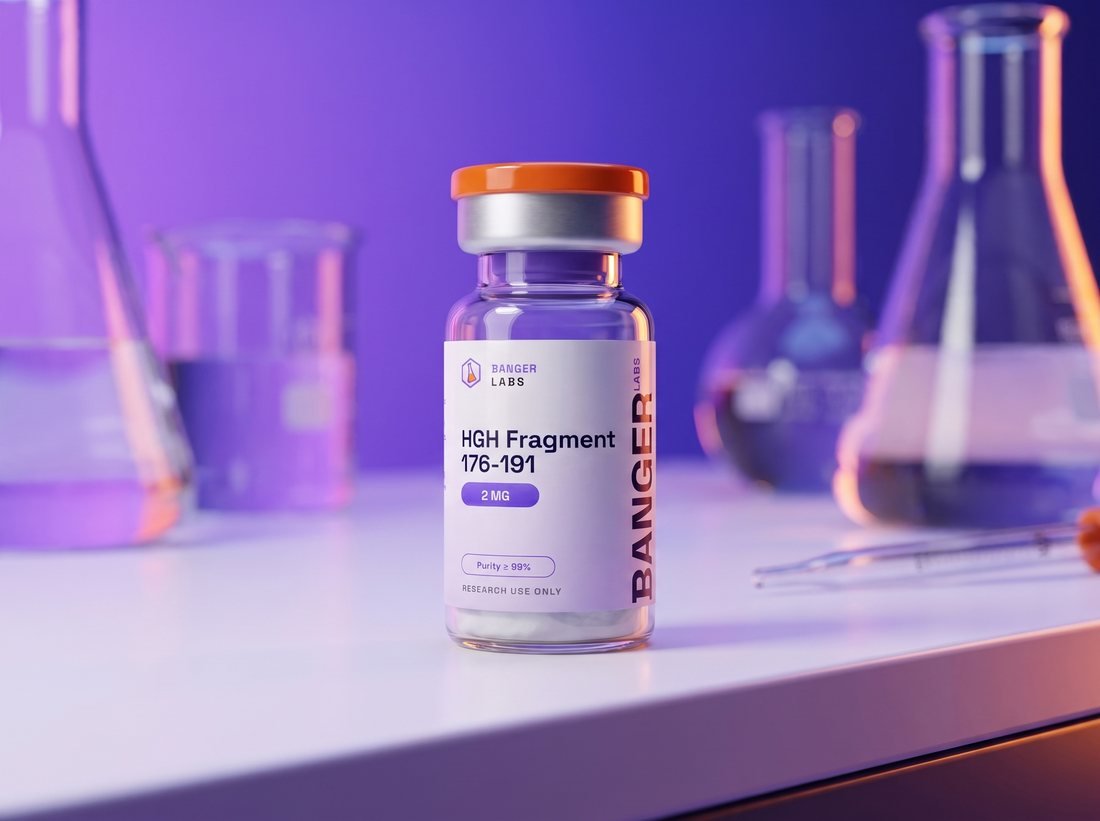
These describe laboratory/preclinical research only. No therapeutic, medical, or efficacy claims are made.
Frequently asked questions
Are AOD-9604 and HGH Fragment 176-191 the same?
No — see the comparison table above; they differ in class and the research contexts in which they are studied.
Are these research use only?
Yes. Both are supplied strictly for laboratory research — not for human or veterinary use.
References
- The effects of human GH and its lipolytic fragment (AOD9604) on lipid metabolism following chronic treatment in obese mice and beta(3)-AR knock-out mice — PubMed (Endocrinology, 2001; PMID 11713213)
- AOD9604 — Wikipedia (overview with primary-source references)
- Wu Z, Ng FM. Antilipogenic action of synthetic C-terminal sequence 177-191 of human growth hormone. Biochem Mol Biol Int. 1993;30(1):187-96. — PubMed (NCBI)
Shop these research peptides
Shop AOD-9604 →Shop HGH Fragment 176-191 →
By the Banger Labs Research Team. For research use only. Not for human or veterinary use. Educational information, not medical advice.