By the Banger Labs Research Team · Updated June 2026
Adipotide vs AOD-9604 at a glance
What is Adipotide?
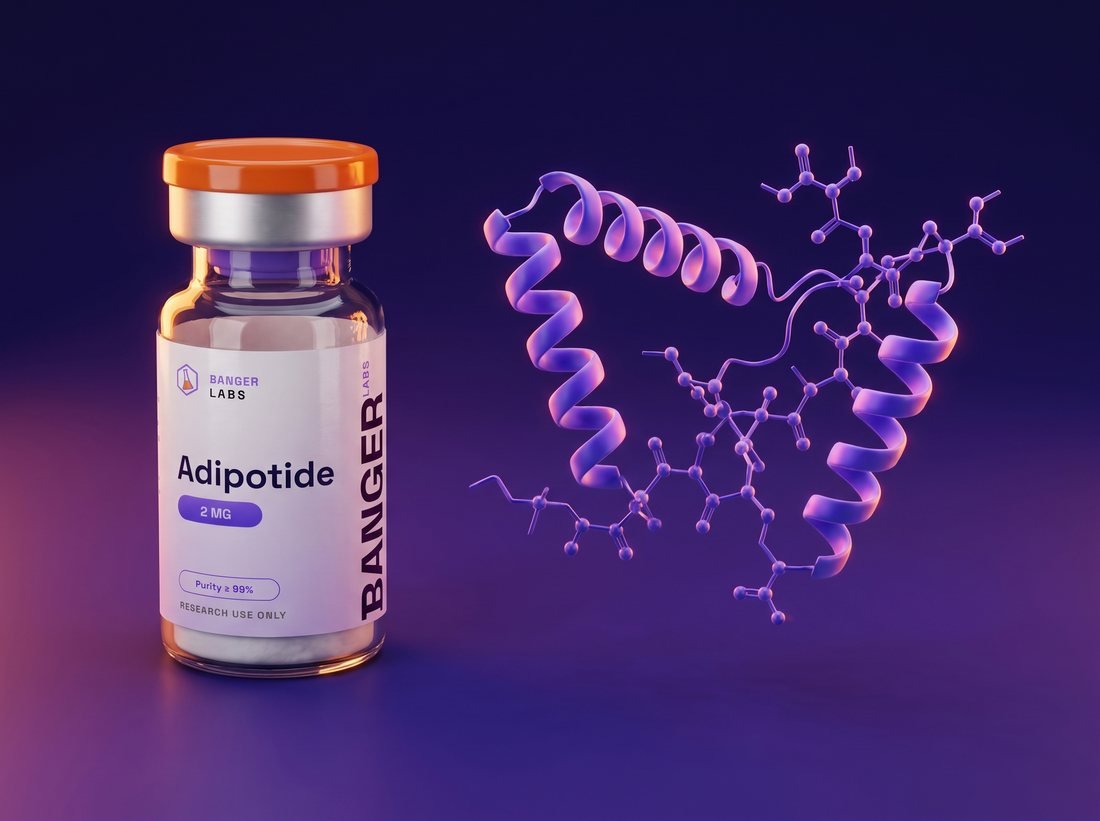
Adipotide (also designated prohibitin-targeting peptide 1 / FTPP) is a synthetic peptidomimetic with the sequence CKGGRAKDC-GG-D(KLAKLAK)2, joining a cyclic vascular-homing motif to a proapoptotic moiety. It was first described by Kolonin and colleagues (2004) and is characterized in the literature strictly as a preclinical research compound, not an approved drug.
What is AOD-9604?
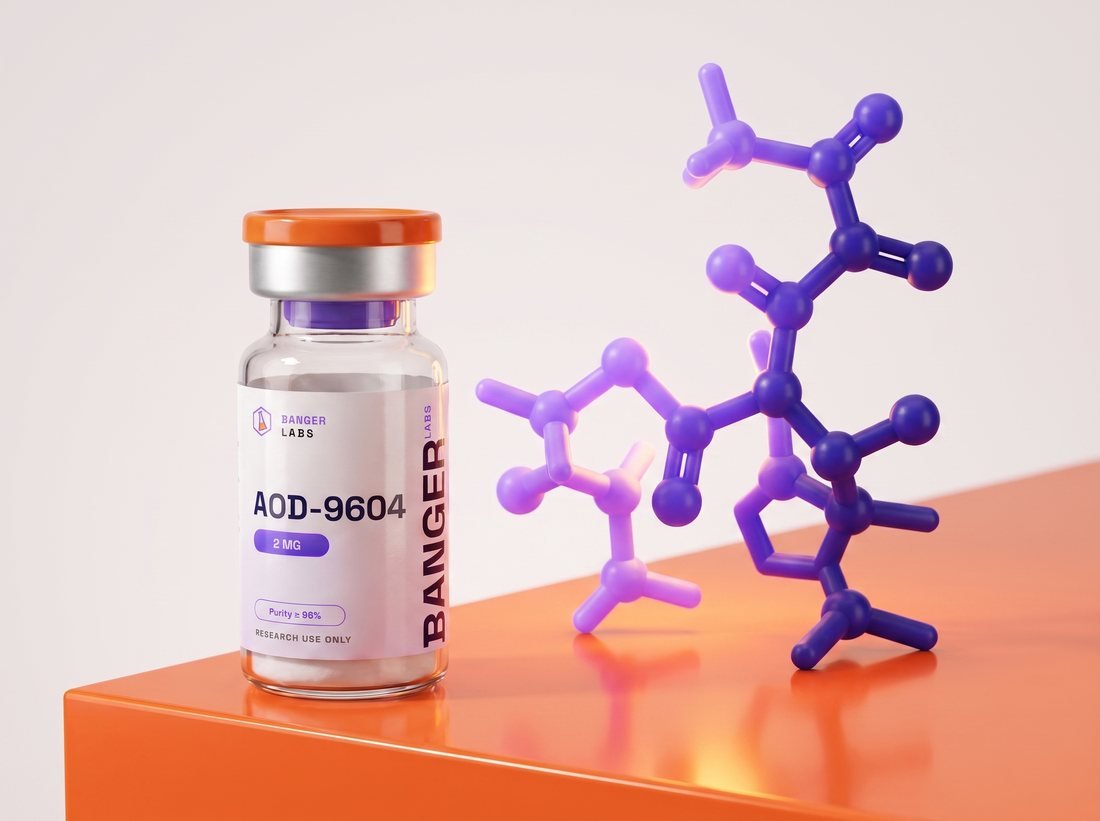
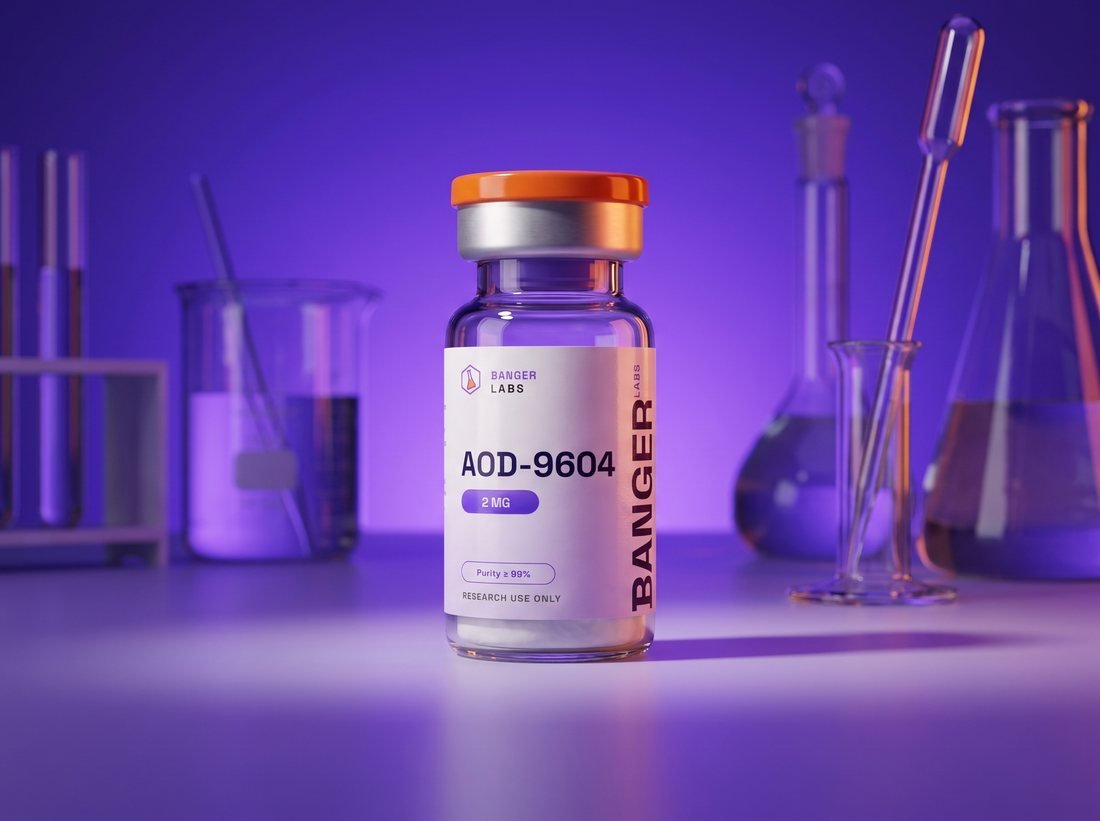
AOD-9604 is a synthetic peptide derived from the C-terminal region of human growth hormone, corresponding to residues 176-191, with a tyrosine substituted for the phenylalanine at the N-terminal position. It is a 16-amino-acid peptide (hexadecapeptide) and, in published studies, has been characterized as not binding the growth hormone receptor or inducing IGF-1 production. It is supplied strictly as a research-use-only compound and is not an approved drug; its name historically derives from the abbreviation ‘AOD’ used during early research.
How they differ
In published animal-model studies, the cyclic CKGGRAKDC domain is reported to bind a prohibitin / annexin A2 (ANXA2) receptor pair described on the endothelial cell surface of blood vessels supplying white adipose tissue. Following receptor-mediated internalization, the appended D(KLAKLAK)2 amphipathic domain is described as disrupting mitochondrial membranes and triggering apoptosis in those targeted endothelial cells. This mechanism has been characterized in rodent and non-human primate research models only. By contrast, In preclinical models, AOD-9604 has been studied in connection with adipose-tissue lipid metabolism, with research describing effects on lipolysis and lipogenesis signaling. Work in obese and beta-3 adrenergic receptor (beta3-AR) knockout mice (Heffernan et al., Endocrinology 2001) reported that the lipolytic activity observed in those models was associated with the beta-3 adrenergic receptor pathway rather than the classical growth hormone receptor. These are mechanistic observations from animal and in vitro research only and do not describe human outcomes.
These describe laboratory/preclinical research only. No therapeutic, medical, or efficacy claims are made.
Frequently asked questions
Are Adipotide and AOD-9604 the same?
No — see the comparison table above; they differ in class and the research contexts in which they are studied.
Are these research use only?
Yes. Both are supplied strictly for laboratory research — not for human or veterinary use.
References
- Reversal of obesity by targeted ablation of adipose tissue — Kolonin et al., Nature Medicine 2004 (PMID 15133506)
- A Peptidomimetic Targeting White Fat Causes body-weight research and Improved Insulin Resistance in Obese Monkeys — Barnhart et al., Science Translational Medicine 2011 (PMID 22072637, PMCID PMC3666164)
- Prohibitin-targeting peptide 1 — Wikipedia (overview/structure reference)
- The effects of human GH and its lipolytic fragment (AOD9604) on lipid metabolism following chronic treatment in obese mice and beta(3)-AR knock-out mice — PubMed (Endocrinology, 2001; PMID 11713213)
- AOD9604 — Wikipedia (overview with primary-source references)
Shop these research peptides
Shop Adipotide →Shop AOD-9604 →
By the Banger Labs Research Team. For research use only. Not for human or veterinary use. Educational information, not medical advice.