By the Banger Labs Research Team · Updated June 2026
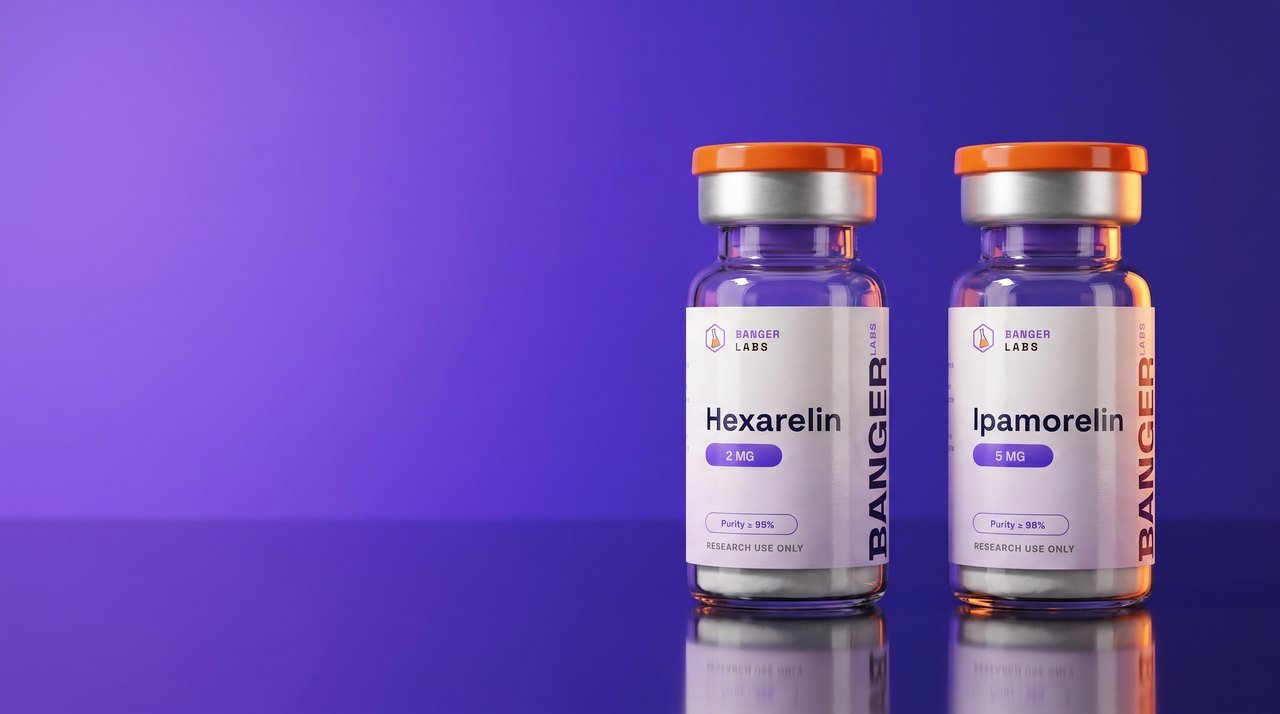
Hexarelin vs Ipamorelin at a glance
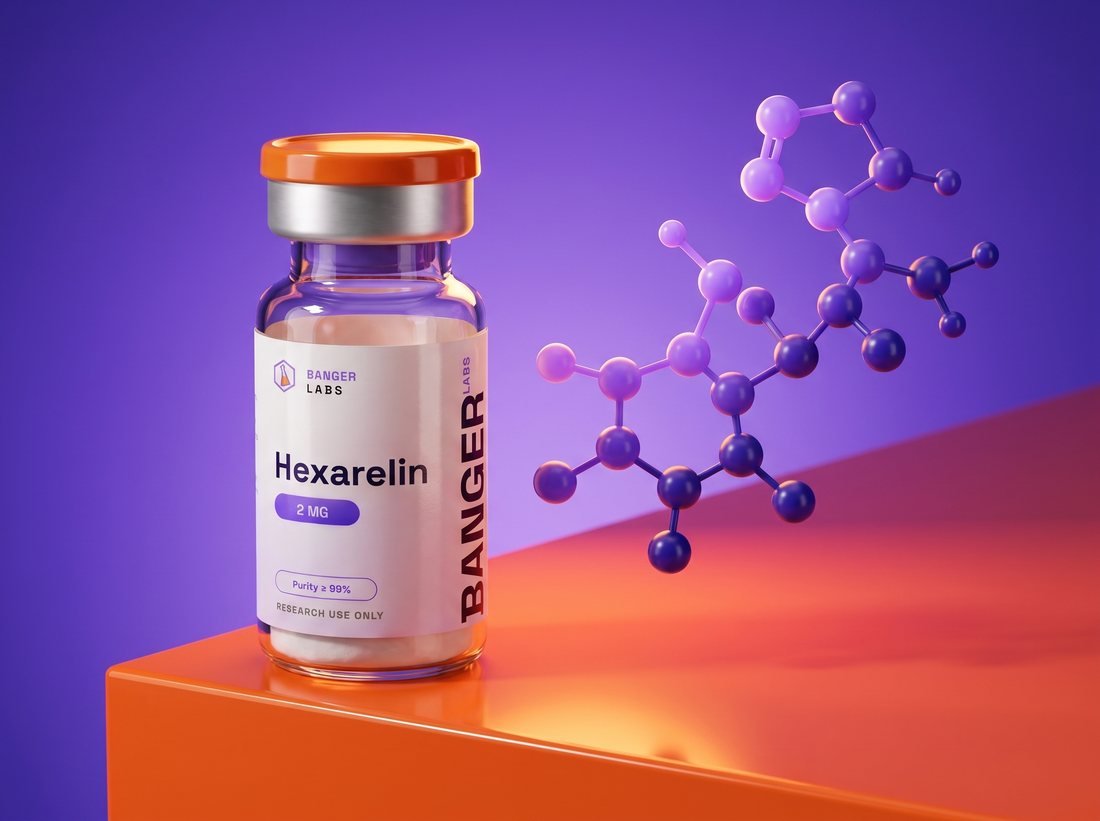
What is Hexarelin?
Hexarelin (also known as examorelin) is a synthetic six-amino-acid peptide with the sequence His-D-2-methyl-Trp-Ala-Trp-D-Phe-Lys-NH2, derived from the parent growth hormone-releasing peptide GHRP-6 by substitution of the position-2 D-tryptophan with its 2-methyl derivative. It belongs to the growth hormone secretagogue (GHS) class of research peptides. This brief is provided for research-use-only, educational purposes and makes no therapeutic, efficacy, or human-use claims.
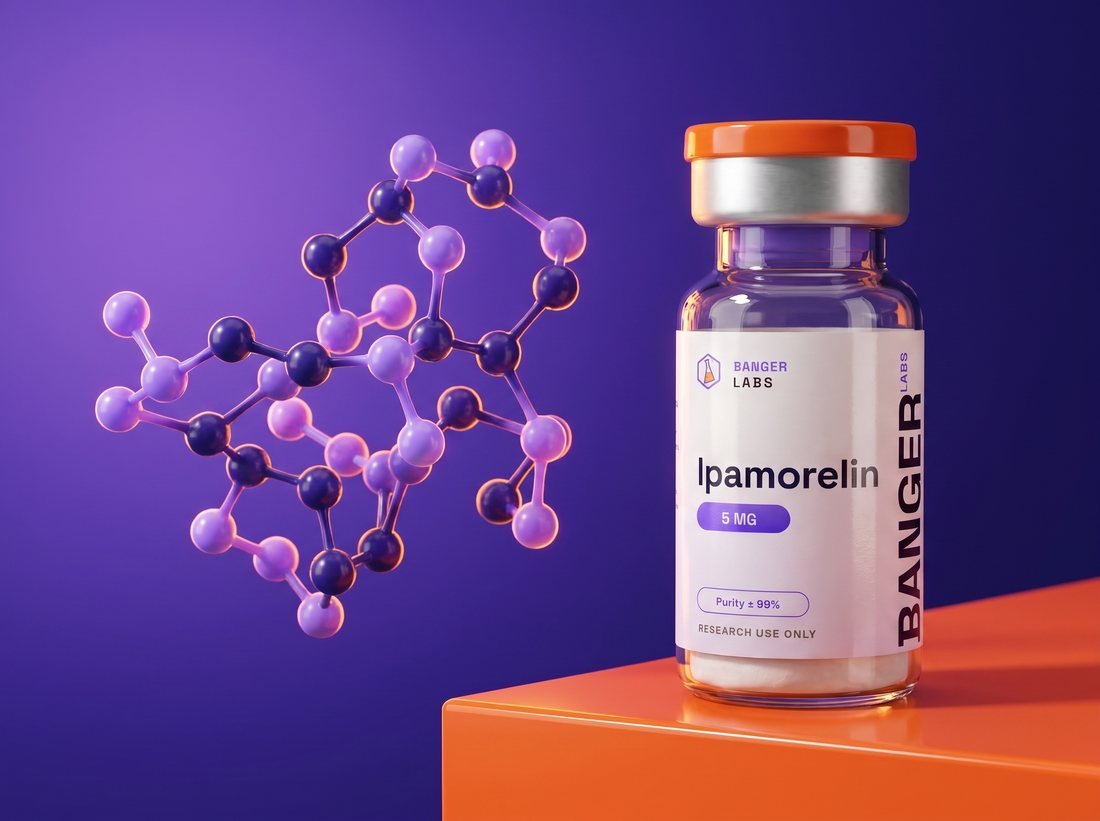
What is Ipamorelin?
Ipamorelin is a synthetic pentapeptide first described by Raun and colleagues at Novo Nordisk A/S in 1998 and derived from growth hormone-releasing peptide (GHRP) research. Its sequence is Aib-His-D-2-Nal-D-Phe-Lys-NH2 (CAS 170851-70-4; molecular weight approximately 711.85 g/mol, C38H49N9O5), incorporating the non-standard residues aminoisobutyric acid (Aib) and D-2-naphthylalanine. It is classified in the research literature as a growth hormone secretagogue.
How they differ
In preclinical and in vitro studies, hexarelin acts as an agonist of the growth hormone secretagogue receptor type 1a (GHS-R1a), a G-protein-coupled receptor expressed in the pituitary, hypothalamus, and various peripheral tissues, with signaling reported through phospholipase C and intracellular calcium mobilization. Research reports describe stimulation of pituitary growth hormone release via direct pituitary action and via hypothalamic mechanisms acting alongside GHRH in animal models. Studies also report binding to the scavenger receptor CD36 in cardiac and peripheral tissues, a pathway investigated independently of the GH axis. By contrast, In preclinical in vitro and in vivo research, ipamorelin acts as an agonist at the growth hormone secretagogue receptor (GHS-R1a), the same receptor bound by the endogenous ligand ghrelin, on anterior pituitary somatotrophs. Its receptor-mediated action has been characterized pharmacologically, with growth-hormone release in pituitary cell models antagonized by the GHS-R1a blocker D-Lys3-GHRP-6. A noted research feature is its selectivity: in published studies it released growth hormone without significantly elevating ACTH or cortisol, even at amounts well above those producing growth-hormone release in those research models.
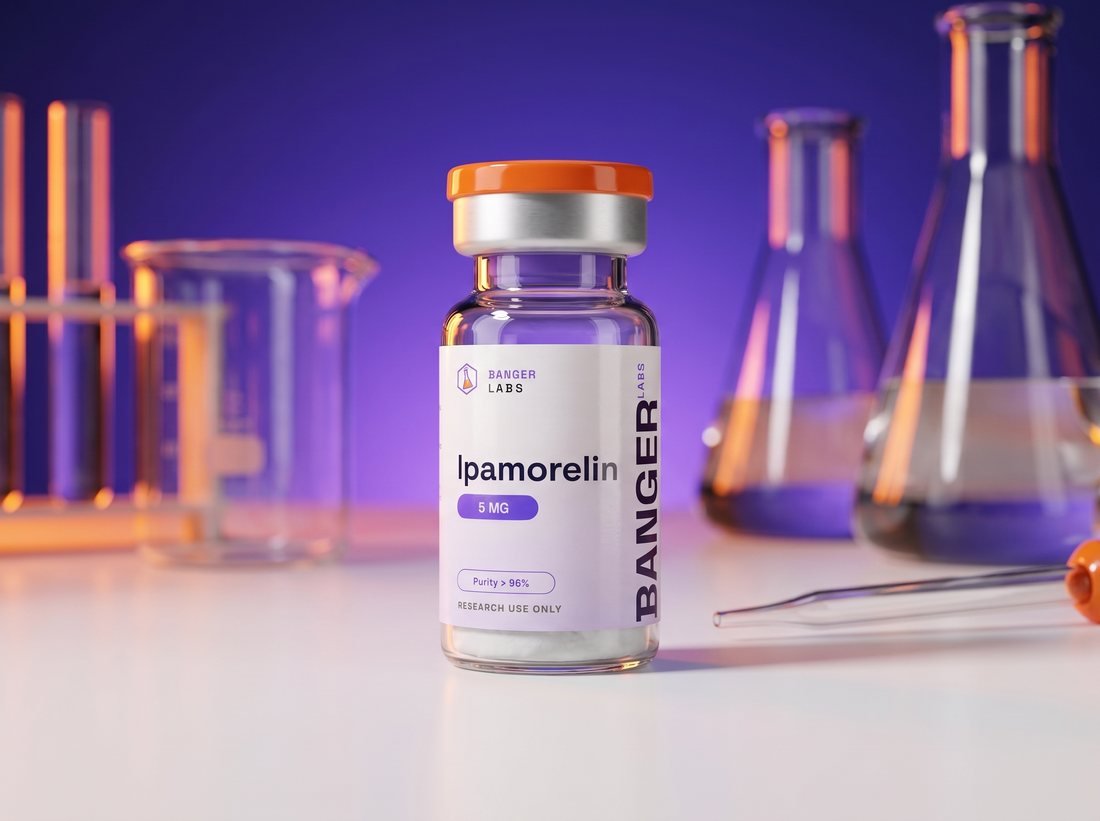
These describe laboratory/preclinical research only. No therapeutic, medical, or efficacy claims are made.
Frequently asked questions
Are Hexarelin and Ipamorelin the same?
No — see the comparison table above; they differ in class and the research contexts in which they are studied.
Are these research use only?
Yes. Both are supplied strictly for laboratory research — not for human or veterinary use.
References
- Mechanism of action of Hexarelin. I. Growth hormone-releasing activity in the rat — PubMed (Eur J Endocrinol, 1996)
- GH-releasing activity of Hexarelin, a new growth hormone releasing peptide, in infant and adult rats — PubMed (Life Sci, 1994)
- The Growth Hormone Secretagogue Hexarelin Protects Rat Cardiomyocytes From in vivo Ischemia/Reperfusion Injury Through Interleukin-1 Signaling Pathway — PubMed (Int Heart J, 2017)
- Hexarelin, a Growth Hormone Secretagogue, affects Lipid Metabolic Aberrations in Nonobese Insulin-Resistant Male MKR Mice — PMC (Endocrinology, 2017)
- Raun K, et al. Ipamorelin, the first selective growth hormone secretagogue. Eur J Endocrinol. 1998;139(5):552-561. — PubMed (European Journal of Endocrinology)
Shop these research peptides
Shop Hexarelin →Shop Ipamorelin →
By the Banger Labs Research Team. For research use only. Not for human or veterinary use. Educational information, not medical advice.